The Rise of Intelligent Welding: Trends in Automation, AI Control, and Real-Time Monitoring
【Introduction】 The Rise of Intelligent Welding: Trends in Automation, AI Control, and Real Time Monitoring
In today’s manufacturing landscape, welding automation robots are transforming how we approach metal joining, especially as demand increases for precision and efficiency. At ITES China, we have observed how advancements in sensors, data analytics, and AI algorithms are enabling systems to adapt dynamically during operations. When discussing intelligent welding, it is important to understand how machines integrate perception, decision-making, and actuation. Technologies such as real-time vision feedback, machine learning control loops, and sensor fusion help welding tools respond immediately to variations in joint fit-up or material inconsistency. Through this evolution, manufacturers can reduce rework and improve throughput without overburdening staff. Our exposure to global trends and domestic capabilities has shown us that the integration of AI control into welding platforms is expanding the possibilities for fabricators across automotive, heavy machinery, and shipbuilding sectors.
China’s Role in Intelligent Welding and Supply Chain Dynamics
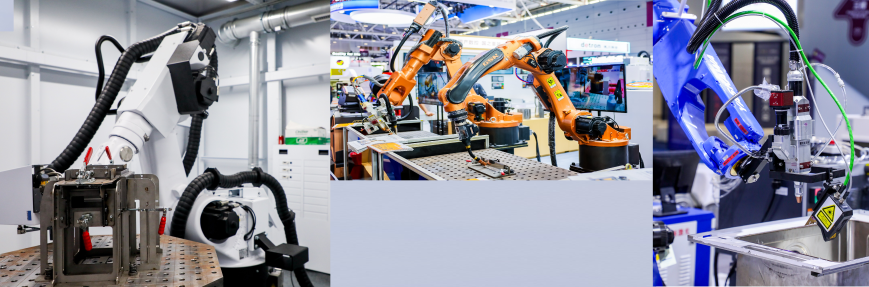
China continues to play a significant role in the supply chain for intelligent welding solutions, and ITES China engages frequently with partners who demand both quality and scalability. The ecosystem supporting welding automation robots includes local component makers, system integrators, and software developers, which collectively bolster responsiveness to customer needs. Within this system, we focus on how an automated welding robot machine can be configured to suit specific applications, whether for spot welding in consumer electronics or arc welding in structural fabrication. By promoting modular design and open communication protocols, the integration phase becomes smoother for end users. We have also seen how Chinese suppliers are adopting international standards, enabling global interoperability while maintaining cost structures that support competitive quoting. Through collaboration with universities and research labs, some firms in China are advancing adaptive control techniques that refine weld quality by adjusting parameters on the fly, which aligns with the broader trend toward connected, self-optimizing systems.
Intelligent Welding at the Upcoming Industry Exhibition
As part of our outreach efforts, ITES China is preparing to showcase the latest innovations in intelligent welding at an upcoming industry exhibition. Attendees will have the opportunity to interact with a range of automated welding robot machines that illustrate real-time monitoring dashboards, AI-based control routines, and flexible tooling options. One of the highlights will be a live demonstration where sensors feed data into a visualization platform, allowing visitors to see how adjustments to torch angle, feed rate, and travel speed occur without manual intervention. Alongside these exhibits, there will be presentations from partner companies in metrology, safety systems, and digital twin modeling. Through the exhibition, we aim to foster dialogue about how intelligent welding systems can adapt to evolving production needs while maintaining consistency. For manufacturers exploring welding automation robots, this event will serve as an interactive forum to discuss challenges like cycle time reduction and process traceability with subject matter experts.
Conclusion: Embracing Intelligent Welding for the Future
Looking forward, the intersection of AI control, real-time monitoring, and advanced robotics signifies a meaningful shift in how fabrication lines operate. For organizations evaluating intelligent solutions, understanding the capabilities of an automated welding robot machine in conjunction with robust software tools is essential. At ITES China, we believe that welding systems supported by adaptive algorithms, comprehensive sensor arrays, and transparent data flows can help manufacturers respond to tighter tolerances and evolving design requirements. By engaging with the broader community at exhibitions and through targeted collaborations, we continue to promote knowledge sharing and practical implementation strategies. Ultimately, the rise of intelligent welding reflects not just technological innovation but also the need for operational resilience and agility, enabling production teams to balance quality and efficiency through smarter machines and informed decision-making.