Applications of Machine Vision in Semiconductor, EV Battery, and 3C Electronics Production
【Introduction】 Applications of Machine Vision in Semiconductor, EV Battery, and 3C Electronics Production
In modern high-precision manufacturing lines, the role of automated visual inspection has become indispensable. The application of machine vision system technology is a critical factor in achieving the near-zero defect rates required in advanced industries. As ITES China, we see this technology as a foundational element for sectors where microscopic flaws or dimensional inaccuracies can lead to significant functional failure. The core function of machine vision for quality inspection is to perform rapid, consistent, and objective assessments that surpass human visual capability in speed and repeatability. For producers in the semiconductor, electric vehicle (EV) battery, and 3C electronics fields, implementing a robust vision system is less an option and more a prerequisite for market competitiveness and supply chain reliability.
Technical Imperatives in High-Stakes Manufacturing Environments
Each of these sectors presents unique challenges that a well-configured machine vision system is designed to address. In semiconductor fabrication, vision systems guide wafer handling robots with micron-level precision and inspect circuitry for defects invisible to the naked eye. For EV battery production, the application of machine vision system covers electrode coating uniformity, weld seam integrity on cells, and module assembly verification, where any fault can impact safety and performance. Within 3C electronics, these systems verify the placement of miniature components on PCBs, check for cosmetic flaws on final assemblies, and ensure connector alignment. The machine vision for quality inspection in these contexts acts as a tireless gatekeeper, ensuring that only products meeting stringent specifications proceed, thereby safeguarding brand reputation and reducing costly waste or recalls.
The Integrated Supply Chain for Vision Solutions
The complexity of these applications has fostered a specialized and responsive supply chain. A network of providers has developed extensive capabilities not just in manufacturing standard cameras or sensors, but in delivering complete, integrated machine vision for quality inspection solutions. This ecosystem advantage lies in its vertical integration and application engineering prowess. Providers often collaborate closely with automation integrators to tailor hardware selection, lighting schemes, and software algorithms to a client’s specific production line and defect library. This collaborative model allows for the development of highly customized application of machine vision system packages, which can be scaled and adapted as production needs evolve. Engaging with this network provides access to both the core components and the critical implementation expertise necessary for a successful deployment.
Convergence of Innovation at the Specialized Platform
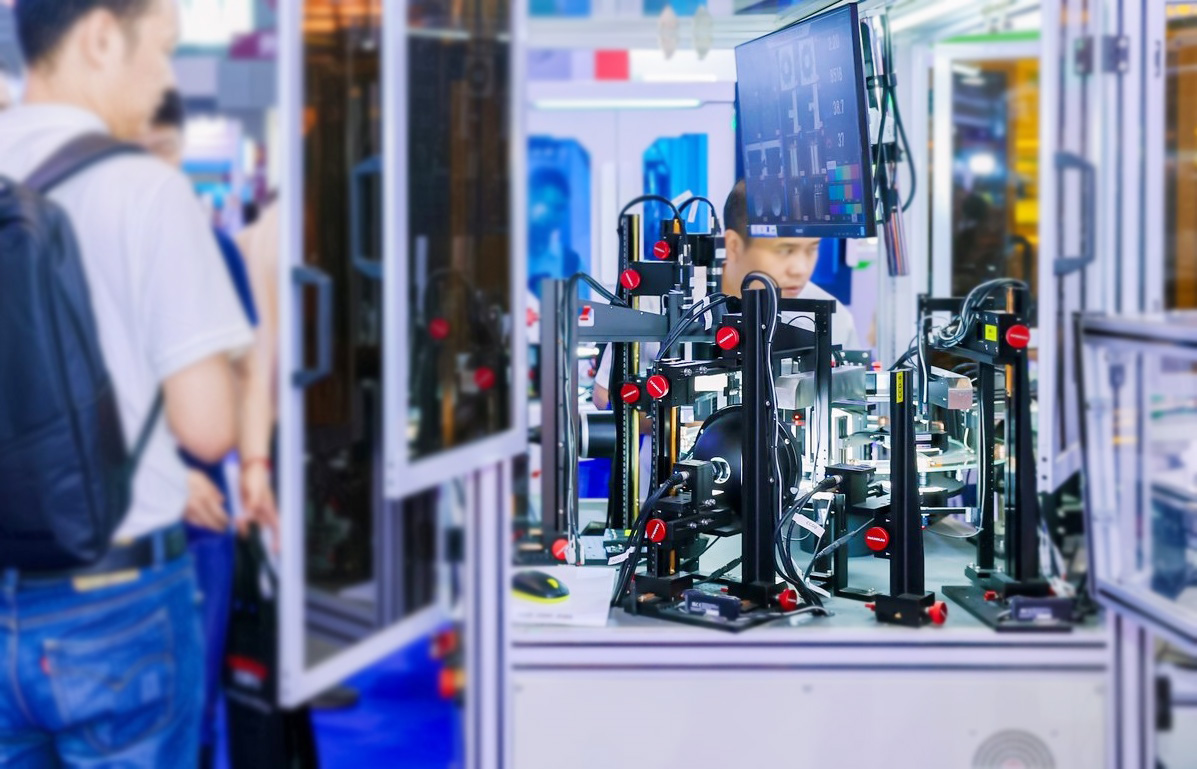
Identifying the optimal machine vision system requires more than reviewing catalog specifications; it involves understanding how different components interact within a real production environment. This need for holistic evaluation is what our dedicated exhibition zone facilitates. At ITES China, the section for Machine Vision Applications and Inspection Equipment is structured to serve this exact purpose. It functions as a central hub where technology developers, system integrators, and manufacturing engineers converge. For professionals tasked with specifying or upgrading inspection stations, this zone offers a direct method to compare the capabilities and approach of different providers side-by-side, moving the procurement process from theoretical comparison to practical assessment.
Exhibition Scope: A Spectrum of Inspection and Guidance Technologies
The range of technologies on display at ITES China covers the entire spectrum of visual automation needs. Visitors can explore dedicated machine vision for quality inspection solutions, including CCD vision inspection equipment, optical screening machines, and AOI (Automated Optical Inspection) systems for PCB assembly. A significant area of focus is the rise of AI-powered inspection, with systems utilizing deep learning to identify complex or variable defects that challenge traditional rule-based algorithms. Beyond pure inspection, the exhibition showcases vision positioning solutions, such as 3D cameras and bin-picking systems that guide robots in unstructured tasks. The scope also includes critical identification technologies: barcode and QR code readers, OCR systems for character verification, and RFID solutions for track-and-trace applications. This comprehensive presentation allows a visitor to assess a camera’s sensor, discuss a software platform’s analytics tools, and see a fully integrated cell performing a relevant inspection task—all within the context of their industry’s requirements.
The integration of advanced visual inspection is a definitive step in the evolution of precision manufacturing. The decision to implement or upgrade a machine vision system carries implications for product quality, line efficiency, and operational data intelligence. Engaging directly with the concentrated expertise and technology presented at a dedicated industrial forum provides a direct route to informed decision-making. We create the environment where these technical exchanges and product evaluations can occur with efficiency and depth. The solutions and dialogues found at ITES China are oriented towards solving concrete production challenges, translating the powerful potential of the application of machine vision system into a reliable and integral part of the manufacturing process.