
ITES China Shenzhen International Industrial Manufacturing Technology and Equipment Exhibition

Company Introduce
Dongguan Derong Mold & Plastic Technology Co., Ltd. provides one-stop services for mold workshops. With 25 years of experience, we deliver high-quality molds, manufacture inspection fixtures, and handle end-effector and automation operations. Our facility spans over 5,000 square meters and employs more than 100 professionals to complete all projects and opportunities entrusted to us by our clients!
Exhibit brands
Exhibits
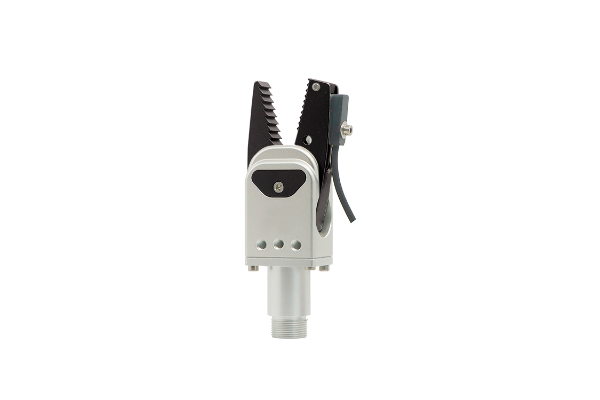
Sprue Gripper
The “sprue gripper” in robotic end-effectors is a specialized end-effector designed for gripping and removing plastic part sprues (commonly known as “sprues”) from automated injection molding production lines. Core Functions and Part Removal Methods Comparison Characteristic Dimension: Sprue Gripper (Specialized) Vacuum Suction Universal Parallel Gripper Primary Application: Specifically designed to grip, extract, or shear off sprue (water gate) waste. Suction of workpieces with flat, smooth surfaces. Gripping of workpieces with regular shapes and reliable gripping surfaces. Working Principle: Typically pneumatically driven, utilizing direct piston thrust to generate substantial gripping force; some designs can directly shear off sprues. Adheres to workpieces via negative pressure. Cylinder-driven, parallel opening/closing grips workpieces. Applicable Objects: Irregular plastic scrap from injection molding (e.g., sprues, runners). Finished products with intact surfaces (e.g., plastic shells, plates). Workpieces with symmetrical gripping surfaces (e.g., blocks, shafts). Key Advantages: Highly targeted design with jaw shapes matching sprues; high gripping force for reliable grasping or cutting. Large contact area minimizes surface damage. High versatility accommodates various regular-shaped parts. Technical Features and Selection Considerations Sprue grippers are engineered for efficient, reliable handling of specific waste materials: · Lightweight yet robust construction: Main body typically crafted from ultra-hard aluminum alloy, ensuring rigidity and longevity while minimizing robot end-effector load. · High gripping force design: Utilizing methods like direct piston push, its gripping force typically exceeds standard parallel grippers, ensuring secure grasping or cutting of sprues. · High flexibility and customizability: · Modular: Supports threaded mounting or quick assembly with standard EOAT (End-of-Arm Tooling) components. · Interchangeable jaws: Offers multiple jaw shapes to accommodate sprues of varying forms and dimensions. · Customization: Many suppliers accept bespoke designs to address specialized sprue handling requirements. · Integration and detection: Premium sprue grippers can incorporate magnetic switches or sensors to verify jaw closure or successful sprue capture, enabling process monitoring. Application Scenarios and Development Sprue grippers are critical components in automated injection molding production lines. They can function as standalone tools or integrate into multifunctional composite grippers alongside suction cups for finished parts or insert-holding grippers, enabling robots to simultaneously perform sprue separation and part handling. With the advancement of industrial automation, sprue grippers are trending toward miniaturization and intelligent capabilities. Miniature sprue grippers are better suited for operations in confined spaces, such as those found in precision electronics and medical devices. Integration with sensors and IoT technology enables intelligent functions like gripping force monitoring and predictive maintenance.
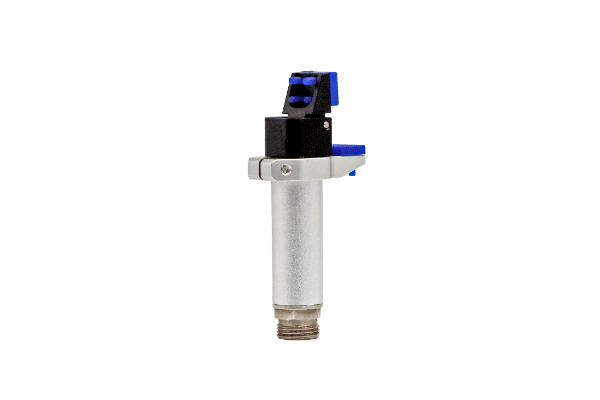
One Finger Angular Pneumatic Grippers
The “single-action ejector fingers” at the robot end effector are specialized grippers designed for part removal from injection molding machines, primarily used to pick up finished products on automated production lines. Their purpose differs entirely from the previously mentioned “sprue grippers.” Simply put: · Single-action ejector fingers: Aim to remove finished products. · Sprue grippers: Aim to remove or cut off sprue waste. To help you quickly grasp their differences, here's a comparison of their core characteristics: Single-Action Finger Plucker · Core purpose: Grasping plastic products after injection molding · Operating logic: Single action primarily for gripping and flipping products to aid demolding · Application scenario: Retrieving plastic products · Key features: Relatively simple structure, direct action Sprue Cutter · Core Function: Grasping or shearing off sprue (gate) scrap · Operating Logic: Typically requires high clamping or shearing force, specifically designed for scrap geometry · Application Scenario: Sprue scrap separation · Key Features: Highly targeted, high clamping force Key Characteristics of Single-Action Ejector Fingers Based on existing product information, single-action ejector fingers generally feature the following design characteristics: 1. Single-action mechanism: Streamlined structure with a primary gripping action in one direction. 2. Modular assembly: Can be combined with other modules (e.g., “gripper pins”) via connectors to form a complete gripping unit. 3. Built-in Magnetic Ring: The cylinder typically houses a magnetic piston, enabling external magnetic switches to detect the “open” or “closed” status of the gripper for position feedback. In summary, single-action ejector fingers and sprue clamps are two distinct end-of-arm tools with clear functional divisions on automated injection molding lines. Understanding their differences facilitates selecting the appropriate tool based on specific process requirements—whether retrieving finished parts or handling scrap material.
Main products
Automation series products, Sprue Gripper, One Finger Angular Pneumatic Grippers, Air Nippers, Vacuum Cups, Vacuum Cup Fitting, and more.


