 Countdown158days
2027.3.24-3.27 Shenzhen World Exhibition & Convention Center
Countdown158days
2027.3.24-3.27 Shenzhen World Exhibition & Convention CenterQuality Assurance in Precision Machining: Measurement, Non-Destructive Testing, and Process Control
【Introduction】 Quality Assurance in Precision Machining: Measurement, Non-Destructive Testing, and Process Control
Assuring the quality of machined components is a fundamental requirement across advanced industries. The discipline of precision component machining depends on a rigorous framework of verification, where advanced measurement, nondestructive testing, and integrated process control form the essential pillars. For decision-makers evaluating precision machining component suppliers, understanding a provider's commitment to these QA dimensions is as critical as assessing their machinery. In China's manufacturing sector, the integration of these quality assurance technologies has become a defining characteristic of capable suppliers. We observe this evolution directly through our role at ITES Shenzhen, where the tools and methodologies of quality are prominently displayed and scrutinized. This article outlines the key elements of a robust QA system and how industry platforms enable their practical evaluation.
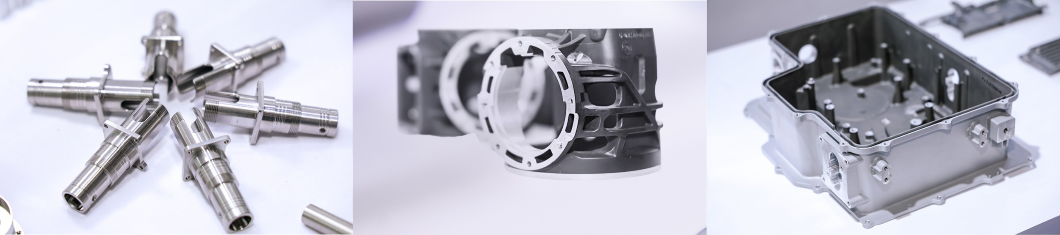
The Critical Role of Advanced Measurement and Inspection
The first pillar of quality lies in definitive measurement. Modern precision component machining demands capabilities that far exceed basic caliper checks. It involves coordinate measuring machines (CMMs), optical comparators, and sophisticated surface metrology instruments to verify micron-level tolerances and complex geometries. The scope extends to automated inspection systems that integrate directly into production lines, allowing for real-time data collection and statistical process control. For precision machining component suppliers, investment in this metrology equipment is a direct indicator of their technical seriousness. The exhibited range at industrial events like ITES Shenzhen often includes these very technologies, from high-precision measuring equipment to the specialized inspection consumables required for consistent results, providing a clear window into a supplier's verification capabilities.
Employing Non-Destructive Testing for Integrity Assurance
Beyond dimensional checks, verifying the internal and surface integrity of a component is necessary. Non-destructive testing (NDT) methods provide this assurance without affecting the part's functionality. Techniques such as dye penetrant inspection, magnetic particle testing, and X-ray inspection are employed to detect cracks, voids, or inclusions that could lead to field failure. The use of these technologies is particularly relevant for components destined for the automotive, aerospace, or medical device modules common in precision component machining. A supplier's proficiency with relevant NDT methods is a key differentiator. At a comprehensive trade fair, these technologies are part of the narrative, showcased alongside the machining equipment, allowing buyers to assess the full quality assurance loop.
Process Control as a Proactive Quality Strategy
The most effective quality assurance systems are proactive, embedded within the manufacturing process itself. This is where process control connects design to the finished part. It involves the use of CAE simulation software to predict manufacturing stresses, MES production management systems to track variables in real time, and quality traceability software to link each part to its production data. For precision machining component suppliers, this digital thread is what enables consistency across large batches and complex custom orders. It represents a move from inspection-after-the-fact to control-during-production. Observing these software and control systems in an applied context, such as the Precision Component Design and Automation sections at ITES Shenzhen, offers tangible proof of a supplier's commitment to this advanced methodology.
The integration of stringent QA practices within China's supply network has elevated the sector's output. The concentration of expertise allows for specialization, where suppliers adopt specific measurement and NDT protocols tailored to industries like semiconductor equipment or medical device manufacturing. Engaging with this network requires a focused approach to verify these quality claims. A dedicated industrial exhibition serves as a functional venue for this due diligence.
The Precision Component Machining zone at ITES Shenzhen is organized to facilitate this technical assessment. The "Inspection, Metrology Instruments & Auxiliary Devices" section is a core area, where visitors can interact with the latest measuring equipment, non-destructive testing technologies, and automated inspection solutions. This is not an isolated display; it is situated adjacent to the processing equipment and raw materials sections, mirroring the integrated reality of modern production. Professionals can discuss application-specific challenges with experts, compare technologies from different providers, and see how leading precision machining component suppliers incorporate these tools into their workflow. This environment transforms abstract quality certifications into observable, demonstrable practices.
Establishing a reliable supply chain for precision parts hinges on verifiable quality assurance. This verification extends beyond certificates to encompass the measurement tools, testing methodologies, and control systems a supplier employs. The technical density of these systems makes direct evaluation highly advantageous. An industry-focused event provides the setting to conduct this evaluation efficiently, placing the entire spectrum of QA technology alongside the production capabilities it governs. We structure ITES Shenzhen to enable these critical examinations, supporting the industry's pursuit of reliability and performance through demonstrated quality assurance.