Apple's 5.2mm Foldable Phone: The 100 Precision Parts Hidden Inside Its Hinge
【Introduction】 Apple's foldable iPhone Duo is here. See the 100+ hinge precision parts, UTG glass, and the manufacturing behind them.
In 72 hours and three launch events, the spotlight of the smartphone world landed on a single track.
Huawei's tri-fold, Xiaomi's “wide-fold,” and Apple's foldable iPhone Duo — three players going head to head on the same track. On stage they compete over how to fold; off stage, the factories in the Pearl River Delta and Yangtze River Delta that stay lit all night are wrestling with a different question: “How do you actually build these things?”
A foldable phone is not as simple as joining two candy-bar phones with a hinge. The real hard work lies in the tiny parts, sensitive materials, and extreme tolerances inside the body.
Today we set aside the marketing specs and look at the manufacturing foundation behind them.
Key Takeaways
• Apple's iPhone Duo arrives at US$1,999 with a ~10 million-unit stocking target — foldables shift from niche to a giant melee.
• A foldable adds three hard parts over a candy-bar phone: the hinge (50–100 micro MIM parts), precision structural parts (0.3 mm midframes), and UTG glass (≤30 μm).
• Apple's hinge yield is reportedly only 65% against an 85% target — the real battle is stable mass production, not design.
• The opportunity flows downstream: high-precision CNC and EDM, micro-diameter specialty cutting tools, and automated vision and CMM inspection.
Apple Enters the Fray: Foldable Phones Become a Battle of Giants
Foldable phones are not a new species. Royole launched the first one in 2018, Samsung followed in 2019, and Huawei, OPPO, vivo, and Xiaomi have since joined in. Yet for the past seven years the category has stayed in a state where “people make them, but no one goes all out.”
Apple's entry changed everything. The new iPhone Duo uses an inward-folding left-right design: closed, it has a 5.4-inch outer display, and unfolded it opens into a 7.6-inch Super Retina XDR display. The inner screen is 50% larger than the iPhone 18 Pro Max and 80% larger than the iPhone 18 Pro. Pricing starts at US$1,999, with 256GB, 512GB, 1TB, and 2TB storage options and two colorways, Starlight White and Midnight. In China the different storage versions are priced at RMB 15,999 (≈ US$2,374), RMB 17,999 (≈ US$2,670), RMB 21,499 (≈ US$3,190), and RMB 26,499 (≈ US$3,932), with pre-orders opening on October 16.
According to supply-chain teardowns, Apple's first foldable has a total BOM (bill of materials) of US$770–790, more than 40% higher than a candy-bar iPhone. The full-year stocking target is about 10 million units — not a small number, but an extreme test handed to the entire precision-machining industry.
Each player runs its supply chain differently. On Apple's side, final assembly goes to Foxconn, Samsung Display is the sole panel supplier, Lens Technology is the main UTG supplier, and the hinge assembly is led by Amphenol and Shin Zu Shing, using a titanium-aluminum alloy hinge system with custom cover glass co-developed with Corning. Chinese companies mainly participate as second-tier component suppliers — Eontec handles the liquid-metal hinge main shaft, while Gian Technology focuses on MIM precision parts.
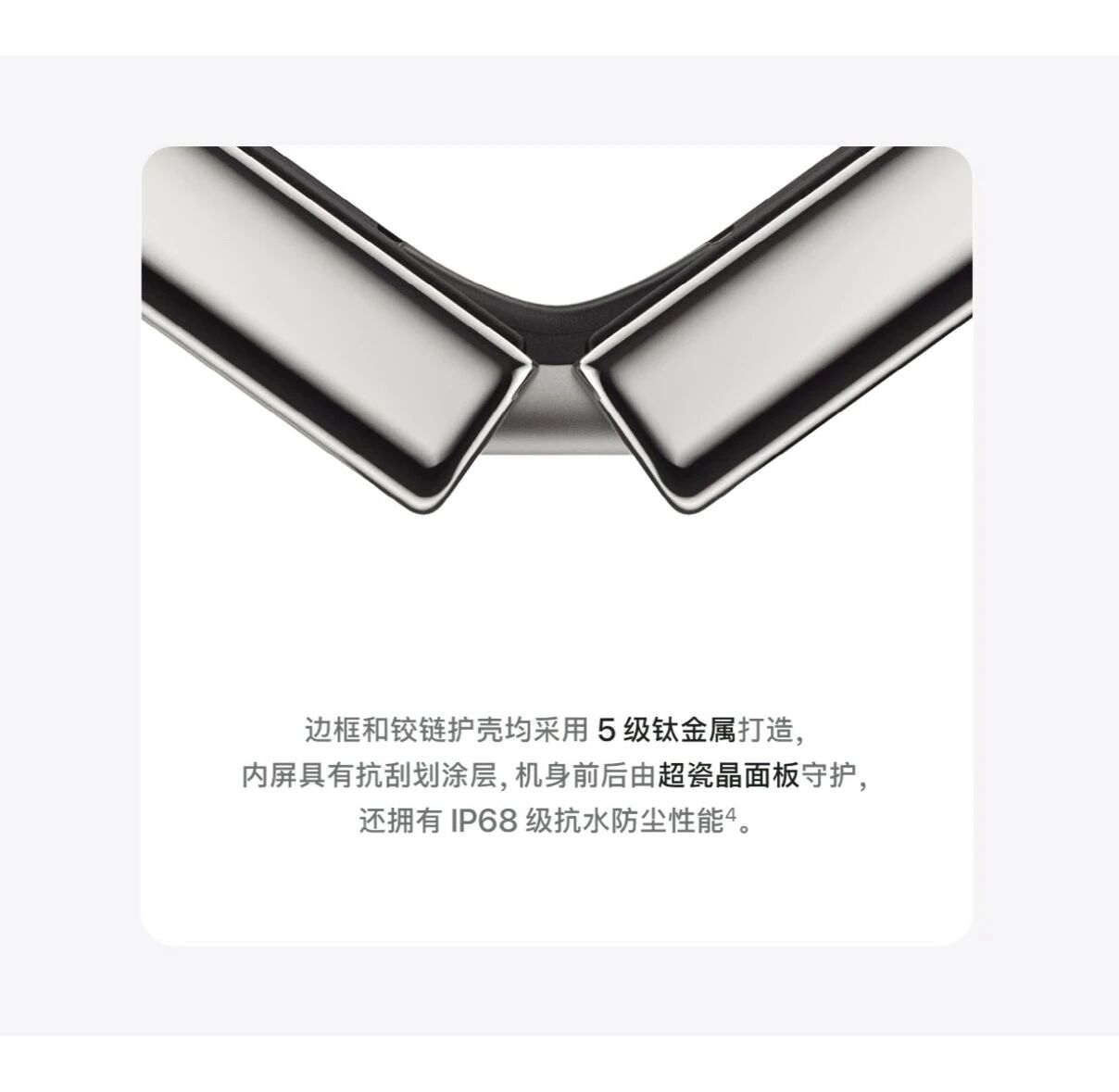
Image source: Apple
Huawei takes a different path. BOE exclusively supplies the flexible OLED panel, while NBTM New Materials, Gian Technology, and Eontec form a domestic-substitution matrix in the hinge segment. Triumph Science & Technology co-develops UTG glass with Huawei, at a thickness of ≤30 μm and a yield above 90%. The deepest moat of the tri-fold is not a product assembled from a screen supplier plus a hinge supplier, but system-level engineering capability at the whole-device level.

Image source: online
The Xiaomi 18 Fold debuts with the self-developed Xuanjie O3 chip and CXMT LPDDR6 memory, pursuing full-stack in-house development across “chip + system + foldable form factor.”
OPPO and vivo each have their own approach. But frankly, who supplies whom is not the key question. The key question is: who is actually helping everyone build these things?
What Makes a Foldable Phone So Hard to Manufacture?
Compared with a candy-bar phone, a foldable adds three things: the hinge, precision structural parts, and UTG ultra-thin glass.
The Hinge: A Precision Mechanism of Over a Hundred Tiny Parts
The hinge determines the open-and-close feel, crease performance, durability, and the forces on the screen. A conventional hinge contains 15–40 functional small parts; high-end or complex hinges (such as water-drop hinges and multi-axis linkage hinges) typically contain 50–100. They make heavy use of MIM (metal injection molding) 17-4PH stainless steel, featuring thin walls (0.4–1.0 mm), irregular curved surfaces, and micro-sized shaft holes, with critical dimensional tolerances of ±0.01 to ±0.03 mm.
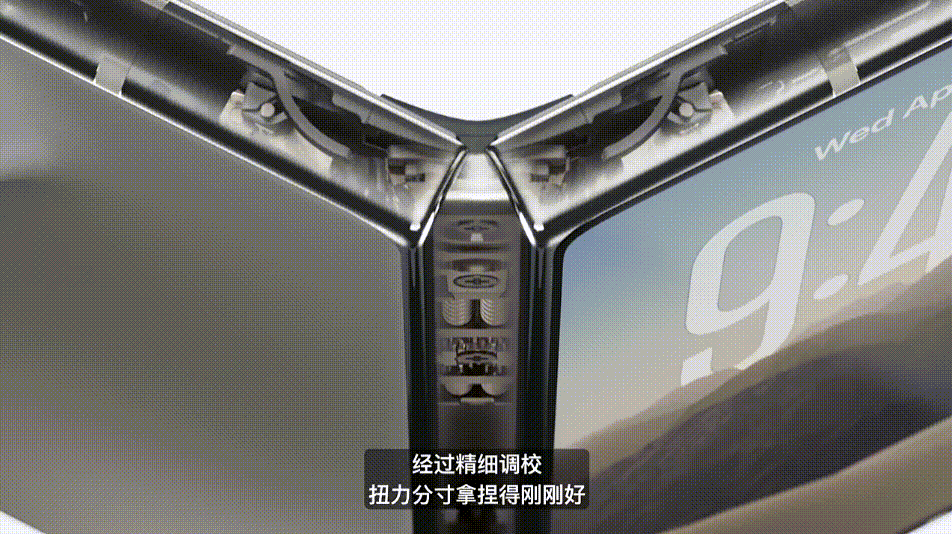
Apple hinge component detail, image source: Apple
MIM can form complex shapes in one shot, but sintering shrinks the part by 15%–18%, and thin-walled asymmetric structures deform easily. Volume production relies on a combined process of “17-4PH MIM + sintering sizing + localized CNC finishing + age hardening + surface polishing.” These hinges are structurally complex and contain many micro precision parts (such as cams, synchronous pinions, linkages, locking parts, swing arms, and pins), with MIM parts accounting for a very high share (up to 60–70%, or roughly 30–70 pieces) to achieve integrated forming of complex 3D structures.
The hinge is worth RMB 600–1,200 (≈ US$89–178) per unit, with far higher process barriers than ordinary CNC structural parts. Apple's hinge yield is reportedly only 65%, far below the 85% target line — which is why mass production was pushed from June to August.
Precision Structural Parts: The Thinner the Phone, the Harder the Parts
The midframe thickness is squeezed from 0.5 mm down to 0.3 mm, and of 200 CNC-machined samples only 110 pass. Thin walls, complex curved surfaces, tiny holes and slots, and high-precision mating surfaces appear densely across midframes, support plates, hinge covers, and internal brackets. Materials run from aluminum alloy and stainless steel to titanium alloy and MIM metal parts — increasingly mixed.
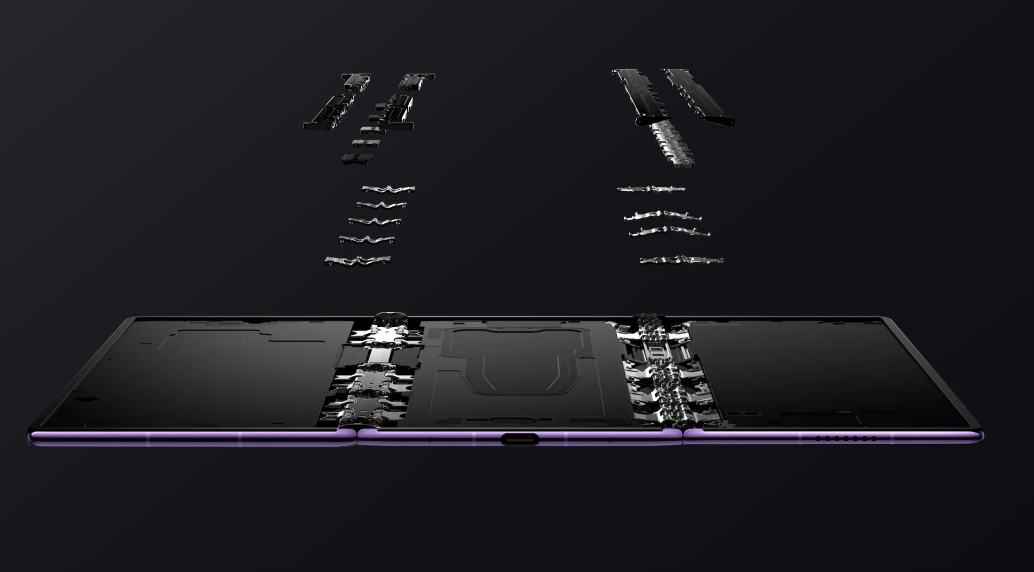
Huawei Mate XT 2 hinge component teardown rendering, image source: Huawei
Titanium alloy has poor thermal conductivity, tends to stick to tools, and thin-walled parts easily deflect the tool. Liquid metal (zirconium-based amorphous alloy) is 2.5 times stronger than titanium alloy, but its forming yield is reportedly only 65%.
From hinge to structural parts, the foldable adds an entire set of manufacturing steps that are more sensitive to precision, materials, machining, and inspection.
The Thinner the UTG, the Smaller the Margin for Error
UTG ultra-thin flexible glass is made thinner than 30 μm. The raw sheet (US$18–23) must go through chemical thinning, cutting and polishing, chemical strengthening, and coating, then be laminated with a support plate and functional films (US$27–33). Thickness consistency, flatness, edge strength, micro-cracks, and surface scratches — every indicator pushes the limit. Domestic makers are generally stuck at two checkpoints: edge treatment and integrated component lamination.

Xiaomi UTG glass design rendering, image source: Xiaomi official website
What the foldable really tests is not whether the material can “fold,” but whether every part can stay consistent in high-volume production.
As the Supply Chain Intensifies, the Foundation Is Still Manufacturing
Once foldables enter scale competition, the contest is no longer about design capability but about turning complex designs into stable volume production. The launch event shows the first unit; the supply chain faces the hundred-thousandth. The former tests R&D, the latter tests manufacturing.
Machining: Get It Made First
CNC machining centers, high-speed drilling & tapping centers, and precision machine tools are being pushed toward higher precision requirements — and the first capability put to the test is mold making.
The micro gears, irregular slots, and complex curved surfaces in hinges rely heavily on precision EDM (electrical discharge machining). The upgraded SG8M EDM machine that Mitsubishi Electric showcased at ITES 2026 targets exactly this need. Its Maisart intelligent system automatically optimizes machining parameters and corner-accuracy control, turning the experience-dependent discharge process into an algorithm-driven one — greatly improving machining consistency for deep narrow slots and irregular structures in hinges.
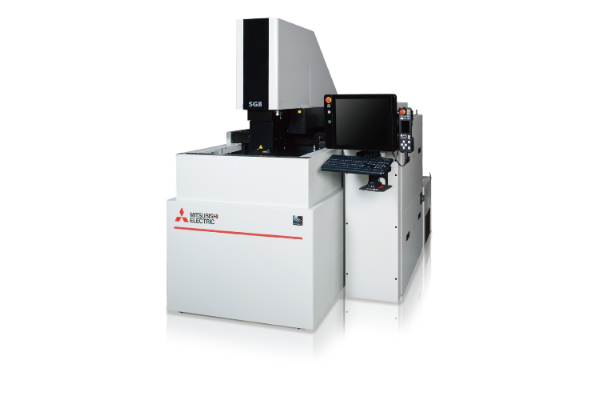
Image source: Mitsubishi Electric
Sodick's ALN400Gs machining center uses direct linear-motor drive to eliminate mechanical transmission backlash, delivering sub-micron contour accuracy for molds of hinge core transmission parts. The LP20EH4 micro precision injection molding machine, meanwhile, showcases stable batch replication of small gears and spacers, ensuring mold details translate into millions of standardized parts.
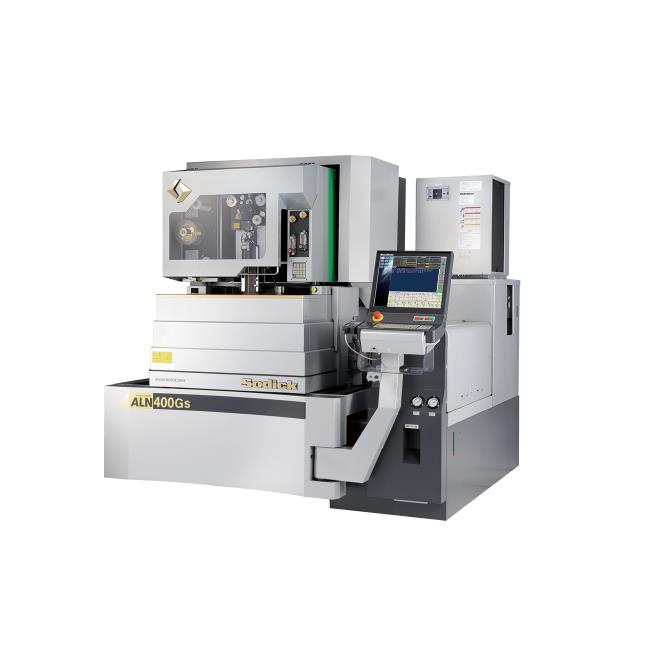
Image source: Sodick
At the same time, metal structural parts such as hinge bodies, midframes, and support plates are pushing CNC equipment toward higher precision and higher efficiency.
Makino's high-precision machining centers have long been used in consumer-electronics precision manufacturing. Its F-series and V-series machines offer high rigidity and micron-level machining, meeting the dimensional-accuracy and surface-quality demands of complex structural parts such as foldable hinges and midframes. Take the V300 vertical machining center as an example: through excellent thermal control it sustains stable high-precision machining over long runs, holding machined-surface height difference within ±1.5 μm and deformation within 2 μm in the X/Y/Z axes. Its proprietary GI smoothing function automatically adjusts the machined surface by machining mode for a smooth finish.
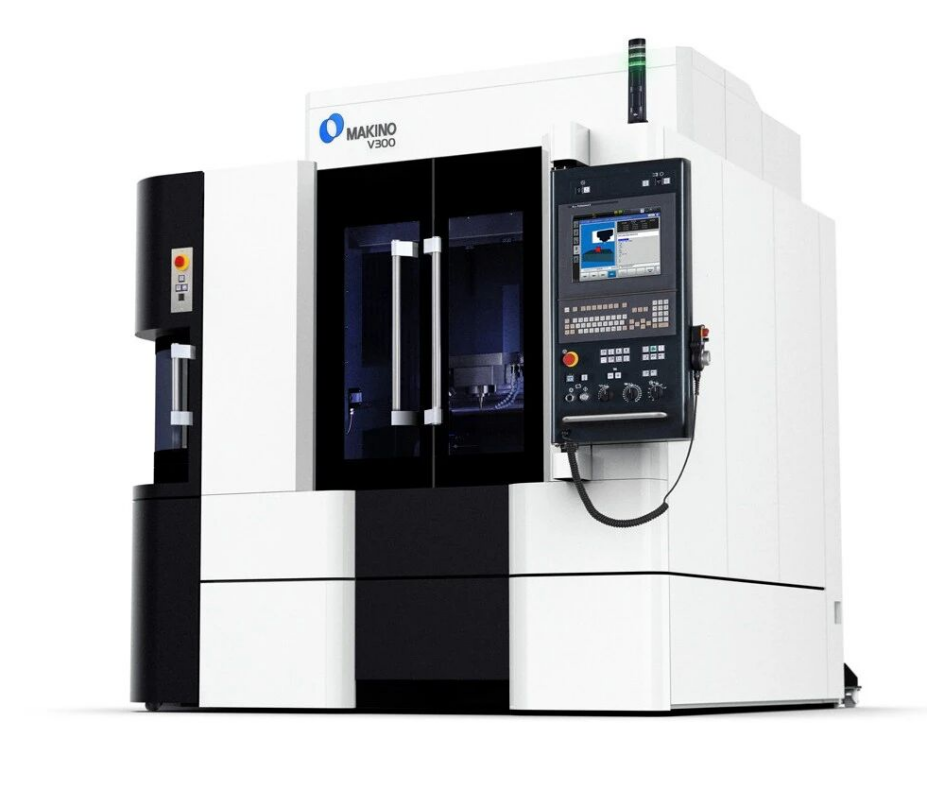
V300 vertical machining center, image source: Makino China
Chinese companies are also taking on this wave of demand. Create Century, the domestic leader in drilling & tapping machines, makes machines that can directly machine metal structural parts such as tri-fold midframes and hinges — tri-fold midframes are thinner and longer, with higher machining complexity and longer machining time. Create Century's drilling & tapping machines have reached their seventh generation, with tool magazine capacity raised from 14 to 30/40 tools. Its flagship T-500Ultra drilling & tapping center mainly serves parts in the 3C and consumer-electronics industries that demand high surface finish.
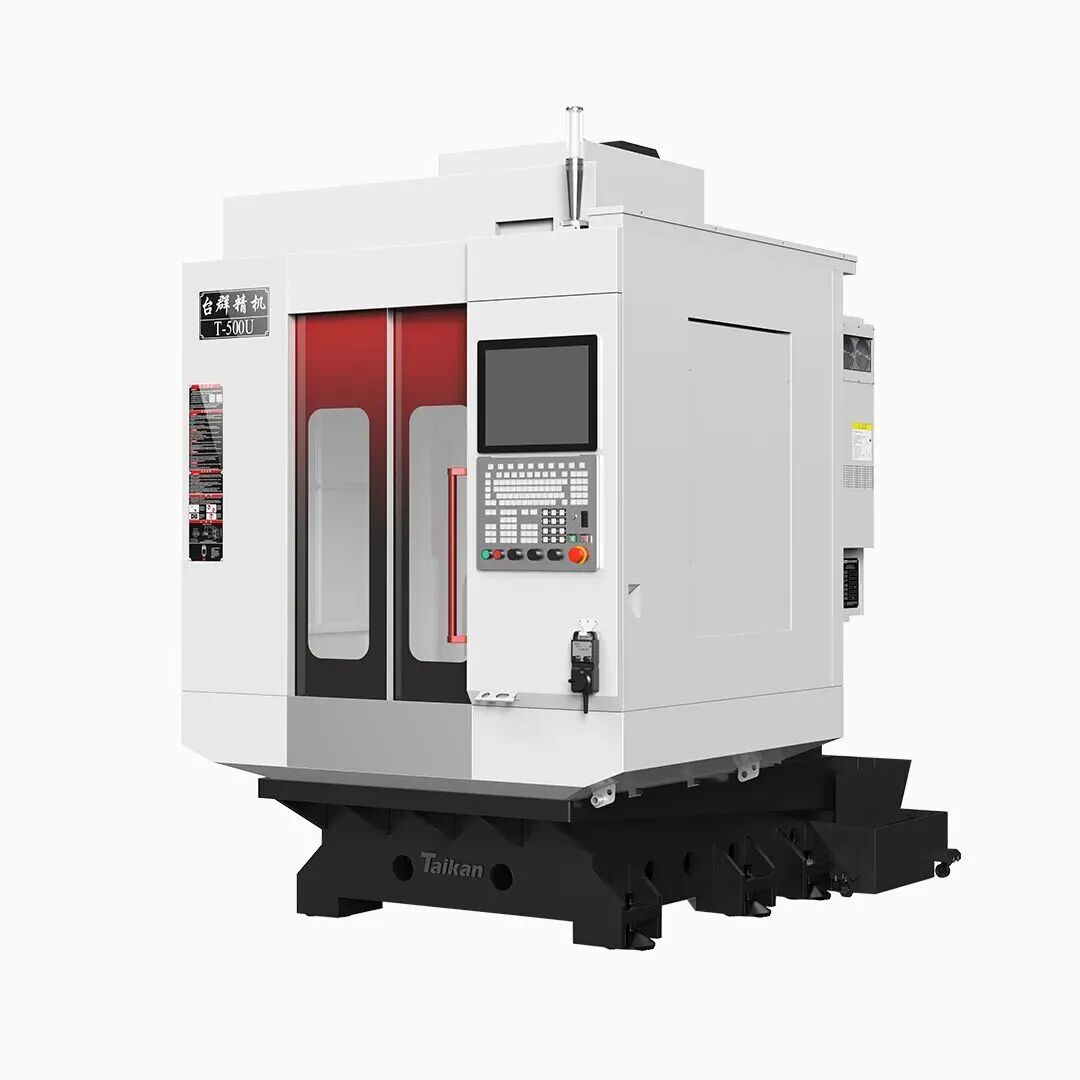
Image source: Create Century
Jirfine Intelligent Equipment's newly upgraded T-5F high-speed drilling & milling center adopts a new composite material, achieving a leap in vibration resistance and thermal stability. The composite's excellent damping greatly reduces machining vibration and significantly improves yield and productivity, while effectively controlling geometric errors caused by temperature change to safeguard accuracy. Tool-to-tool change takes just 1.26 seconds, greatly boosting changeover efficiency — ideal for phone midframe machining.
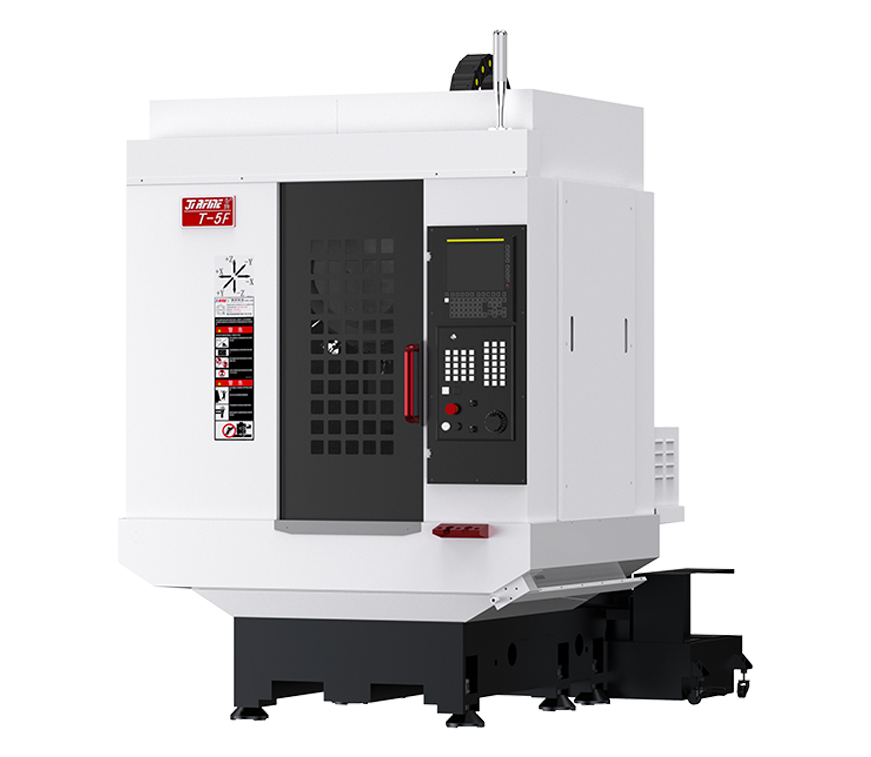
Image source: Jirfine Intelligent Equipment
At ITES 2026, Gree Electric Appliances introduced the GA-VT640P drilling & tapping center for the 3C industry, built around “high precision and high efficiency.” It can machine phone midframes, frames, and housings, with repeat positioning accuracy of 0.006 mm. By optimizing the machine-body support structure to boost overall rigidity, it can stably perform mirror-finish milling and micro machining, precisely form thin-walled parts and complex contours, and safeguard mirror-level surface accuracy.
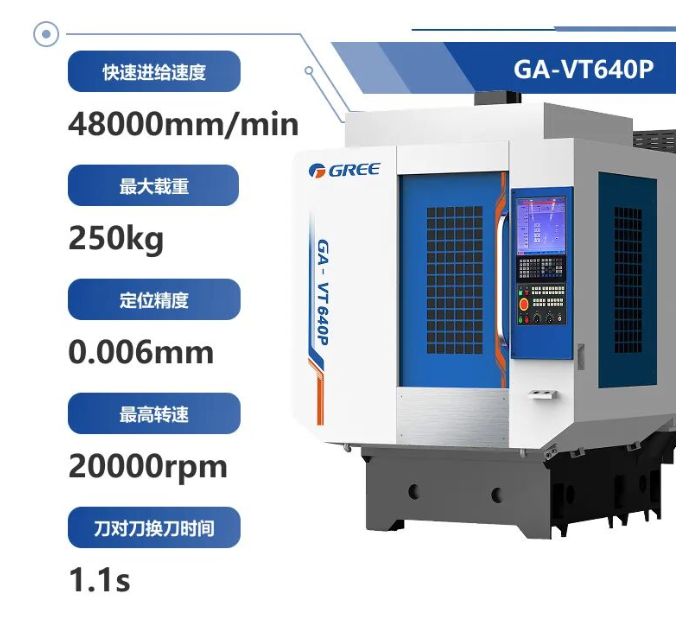
Image source: Gree Electric Appliances
In addition, Hanqi CNC, LK Group, Shixinghong, Litz Hitech, and others have also launched high-speed drilling & tapping equipment for phone structural parts, improving batch machining of thin-walled and high-gloss parts. From hinge molds to metal structural parts, from single-piece machining to million-unit replication, foldables are pushing phone manufacturing into ever higher-precision equipment competition.
Cutting Tools: Machining With Stability
The machine tool determines whether you can machine at all; the cutting tool determines whether you can machine stably, efficiently, and profitably.
Foldables need large quantities of micro-diameter tools, deep-slot tools, and thin-wall specialty tools. Conventional CNC end mills go down to 0.5 mm; machining 0.3 mm thin walls requires special tools that cost at least 5× the price of conventional ones. In titanium machining, tools wear quickly and the parameter window is narrow — the cutting edge is the make-or-break point.
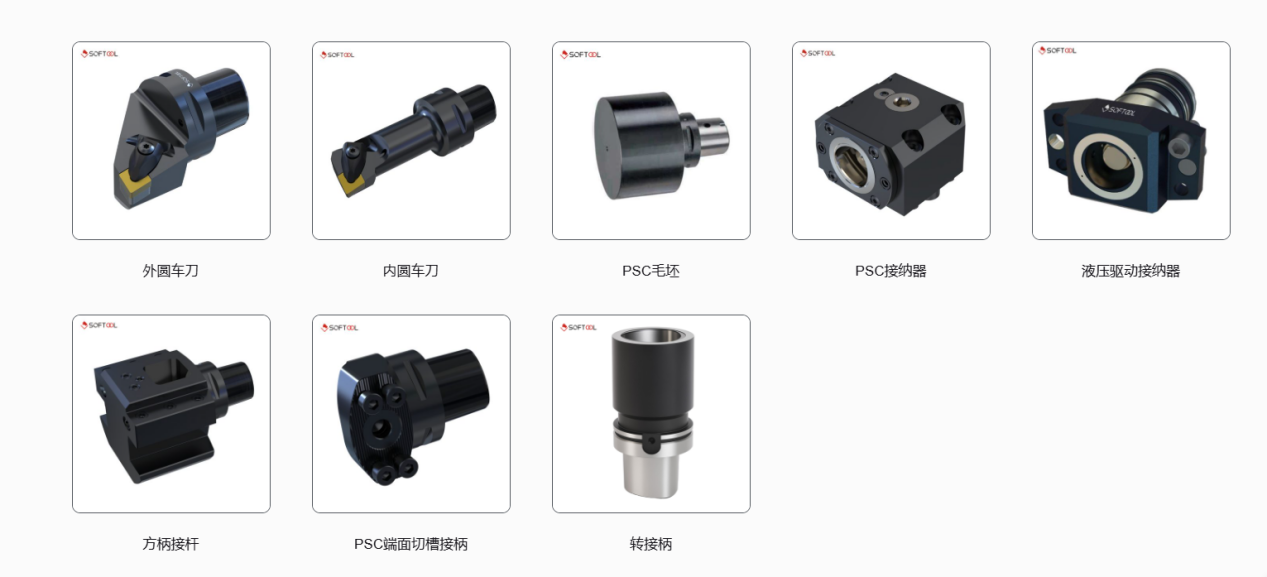
Bestool's PSC tool system supports PSC32–PSC100 interfaces and covers turning tools, boring tools, milling cutters, drill rods, and more, suited to precision machining of 3C electronic products. With repeat positioning accuracy of 0.002 mm, it enables fast tool changes, less downtime, and higher productivity, meeting the demanding accuracy and stability requirements of 3C electronics machining.
PSC tool products, image source: Bestool official website
Manufacturers such as NS, YG, and Fulandi have launched dedicated tools for the evolving materials and processes of 3C machining. As materials get tougher, tolerances tighter, and batches larger, the old habit of changing tools by feel gradually falls short.
Inspection: Proving Every Part Is the Same
Machining solves “manufacturing capability”; inspection solves “production credibility.” A flaw in one part won't affect a prototype, but at million-unit scale, tiny defects become a large-scale quality risk.
Structural parts must be checked for dimensions, contour, hole positions, flatness, and assembly clearance; glass and displays must be checked for scratches, micro-cracks, foreign matter, and surface defects; and full-device assembly must also ensure left-right alignment and consistent folding.
Consumer electronics used to rely on manual sampling inspection. Faced with increasingly complex structures and ever-higher yield requirements, automated vision inspection and high-precision measurement are becoming core supply-chain capabilities.
The ZEISS SPECTRUM CMM features the new SoftTouch measuring mode, built specifically for tiny, sensitive electronic components. Soft-touch scanning combines extremely low probing force with high-speed detection to avoid workpiece deformation. It supports flexible switching between scanning and single-point measurement, with one probe combination adapting to multiple workpiece types, and optimized probing algorithms that significantly shorten measurement cycles and boost production-line quality control.

Image source: ZEISS
Hexagon's new Auro AI four-in-one fully automated rapid measurement platform integrates multiple sensors for multi-function capability in one machine, with flexible selection according to measurement needs for 2D and 3D full-dimension inspection. With AI intelligent edge-finding and linear fly-scan technology, it achieves millisecond-level high-speed acquisition and improves measurement efficiency by more than 50%, suited to dimension inspection of electronic components (phone midframes, foldable hinge parts, etc.).
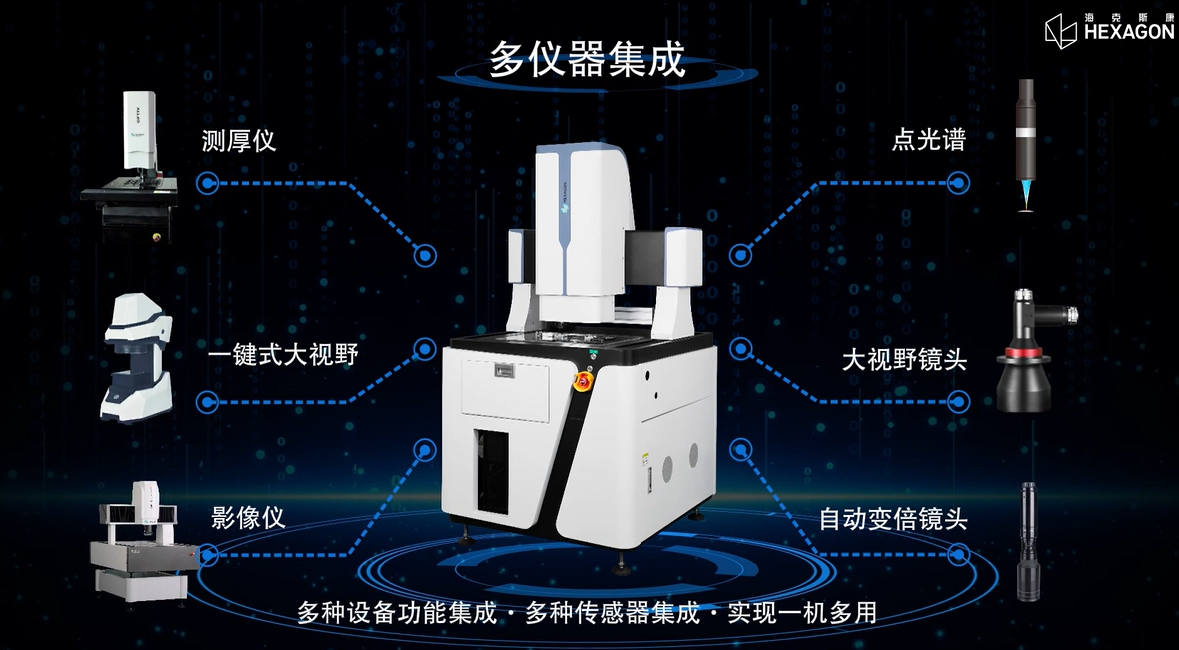
Image source: Hexagon
TZTEK's CMZ CMM (accuracy 0.5 μm) pairs with its self-developed HSP scanning probe and TCC integrated drive system; the VMZ vision measuring machine offers 0.8 μm accuracy, and its self-developed software takes less than 1 second per focusing cycle, cutting focusing time by 50% — both greatly improving measurement efficiency.

Image source: TZTEK
Behind a foldable phone lies a complete manufacturing chain spanning materials, machining, cutting tools, and inspection. Phone makers compete on “how to fold” at launch events; the supply chain solves “how to build” on the factory floor.
This is also why ITES keeps a close eye on precision manufacturing. From March 24 to 27, 2027, ITES 2027 — the 28th edition — will be held at the Shenzhen World Exhibition & Convention Center (Bao'an), centering on high-end equipment, precision manufacturing, and industrial embodied-intelligence applications, bringing the machining, component, automation, and inspection needs behind 3C electronics to the show floor.
In the foldable battle, the deciding move is not on the launch stage but on the factory floor.