 Countdown166days
2027.3.24-3.27 Shenzhen World Exhibition & Convention Center
Countdown166days
2027.3.24-3.27 Shenzhen World Exhibition & Convention CenterTrends Driving the Robotics & Automation Expo in 2026
【Introduction】 Trends Driving the Robotics & Automation Expo in 2026
A clear movement is reshaping manufacturing floors across South China and beyond. This shift centers on the need for heightened precision, adaptable production lines, and integrated systems, directly influencing what professionals seek from industry gatherings. The upcoming robotics and automation exhibition 2026 represents a direct response to these industrial currents. At ITES China, we see our role as facilitating the critical connection between these complex demands and the advanced solutions that meet them. This article outlines the core trends that will define the next robotics & automation expo, focusing on the exhibition's structure, its key exhibits, and the specialized exhibitors driving progress.
The Exhibition as a Strategic Response to Regional Manufacturing Needs
The format and focus of a major robotics & automation expo are never arbitrary; they mirror the pressing requirements of the industry it serves. For the 2026 event, this is profoundly evident in its dedicated attention to precision component production. Industries such as automotive, new energy, semiconductors, and medical devices operate with exceptionally low tolerances. Their demand for automation that ensures consistency and quality in processes like assembly, polishing, cleaning, and testing is a primary driver. Consequently, the robotics and automation exhibition 2026 is designed to move beyond displaying isolated machines. It will instead demonstrate connected ecosystems of technology. This approach allows visitors at ITES China to evaluate solutions that cover the entire sequence from material handling and storage through to final inspection, providing a complete view of modern automated lines.
Exhibits Centered on Integrated Process Solutions
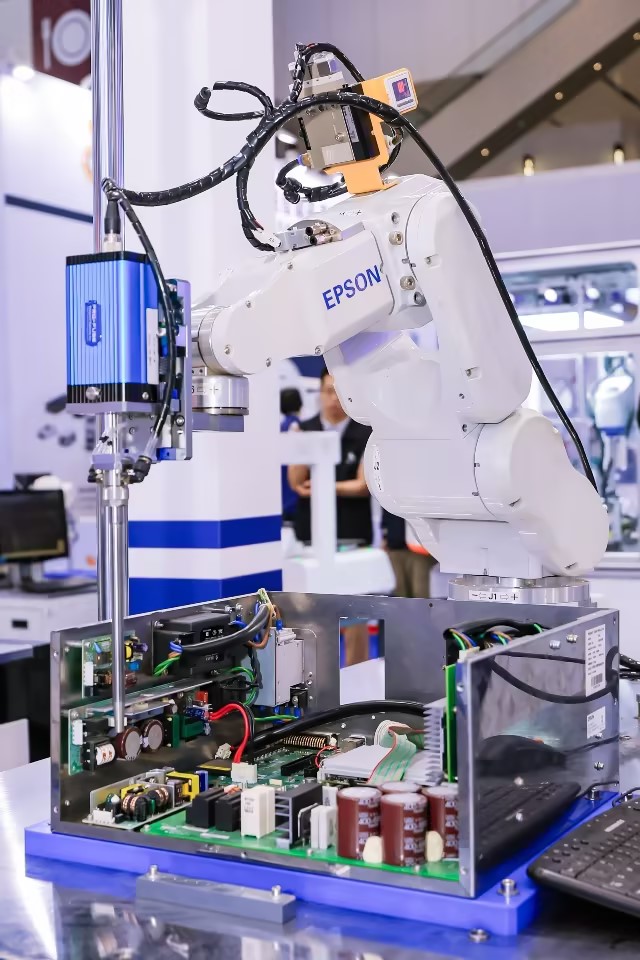
When walking the floor of the Robotics & Automation Expo, the narrative will shift from showcasing standalone robots to presenting integrated process solutions. The core exhibits will logically cluster around the complete workflow for precision manufacturing. Visitors will encounter specialized end-effectors designed for delicate assembly tasks alongside robust robots capable of precise material feeding and handling. A significant focus will be on automated equipment dedicated to finishing processes like grinding and polishing, where consistency is paramount. Furthermore, advanced sensing and machine vision for automated testing will be a prevalent theme, representing the critical quality assurance step in automated lines. This curated exhibit layout at the robotics and automation exhibition 2026 makes it possible for manufacturing engineers to source compatible technologies for different stages of their production process in one location, a key advantage of attending ITES China.
Exhibitors Driving Customization for Specific Application Clusters
The character of the robotics & automation expo is fundamentally defined by its participants. The exhibitors at the 2026 iteration are increasingly oriented toward providing professional, customized solutions rather than offering only standard catalog products. This trend is a direct result of the diverse production scenarios found within South China's dense manufacturing clusters. A solution for a semiconductor cleanroom differs substantially from one for automotive battery module assembly. Exhibitors at ITES China will therefore demonstrate a deep application understanding. Their expertise allows them to tailor combinations of end effectors, robots, and auxiliary automated equipment to address unique challenges in specific industries. This focus on customization transforms the robotics and automation exhibition 2026 from a simple trade show into a forum for solving applied engineering challenges, where the dialogue between exhibitor and visitor is centered on specific technical parameters and operational outcomes.
The evolving demands of high-precision manufacturing are setting a clear agenda for the industry's premier events. The robotics & automation expo in 2026 will reflect this by emphasizing integrated systems over isolated components, a format that mirrors real-world production lines. For professionals involved in specifying and implementing automation, the value lies in witnessing these interconnected solutions and engaging with exhibitors capable of translating them into reliable, custom applications. This is the practical environment ITES China is committed to fostering—one where the direct exchange of specialized knowledge accelerates the adoption of robust automation, directly supporting the sophisticated manufacturing landscape that defines the region.