 Countdown166days
2027.3.24-3.27 Shenzhen World Exhibition & Convention Center
Countdown166days
2027.3.24-3.27 Shenzhen World Exhibition & Convention CenterHorizontal vs. Vertical Machining Centers: Differences Explained
【Introduction】 Horizontal vs. Vertical Machining Centers: Differences Explained
A common question we encounter from manufacturing professionals involves the fundamental choice between two core types of equipment. Selecting the appropriate machining center is a critical decision that impacts production capability, efficiency, and cost. At ITES China, we see how this choice defines many manufacturing strategies. This article will clarify the distinctions between a China vertical machining center and a China horizontal machining center, providing a clear framework for evaluation.
Overview of Vertical Machining Centers
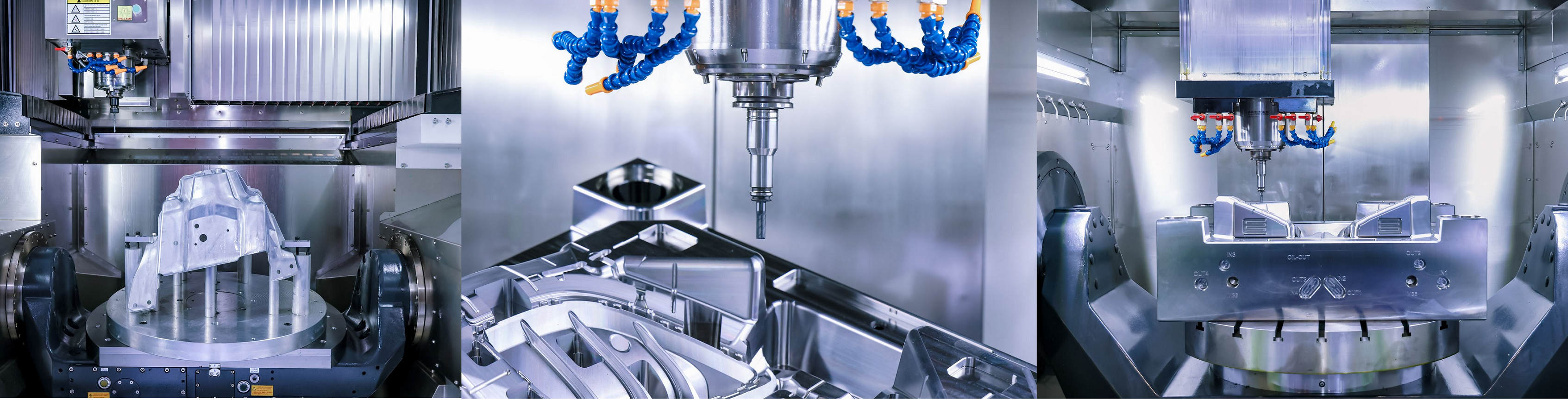
The China vertical machining center (VMC) is characterized by a vertically oriented spindle. This design means the cutting tool points downward from above the workpiece, which is typically mounted on a table that moves in the X and Y axes. The configuration of a China vertical machining center offers several inherent advantages. It provides excellent visibility of the machining process for the operator, simplifying setup and monitoring. The structure often allows for a more straightforward and cost-effective foundation, making VMCs highly accessible for a wide range of workshops. Their primary strength lies in machining flat surfaces, pockets, slots, and dies, where the top-down approach is most effective. For operations focused on a single face of a part or smaller batch sizes requiring frequent setup changes, the China vertical machining center remains a prevalent and reliable solution.
Overview of Horizontal Machining Centers
In contrast, the China horizontal machining center (HMC) features a horizontally oriented spindle. The workpiece is mounted on a pallet or fixture, and the spindle approaches from the side. This fundamental structural difference defines the China horizontal machining center's capabilities. A key feature of many HMCs is the integrated rotary pallet system, which allows for automatic indexing of the workpiece. This enables machining on multiple sides of a part in a single setup. The horizontal orientation naturally aids in chip evacuation, as chips fall away from the workpiece and tool by gravity, which is particularly beneficial during long or heavy cutting operations. The China horizontal machining center is engineered for sustained, high-volume production of parts that require complex, multi-face machining, such as gearboxes, housings, and engine blocks.
Key Differences: Structure, Applications, Precision, Efficiency
The divergence between these two types of equipment extends beyond spindle orientation. Structurally, the China vertical machining center is often seen as a more direct solution for prismatic parts, while the China horizontal machining center is built with a focus on envelope utilization and multi-sided access. In terms of application, VMCs are frequently employed for mold making, plate work, and prototype development. HMCs dominate in sectors requiring complex part families and box-like components produced in larger volumes. Regarding precision and efficiency, both can achieve high accuracy, but the China horizontal machining center often provides greater overall equipment effectiveness (OEE) for suitable parts due to reduced setup time from pallet changers and fewer required operations. The efficiency of a China vertical machining center, however, can be superior for simpler parts or lower volumes where its faster setup and lower initial investment are decisive factors.
Exhibitors at ITES 2026
For professionals tasked with this important equipment decision, theoretical comparison must be supplemented with practical evaluation. This is where the ITES China exhibition provides definitive value. The event will host a comprehensive array of domestic and international manufacturers showcasing both China vertical machining center and China horizontal machining center models. At ITES China, attendees can directly compare the structural build, control systems, and work envelopes of numerous machines side-by-side. Engineers can discuss specific application scenarios with technical experts from each exhibitor, gaining insights into which platform—vertical or horizontal—best aligns with their specific part geometries, tolerances, and production volumes. Seeing these machines under power, with opportunities to review finished sample parts, transforms a technical specification into a tangible understanding of capability.
The choice between a vertical and horizontal platform shapes a production floor's potential. Each type of China vertical machining center or China horizontal machining center serves a distinct and vital role in modern manufacturing. Engaging with the breadth of technology available at ITES China allows decision-makers to move beyond catalog specifications. We offer a direct, hands-on environment to assess which machining center philosophy delivers the required precision, flexibility, and throughput for their operational future, ensuring the capital investment directly addresses long-term production goals.