 Countdown166days
2027.3.24-3.27 Shenzhen World Exhibition & Convention Center
Countdown166days
2027.3.24-3.27 Shenzhen World Exhibition & Convention CenterWhat Are the Common Types of Machining Centers?
【Introduction】 What Are the Common Types of Machining Centers?
In manufacturing, the selection of a machining center is a fundamental technical decision that influences production capability, precision, and long-term operational efficiency. A machining center, fundamentally a computerized numerical control (CNC) machine with an automatic tool changer, is engineered for high-precision, high-stability, and high-efficiency machining of complex components. We observe that their primary application revolves around producing irregular-shaped parts, housing-type components, shafts, and plates where contour complexity and tight tolerances are required. This category of equipment forms a core part of the advanced manufacturing technology displayed at the ITES China exhibition.
Overview of Each Primary Machining Center Type
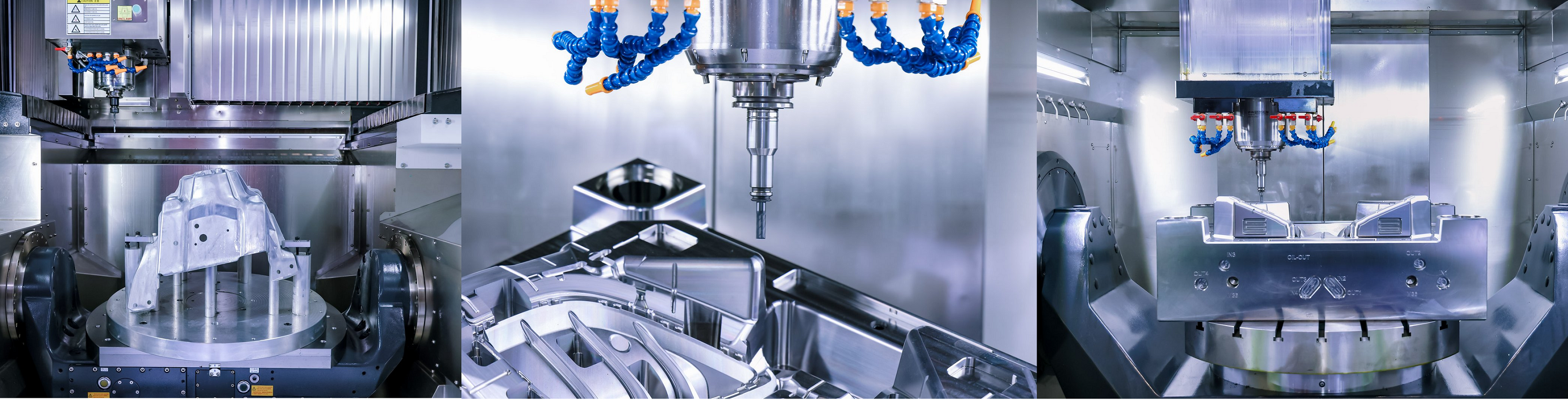
Four principal categories of machining centers address distinct production scenarios. The vertical machining center (VMC) features a vertically oriented spindle, making it suitable for machining the top faces of parts. It is often applied to plate-type workpieces and offers a relatively accessible work envelope. In contrast, the horizontal machining center (HMC) has a horizontally oriented spindle. This design allows chips to fall away more easily and is particularly effective for machining multiple sides of a box-shaped or housing-type component in a single setup, enhancing throughput for batch production.
For complex geometries, the 5-axis machining center provides two rotational axes in addition to the three linear movements. This capability allows the cutting tool to approach the workpiece from nearly any direction, enabling the machining of intricate contours, undercuts, and angled features in a single clamping. This reduces setup time and improves accuracy for aerospace, medical, and automotive parts. The gantry machining center, characterized by a bridge-like structure, offers exceptional stability and a large worktable for machining very large or heavy components, such as molds, frames, and structural parts, where rigidity and travel are critical parameters.
How to Choose the Right Machining Center for Your Workshop
Selecting the appropriate China CNC machining center involves a systematic assessment of your production requirements. The first consideration is the geometry and material of your primary workpieces. Complex, multi-sided parts may necessitate a horizontal or 5-axis model, while larger, flatter components could be served by a vertical or gantry type. The required precision level and surface finish directly inform the needed machine rigidity, spindle quality, and control system sophistication. Production volume is another key factor; high-volume scenarios benefit from the faster cycle times and automation readiness of certain models.
Furthermore, consider the integration of the machine into your existing workflow. Compatibility with manufacturing software, potential for integration into a smart cell or flexible production line, and the availability of technical support are practical concerns. The scope of supporting technologies displayed alongside these machines at ITES China, including CNC systems, tool holders, cutting tools, fixtures, and measurement systems like CMMs, provides a holistic view of the ecosystem required for a successful implementation. Evaluating a CNC machining center China offering should extend beyond the machine itself to include the availability of these critical peripherals and local service.
Why Many Buyers Choose China Machining Center Manufacturers
The decision to source a CNC machining center China based machine is frequently driven by a balance of technical capability and value. Manufacturers have developed significant expertise in producing machines that meet stringent requirements for precision and reliability, suitable for the high-stability scenarios demanded by global precision component producers. The competitive landscape encourages continuous innovation, resulting in machines that often incorporate advanced features at accessible price points.
A primary advantage is the integrated supply chain visible at an event like ITES China. Buyers can evaluate not just the machine, but also the complementary advanced machining technologies, from cutting tools and tool presetters to rotary tables and measurement systems. This condensed access to the entire production ecosystem simplifies the procurement and integration process. Furthermore, many China CNC machining center builders offer considerable customization, allowing for modifications to suit specific workshop layouts or unique part processing needs. The concentration of this specialized industry supports a high level of after-sales service and technical training, which are critical for maintaining long-term productivity and uptime in a professional workshop environment.