 Countdown158days
2027.3.24-3.27 Shenzhen World Exhibition & Convention Center
Countdown158days
2027.3.24-3.27 Shenzhen World Exhibition & Convention CenterOvercoming Mold-Matching and Tooling Challenges in Medical Production
【Introduction】 Overcoming Mold-Matching and Tooling Challenges in Medical Production
Successful medical device production relies on repeatability measured in microns. Between a design prototype and a mass-produced, compliant component lies a critical phase: overcoming challenges in mold matching and tooling. In China medical injection molding, resolving these issues separates functional prototyping from viable commercial manufacturing. We at ITES China understand that for professionals managing production, sourcing, and quality, these technical hurdles are central to selecting competent medical injection molding services.
The Critical Hurdle of Mold Matching and Design
A common point of failure in medical production is a disconnect between mold design and the injection molding process. A mold must be more than a precise negative of the part; it must be engineered for the specific material, the thermal dynamics of the production cell, and the rigors of high-cycle manufacturing. Challenges such as uneven cooling, gate marks in critical areas, or difficulty in achieving consistent fill across complex, thin-walled geometries directly affect part quality and yield. Advanced medical injection molding services address this through integrated design for manufacturability (DFM) analysis. This process uses simulation software to predict flow, cooling, and stress before steel is cut, ensuring the mold design is inherently matched to the process parameters and material behavior.
Precision Tooling as a Foundation for Compliance
The tooling itself—the mold—is a capital investment that defines production capability. Medical-grade tooling demands exceptional craftsmanship, often utilizing high-grade steels and intricate systems for temperature control and venting. Surface finish is paramount, as microscopic imperfections can harbor bacteria or affect part release. Furthermore, tooling must be designed for maintenance and longevity to ensure consistency over hundreds of thousands of cycles. Suppliers engaged in China medical injection molding have invested significantly in precision machining, electrical discharge machining (EDM), and skilled mold polishing to build tooling that meets Class 101 or 102 standards. This focus on foundational tooling quality is what enables manufacturers to hold the tight tolerances and achieve the cosmetic finishes required for medical devices and diagnostic components.
Material Science and Process Validation
The choice of resin—whether a commodity polypropylene or a high-performance polymer—introduces another variable. Each material has unique shrinkage rates, flow characteristics, and thermal properties. A mold perfectly matched for one material may produce defective parts with another. Therefore, robust medical injection molding services involve deep material science expertise and rigorous process validation. Scientific molding techniques establish a stable, documented process window for each material and mold combination. This data-driven approach is not optional; it is a prerequisite for the traceability and validation packages required by regulatory frameworks. The integrated supply chain in this region supports this, with close links between mold makers, material suppliers, and molding specialists facilitating a cohesive development cycle.
A Dedicated Forum for Technical Solutions and Sourcing
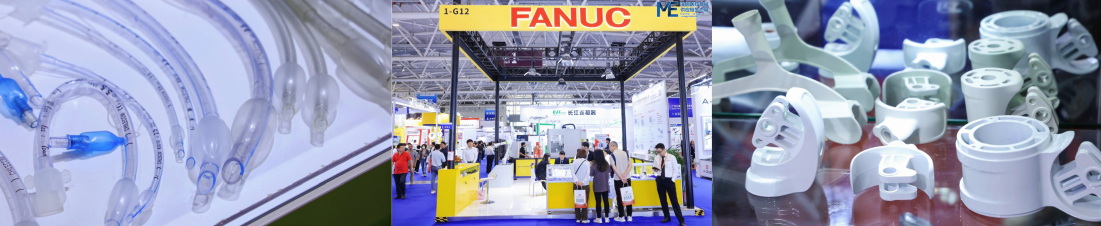
These interconnected challenges—design, tooling, material, and process—find a focused address at the ITES Shenzhen exhibition. The Injection Molding Technology Supply Chain Exhibition Zone is built to dissect these very issues. For any team facing mold-matching or tooling challenges, the zone offers a concentrated view of the solution ecosystem. Visitors can connect with exhibitors specializing in precision plastic mold design and manufacturing, evaluating their capability through completed samples and technical discussions. They can inspect the latest precision injection molding equipment and automated production lines engineered for cleanroom compatibility and validation-ready process control.
Engaging with the Full Production Chain
The scope at ITES Shenzhen extends to the complete value chain. Beyond mold and machine, the exhibition presents a range of injection molding raw materials suited for medical applications, allowing for direct comparison and supplier qualification. Exhibitors also showcase finished medical plastic products, providing tangible benchmarks for quality. This environment allows procurement and engineering professionals to move beyond simple quotations. They can assess a supplier’s technical methodology, examine the quality of their tooling craftsmanship, and discuss automation integration for assembly and packaging. For industries where component failure is not an option, this level of deep technical engagement is essential. The event provides a platform to identify partners within the China medical injection molding sector who possess the scientific approach and proven capability to transform complex designs into reliable, compliant production. We see our role as creating the venue where these precise, high-stakes connections are made.