 Countdown157days
2027.3.24-3.27 Shenzhen World Exhibition & Convention Center
Countdown157days
2027.3.24-3.27 Shenzhen World Exhibition & Convention CenterMachine Vision System Integration: What Industrial Buyers Should Know
【Introduction】 Machine Vision System Integration: What Industrial Buyers Should Know
In complex manufacturing environments, consistent product quality is non-negotiable. Machine vision system integration has moved from a niche advantage to a foundational element for achieving this in sectors like automotive, electronics, and semiconductors. Unlike a standalone camera, a true vision system is an orchestrated network of hardware and software designed to execute specific inspection, guidance, or identification tasks with high speed and reliability. For industrial buyers, navigating this field means looking beyond components to understand total solution capability. We see that China's electronics and automation ecosystem has cultivated a significant concentration of expertise in designing and deploying these integrated systems. The annual ITES China exhibition provides a focused environment to assess this capability directly.
Defining the Integrated System and Its Core Components
A functional machine vision systems integration project is built on careful planning and component synergy. It begins with defining the application's precise requirements: is the goal defect detection, precise dimensional measurement, accurate code reading, or robotic guidance? The hardware selection follows, involving cameras with appropriate resolutions and speeds, lenses optimized for the working distance and field of view, and lighting engineered to highlight features of interest. The software platform is the cornerstone, translating captured images into actionable pass/fail decisions or coordinate data. This integration layer binds everything together, ensuring stable communication with factory networks and production machinery. Effective machine vision system integration therefore hinges on this holistic design approach, where every element is specified to meet a defined production challenge.
The Supplier Landscape and Integration Advantages
The growth of vision technology application in China has fostered a mature supplier network. This ecosystem includes specialized manufacturers of core components like industrial cameras and lenses, developers of advanced vision software platforms, and, critically, a growing number of engineering firms focused solely on machine vision systems integration. These integrators possess the application-specific knowledge to tailor solutions for inspecting lithium battery electrodes, verifying semiconductor wafer markings, or guiding robots in bin-picking operations. A key advantage for buyers is the close collaboration within this supply chain, which can accelerate prototyping, reduce system costs through localized sourcing, and allow for rapid iteration based on real-world factory feedback. This environment supports the development of robust, cost-effective vision solutions.
Evaluating Solutions at the ITES China Exhibition
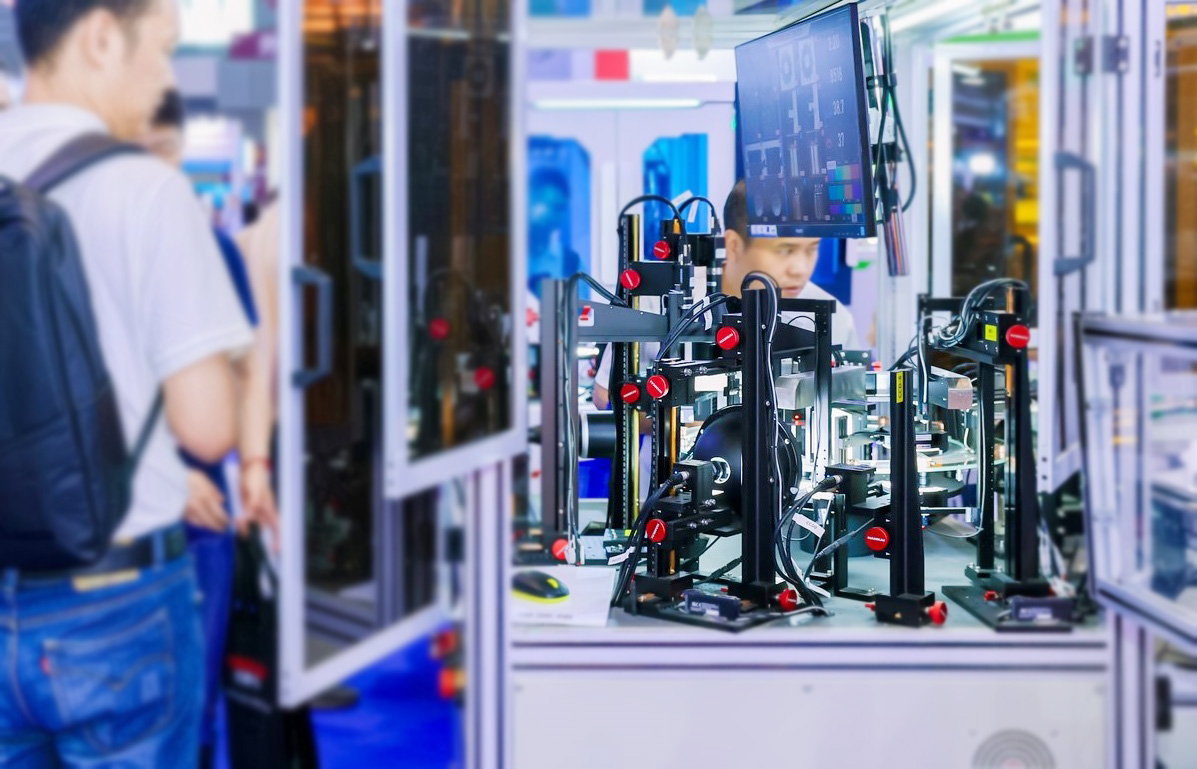
Given the technical complexity, evaluating potential systems and partners requires hands-on engagement. The Machine Vision Applications and Inspection Equipment zone at ITES China is structured to facilitate this critical evaluation. The exhibition acts as a comprehensive showcase for the entire spectrum of vision technology. Visitors can compare different classes of inspection solutions, from standard CCD vision equipment and AOI systems to advanced units incorporating AI deep learning for complex defect classification. The scope also includes critical identification technologies like high-speed code readers and OCR systems, as well as sophisticated vision guidance solutions featuring 3D cameras for robotic positioning.
For an industrial buyer, the value lies in direct comparison and demonstration. At ITES China, engineering teams can discuss specific application challenges with integrators, observe live demos of optical screening machines, and assess the interoperability of different hardware and software combinations. This concentrated access to the market allows for efficient due diligence on the capabilities and specializations of various providers of machine vision system integration. The event transforms abstract specifications into observable performance, providing a clear view of the innovation and practical solutions available to enhance production line accuracy and automation.
The decision to implement a vision system is a significant technical investment with direct implications for quality control and operational efficiency. Success depends on selecting a solution that is thoroughly integrated from the sensor to the factory floor network. The specialized supplier base that has developed offers a wide range of options, from component-level products to complete turnkey inspection cells. Making an informed selection necessitates a detailed examination of available technologies and engineering competencies. Our forum at ITES China is designed to support this process by bringing together the key players and technologies in a single, industrially focused setting. Engaging here provides a practical pathway to identify and evaluate the specific machine vision systems integration expertise needed to address unique manufacturing challenges and quality objectives.