 Countdown161days
2027.3.24-3.27 Shenzhen World Exhibition & Convention Center
Countdown161days
2027.3.24-3.27 Shenzhen World Exhibition & Convention CenterFewer Auto Parts, Yet Harder Mold Machining — Why?
【Introduction】 EV die-casting and smart headlights push molds bigger and finer. See CNC, 5-axis, EDM, CMM and CT at ITES 2027
Auto parts are becoming fewer, but molds are becoming harder to make. Die-casting pushes molds toward larger scale, headlights and optical components toward precision, and interior/exterior parts toward complex surfaces and batch consistency — changes that ultimately cascade into manufacturing equipment. From large molds testing CNC and gantry machine tools, to complex surfaces testing 5-axis machining and cutting tools, to precision verification testing coordinate measuring and industrial CT, a large precision mold now ties together a complete chain of machine tools, cutting tools, and inspection.
This September, BYD successfully trial-produced its first self-developed 9000T large die-casting mold — automotive mold machining is entering an even more demanding stage.
More worth asking than the “9,000-ton” figure is: why did BYD choose to build a mold of this scale in-house?
Look at what other automakers are doing: Tesla's rear underbody, Xiaomi's super die-casting, Zeekr's integrated aluminum rear body... The routes look different, but they are all doing the same thing: consolidating dozens of stamping and welding parts into a single unit. There are fewer manufacturing steps on the surface, yet each part demands greater size, structure, and precision. A mold used to serve a single component; today it must handle a large structural part covering nearly the entire vehicle body.
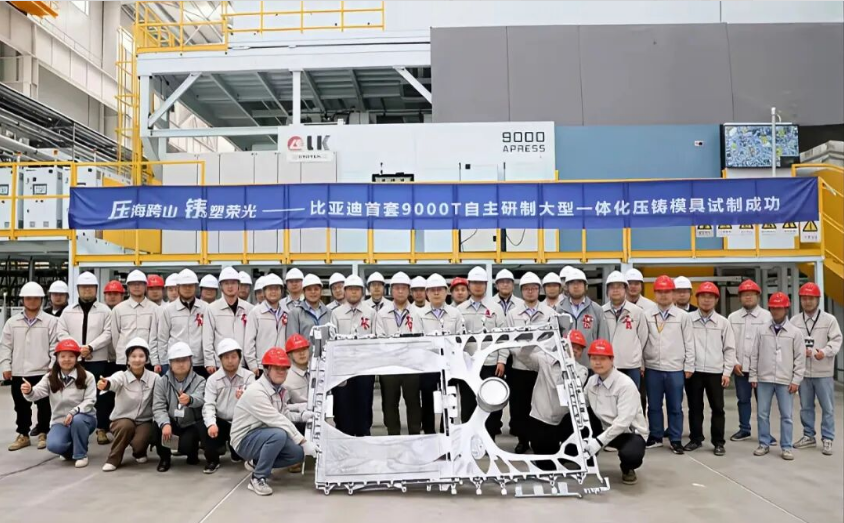
Image source / Internet
And so a telling shift emerges: auto parts are being subtracted, while molds keep gaining difficulty. What is being redefined in auto manufacturing is not just the parts, but the molds that make them. BYD's self-developed 9,000-ton mold is exactly its way of holding this new threshold in its own hands.
Fewer Parts, So Why Are Molds Harder to Make?
The change in NEV manufacturing is not simply about reducing the part count. More precisely, functions once spread across many parts and many processes are being concentrated into fewer structural components.
Die-casting makes molds bigger; intelligent headlights make cavities and surfaces finer; and large interior/exterior parts raise the bar for complex surfaces, appearance quality, and batch consistency.
Die-Casting: Getting Bigger First
This is the easiest change to observe today. In traditional body structure manufacturing, a large area typically goes through stamping, welding, and other processes, made up of multiple parts.
BYD's 9,000-ton die-casting line once consolidated 74 stamping and welding parts into a single large die-cast aluminum part; Xiaomi's 9,100-ton super die-casting highly integrates structures such as the rear floor. After adopting die-casting, the Seres AITO M9 integrated 222 parts into 10 large structural components.
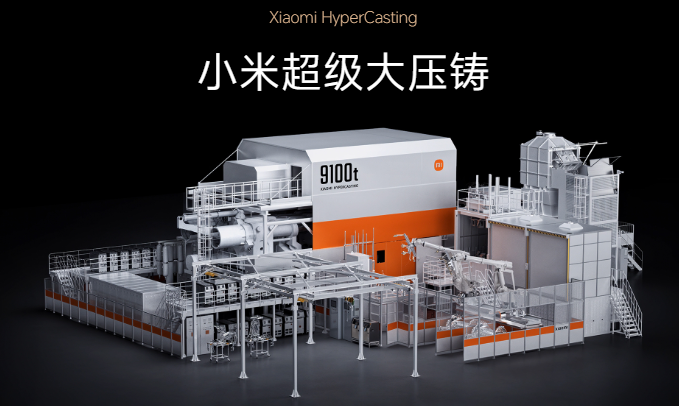
Image source / Xiaomi official website
For automakers, part count, welding points, and assembly steps can be reduced. But for mold making, things get more complex — exactly the opposite.
Molds are larger, cavity structures more complex, and molten aluminum filling, cooling, and venting all need to be rethought. Large thin-walled structures are also prone to thermal stress and uneven cooling, ultimately showing up as deformation, dimensional deviation, or even internal defects.
So the real difficulty of a large die-casting mold is not making it big, but keeping precision, rigidity, and long-term stability together as dimensions keep growing. As body structures become highly integrated, the mold is no longer just an accessory in production, but a critical manufacturing link that affects product design, trial-production cycles, and mass-production stability.
Headlights: From “Bigger” to “Finer”
If die-casting pushes molds toward larger scale, headlights push another route toward precision. NEV headlights are getting increasingly complex.
Full-width light bars, dynamic lighting, hidden lamps, and matrix light sources have turned headlights from simple lighting components into part of the vehicle's exterior and interaction design — and all of this design ultimately lands in the mold.
A complex headlight system typically involves multiple injection-molded parts such as the cover lens, light-guide structures, reflectors, and trim frames. Among them, light guides, thick-wall lenses, and reflectors demand high cavity surface quality, dimensional accuracy, and optical performance.
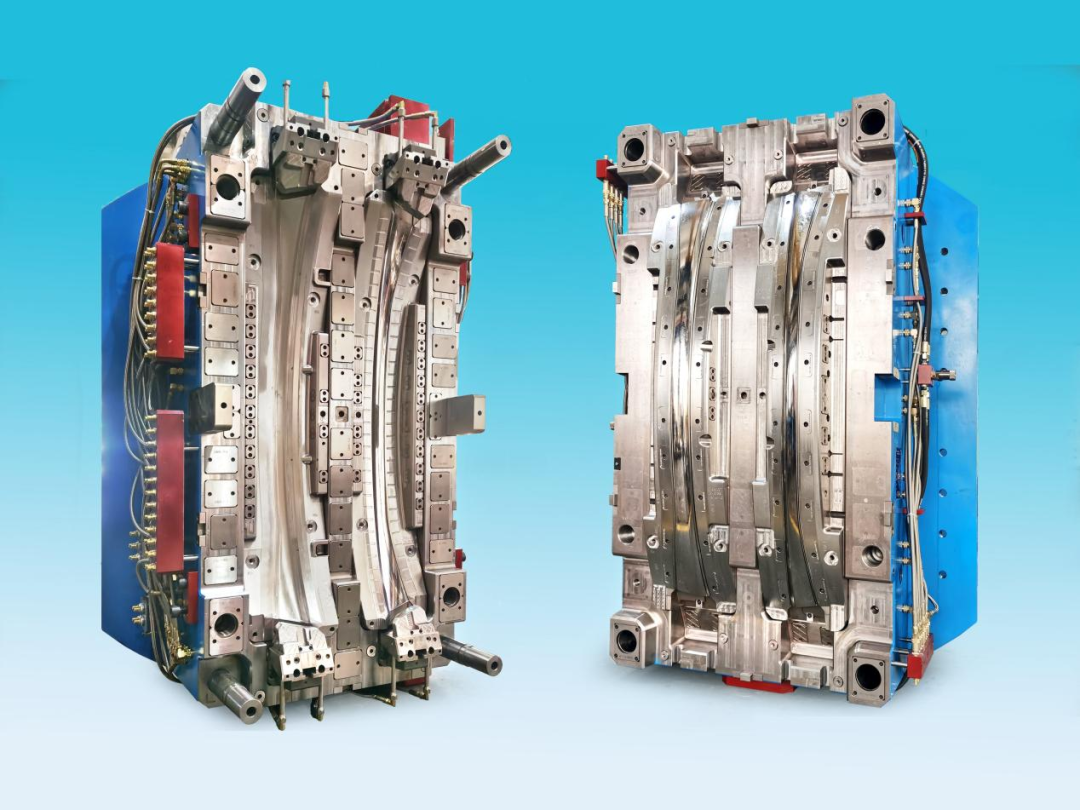
Tail lamp cover injection mold. Image source / Guangzhou Daoxin Mold & Injection Molding Co., Ltd.
Even tiny machining marks or surface deviations on the mold can turn into uneven brightness or light-shadow discontinuities in the final product after injection, light guiding, and reflection. So headlight molds are not simply about “getting dimensions right,” but about nailing complex surfaces, fine structures, and surface quality all at once.
Interiors, Exteriors & Body Panels: Complex Surfaces as a New Variable
Another change comes from vehicle appearance. Large instrument panels, door panels, bumpers, and trim pieces demand ever-higher surface continuity and appearance quality from molds. In NEV design especially, large-area surfaces, hidden structures, and cleaner exteriors are becoming common, and the parts themselves span wider curved surfaces.
Mold machining can no longer just solve local dimensional issues. Across an entire large surface, from roughing to finishing, machining paths, tool marks, surface transitions, and local deformation must all be controlled. For injection molds, surface quality further affects the appearance, assembly, and downstream surface treatment of molded parts.
At the same time, vehicle development cycles keep shrinking, so mold makers face not just “bigger” and “finer,” but also higher development efficiency.
So automotive molds are forming an increasingly clear trend: dimensions grow larger, structures more complex, precision and surface quality demands higher — while delivery cycles cannot stretch indefinitely.
Key Takeaways · Fewer Parts, So Why Are Molds Harder?
• Die-casting → larger molds: BYD 9000T, Xiaomi 9100T, Seres 222→10 structural parts
• Intelligent headlights → finer molds: light guides and thick-wall lenses demand extreme cavity and optical quality
• Interior/exterior panels → complex surfaces + surface quality + batch consistency become new metrics
As Molds Get Harder, How Does Manufacturing Equipment Keep Up?
Inspecting auto parts is, in essence, not about bolting a camera onto a machine. What the machine needs to see depends on the part's own problems — and different parts need different inspection methods.
When changes in auto parts finally land on the mold, what needs upgrading is no longer just the mold itself.
From design and machining, to cutting tools and inspection, to trial molding and correction — behind a large precision mold is actually an entire manufacturing capability.
Large Molds Test CNC Machine Tools First
The first problem from scaling up is machining space. Die-casting molds often weigh tens or even over a hundred tons, and cores keep getting larger. For equipment, the real challenge is not simply extending travel, but keeping sufficient rigidity, precision, and thermal stability after a large workpiece is clamped.
This is why more machine tool makers are launching dedicated CNC machining solutions for large NEV structural parts, with gantry machines and 5-axis machining centers becoming the workhorses.
Yamazaki Mazak's FF-1250H L large aluminum machining solution targets integrally formed large aluminum parts for NEVs. Equipped with a dual-axis tilting rotary table, it performs continuous multi-surface machining with fewer re-clamping operations, handling workpieces up to Φ1600mm × 1100mm and 650 kg.
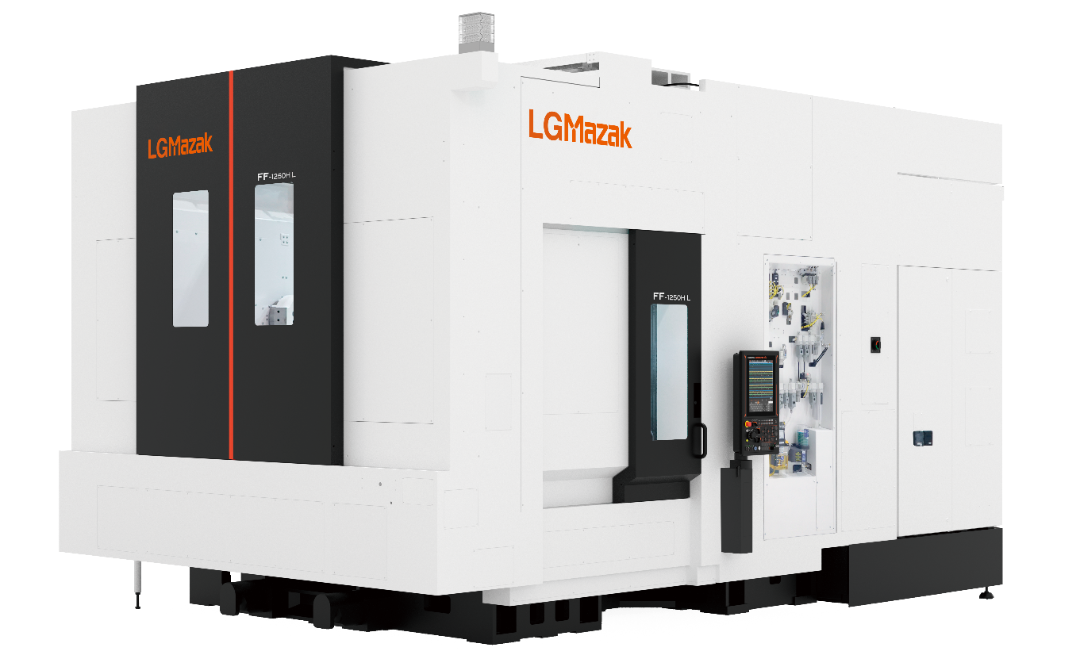
Image source / Yamazaki Mazak
These machines solve more than just “fitting a large part.” For die-cast parts and large molds, fewer clamping operations mean one less positioning error and allow complex surfaces to be machined under more continuous conditions.
Makino approaches it from another route. Its D200Z vertical 5-axis machining center targets complex 3D contour machining of injection and die-casting molds, using a 30,000 rpm spindle and 5-axis simultaneous machining for high-speed, high-precision work on complex surfaces, with the goal of reducing manual finishing.
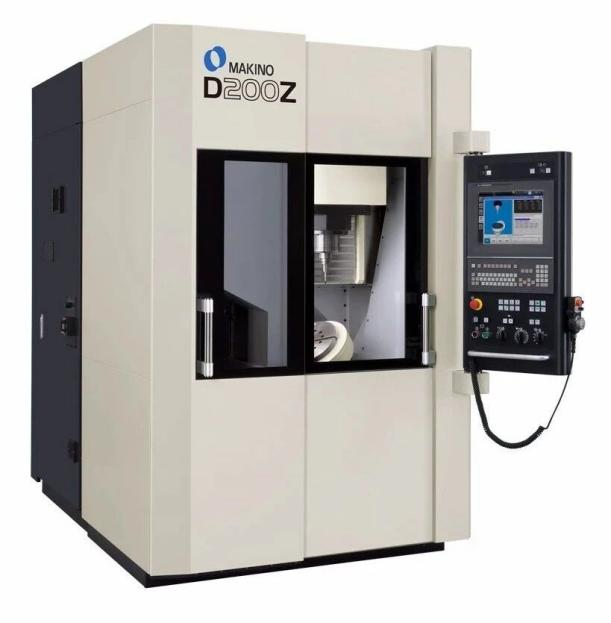
Image source / Makino China
Jingdiao Technology's JDGR300, JDGR400T, and JDGR500 5-axis high-speed machining centers handle precision machining of headlight molds and automotive light-guide molds with minimum features of R0.1–0.15 mm and stable surface roughness of Ra0.05 μm. In addition, Jingdiao's “in-machine automation” mode solves the machining challenges of leveling and alignment to eliminate clamping deviation and compensating for tool errors — tasks that previously required manual operation.
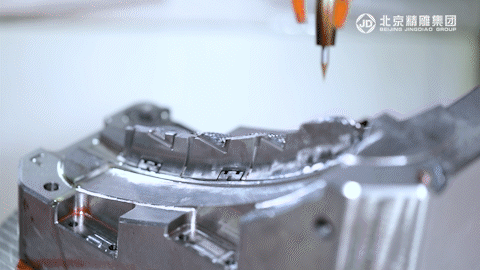
Image source / Jingdiao Technology
L.K. Group's MVD-850 vertical machining center (CNC machining center), showcased at ITES 2026, is widely used for precision machining of die-casting molds, injection molds, and rapid aluminum molds. It can directly cut hard materials, greatly reducing EDM (electrical discharge machining) steps. Tool wear is stable and controllable, cutting manual intervention and effectively ensuring first-pass success. Mold surface finish reaches Ra<0.5 μm, significantly reducing benching and polishing hours and improving efficiency. Machining accuracy is held stably within 15 μm, greatly shortening downstream mold-correction cycles.
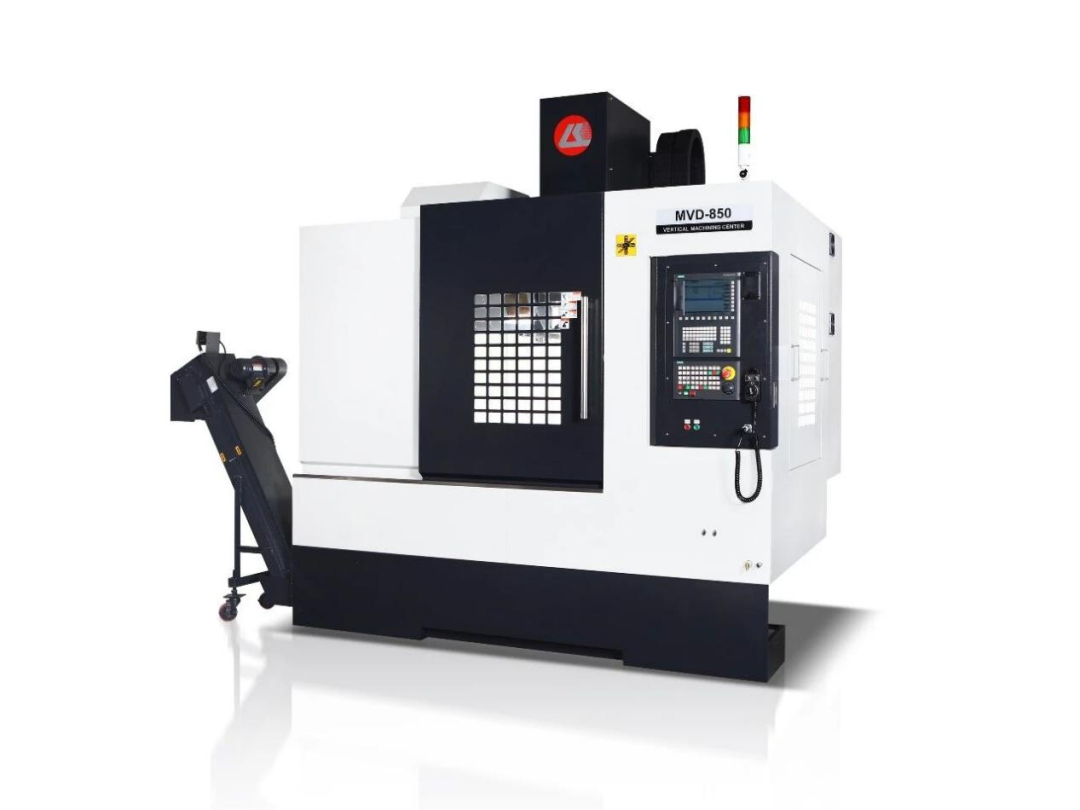
Image source / L.K. Group
The underlying shift is straightforward: as molds grow more complex, machine tools can no longer just provide a “machining platform” — they must participate in the high-precision forming of complex surfaces, with mill-turn and grinding machines each playing their part.
Complex Surfaces: How Do Cutting Tools Cope?
Machine tools provide the machining foundation, but it is the cutting tool that actually touches the workpiece.
In mold machining, most of the work concentrates on curved surfaces, narrow slots, deep cavities, and fine structures. Headlight molds, especially, must also face high-hardness mold steel and high-quality surface machining. The smaller the tool diameter, the harder it is to balance rigidity and wear resistance; the longer the tool overhang, the higher the vibration risk; and the harder the mold steel, the greater the demands on tool material, coating, and cutting-edge design.
In a published case from NS TOOL, mirror finishing of an automotive fog-lamp mold used the PCDRB ball-nose tool on 52HRC steel, completing pre-machining, roughing, semi-finishing, and finishing, with final flank surface roughness reaching Rz 1.52 μm.
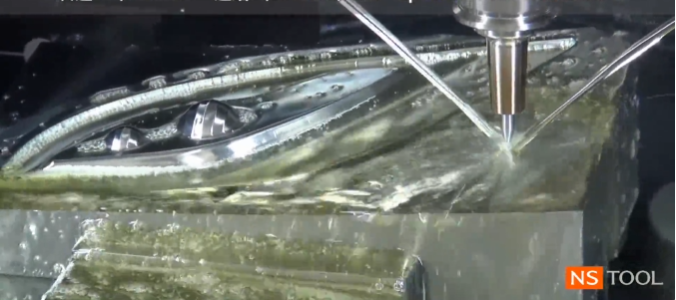
Image source / NS TOOL
Behind these products is a reality: as molds get finer, cutting tools are becoming part of mold-making capability. Especially with faster NEV model refreshes and tighter mold delivery, machining solutions that reduce EDM, polishing, and manual finishing will become increasingly valuable.
After Machining: How CMM & Industrial CT Prove Precision
Large mold manufacturing has one easily underestimated step: inspection.
The bigger the mold, the harder the inspection. After a large die-casting mold is assembled, you cannot just measure a few dimensions with a CMM and call it done. The overall mold surface, key feature positions, assembly relationships, and the actual dimensions of subsequent die-cast parts all need to be correlated.
Hexagon's collaboration with Guangzhou Guangxing Mold Manufacturing Co., Ltd. is a concrete case in point.
As NEV die-casting molds keep growing, Guangxing Mold's existing small inspection equipment could no longer meet demand. To address this, the company successively introduced Leica laser trackers, absolute arm measuring machines, structured-light scanners, and CMMs.
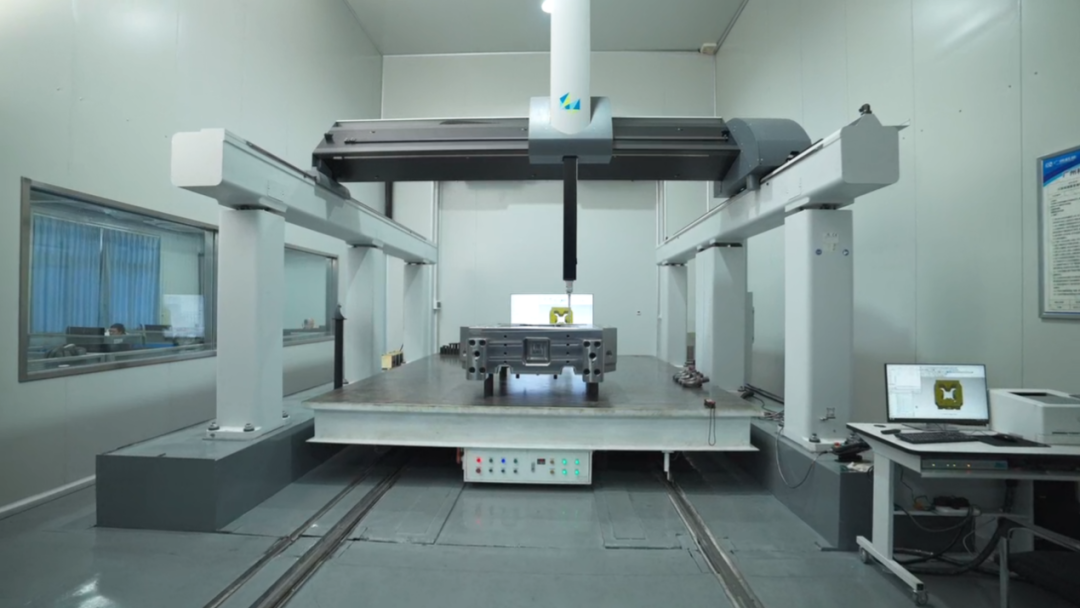
Image source / Hexagon
Among them, laser trackers can measure over large scales of tens of meters, used for inspecting large die-casting molds in final assembly; structured-light scanning performs full-field scanning of large molds, analyzing machining deviations via point-cloud data and feeding them back to the machining process.
On the other side, Zeiss's case in the Handtmann die-casting project further shows why large structural part inspection cannot focus on dimensions alone. Facing meter-scale large die-cast parts, Handtmann used optical 3D measurement, contact measurement, and X-ray inspection together: 3D scanning to judge warpage and surface dimensional deviation, coordinate measurement to confirm key dimensions and machining tolerances, and industrial CT (X-ray) to identify internal defects such as porosity and shrinkage.
This means inspection is no longer just a final “acceptance” step. The deviations measured must flow back to the machining floor. For large integrated structural parts, a local defect may no longer mean merely reworking a small part.
The more parts are integrated, the higher the per-part value and manufacturing risk. So what inspection really needs to solve is how to surface mold and part problems as early as possible — before mass production — through in-line inspection and appearance/dimensional checks.
Key Takeaways · How Manufacturing Equipment Keeps Up with Mold Upgrades
• Machine tools: Mazak FF-1250H (large parts), Makino D200Z (5-axis simultaneous), Jingdiao JDGR (precision), L.K. MVD-850 (direct hard-material cutting)
• Cutting tools: NS TOOL mirror finishing at Rz1.52 μm, reducing EDM and manual finishing
• Inspection: Hexagon laser tracker / structured light; Zeiss optical 3D + contact + industrial CT
From a Single Mold to a Complete Manufacturing Capability
Looking back at BYD's self-developed 9000T large die-casting mold, what truly deserves attention becomes clearer.
New energy vehicles have not made auto manufacturing simpler — they have just concentrated manufacturing requirements once spread across many parts and processes into fewer, larger components. Die-casting drives molds toward larger scale; headlights and optical parts drive them toward precision; interiors, exteriors, and body panels make complex surfaces, surface quality, and batch consistency more important metrics. All of these changes ultimately cascade into manufacturing equipment.
So the next round of manufacturing competition for NEV parts is no longer about whether parts can be integrated, but who can run the integrated process stably at scale. From mold design to machine tool machining, cutting tool application, and precision measurement — behind a large precision mold now stands an entire manufacturing chain.
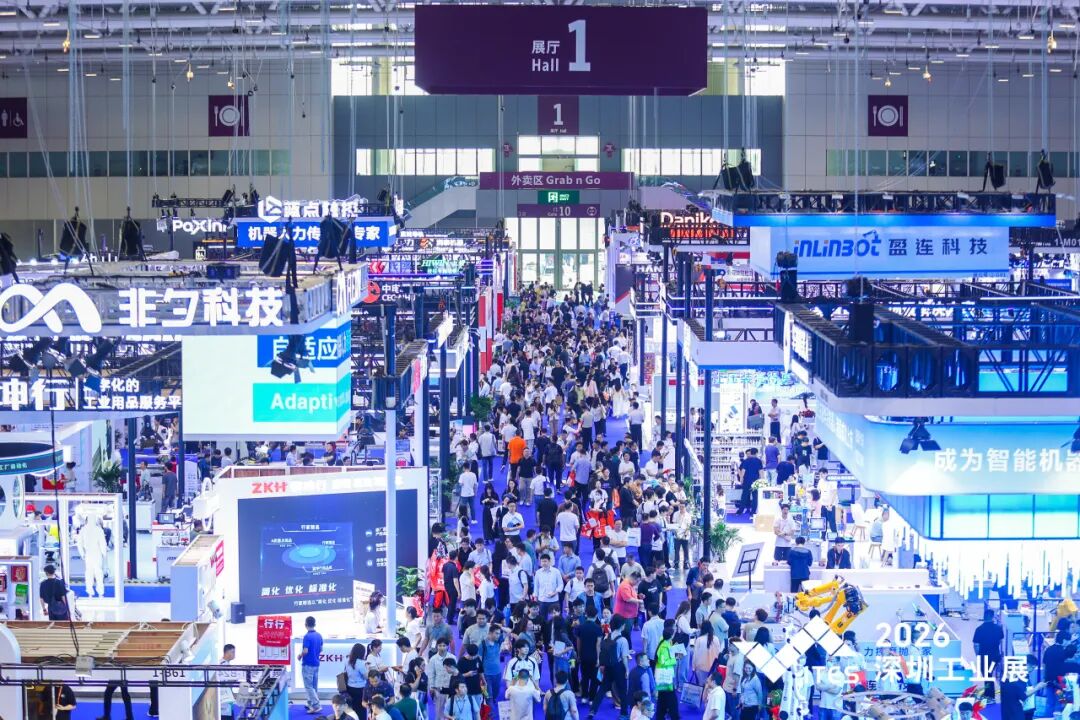
From March 24 to 27, 2027, ITES will be held at the Shenzhen World Exhibition & Convention Center (Bao'an). Around the manufacturing needs of NEV parts, technologies and companies in machine tools, cutting tools, industrial measurement, and intelligent manufacturing are moving from individual equipment and products toward complete process solutions.
Auto parts can keep getting fewer, but every part that remains may become harder to make. And the mold is precisely the link that bears this pressure first — and the one most worth watching.
Key Takeaways · From a Single Mold to a Complete Manufacturing Capability
• Competition shifts from “can parts be integrated” to “can the integrated process be mass-produced stably”
• Complete manufacturing chain: mold design → machine tool machining → cutting tools → inspection → trial-mold correction
• ITES 2027: March 24–27, Shenzhen World Exhibition & Convention Center (Bao'an)
Action Guide
Want to see all large-mold machining equipment in one place? → ITES 2027: on-site matchmaking across machine tools, cutting tools, and measurement.
Sourcing 5-axis machining centers or gantry machines? → The exhibition brings together leading brands like Mazak, Makino, Jingdiao, and L.K.
Need large-mold inspection solutions? → Hexagon and Zeiss demo laser tracking, structured-light scanning, and industrial CT on-site.
FAQ
Q: Which 5-axis machining center is used for precision headlight mold machining?
A: Makino D200Z (30,000 rpm 5-axis simultaneous) and Jingdiao JDGR series (minimum feature R0.1–0.15 mm, surface Ra0.05 μm), among others, for complex 3D contours and mirror-grade finishing.
Q: How are large die-casting molds inspected?
A: Laser tracker (large-scale final assembly inspection over tens of meters) + structured-light scanning (full-field point cloud) + CMM (key dimensions and tolerances) + industrial CT (internal defects such as porosity and shrinkage).
Q: Can mold finishing reduce EDM steps?
A: Yes. L.K.'s MVD-850 vertical machining center (CNC machining center) can directly cut hard materials, greatly reducing EDM (electrical discharge machining) steps and benching/polishing hours.
Q: Where can I see all these machine tools, cutting tools, and measurement equipment in one place?
A: ITES 2027 (March 24–27, Shenzhen World Exhibition & Convention Center · Bao'an), with a focused showcase around NEV parts manufacturing needs.
Entity Glossary
ITES | Die-Casting | 5-Axis Machining Center | Gantry Machine Tool | CNC Machine Tool | CNC Machining Center | EDM Machine | Mill-Turn | Grinding Machine | Coordinate Measuring (CMM) | Industrial CT Inspection | In-Line Inspection | Appearance & Dimensional Inspection | Machine Vision | Precision Machining | Precision Measurement
Key Data at a Glance
BYD 9000T | First self-developed large die-casting mold successfully trial-produced
Xiaomi 9100T | Super die-casting with highly integrated rear floor structures
Seres AITO M9 | 222 parts → 10 large structural components
BYD die-casting line | 74 stamping & welding parts → 1 large die-cast aluminum part
Jingdiao JDGR series | Minimum feature R0.1–0.15 mm, surface Ra0.05 μm
L.K. MVD-850 | Surface Ra<0.5 μm, accuracy stably within 15 μm
Makino D200Z | 30,000 rpm spindle, 5-axis simultaneous machining
NS TOOL | 52HRC mirror finishing, Rz1.52 μm