 Countdown157days
2027.3.24-3.27 Shenzhen World Exhibition & Convention Center
Countdown157days
2027.3.24-3.27 Shenzhen World Exhibition & Convention CenterControl Systems for Humanoid Robots: Chips, Controllers, Drivers and Advanced Algorithms
【Introduction】 Control Systems for Humanoid Robots: Chips, Controllers, Drivers and Advanced Algorithms
The operational precision of a humanoid robot, from balanced walking to delicate object manipulation, is governed by its underlying control architecture. This system functions as the central nervous system, integrating hardware and software to translate high-level commands into fluid, coordinated physical actions. For engineers and developers, understanding the components within this stack—from the semiconductor chips to the motion algorithms—is essential. We note a significant expansion in the capabilities of humanoid robots from china, driven largely by advancements within this critical control layer. This progress is supported by a specialized industrial base, and it is showcased comprehensively at our ITES Shenzhen exhibition, where the entire industry chain converges.

Deconstructing the Integrated Control Stack
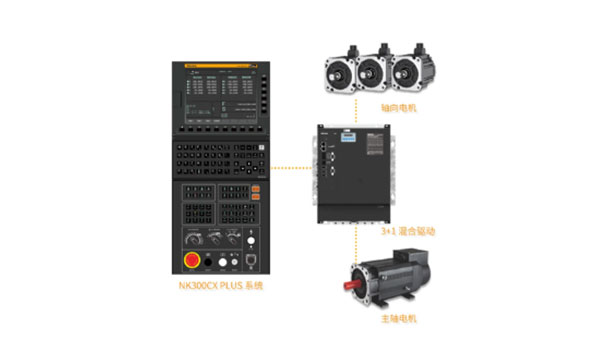
An effective control system for a humanoid robot is a tightly integrated hierarchy. At its base are the chips—the specialized processors and System-on-Chip (SoC) units that provide the computational power for real-time sensor data processing and decision-making. These feed instructions to the controllers, which manage the precise orchestration of multiple joints and actuators. The drivers then act as the power intermediaries, converting control signals into the exact electrical currents needed by motors in each joint. Uniting these hardware elements is the software layer: the advanced algorithms for kinematics, dynamics, balance, and path planning. The performance of a China humanoid robot company is increasingly defined by its mastery in synchronizing these four domains—computing, control, drive, and intelligence—into a seamless, responsive whole.
Supply Chain Synergies for Control System Development
The accelerated development in this arena is facilitated by a cohesive and responsive supply ecosystem. China's established strength in consumer electronics and industrial automation provides a foundational advantage. This ecosystem includes semiconductor firms developing application-specific chips, manufacturers of high-density motor controllers and drivers, and a growing pool of software talent specializing in robotic algorithms and middleware. For a China humanoid robot company, this proximity allows for collaborative R&D, rapid prototyping of control boards, and access to cost-effective, high-volume electronic component manufacturing. This integrated network reduces iteration cycles for control systems, enabling faster refinement of the stability and dexterity that define the latest generation of humanoid robots from china.
The ITES Shenzhen Exhibition: A Technical Forum for Core Technologies
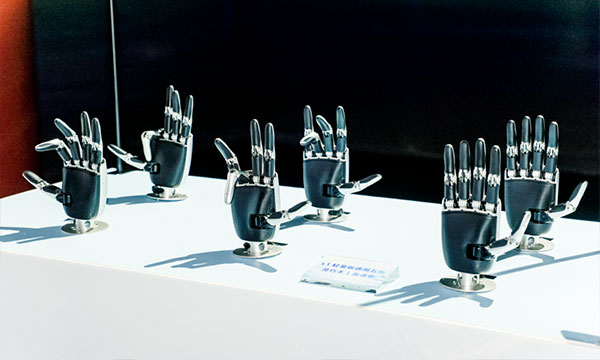
For professionals involved in sourcing or developing these complex systems, theoretical understanding must be paired with practical evaluation. The Humanoid Robot Industry Chain zone at ITES Shenzhen is designed to serve as this vital technical forum. This dedicated segment presents a focused cross-section of the innovation driving the field forward. Exhibitors include leading enterprises displaying the core modules that depend on sophisticated control: complete humanoid robot platforms, dexterous hands, and precise robotic arms that demonstrate final system integration.
The exhibition scope allows for direct examination of the control system's constituents. Visitors can engage with suppliers of the critical actuation systems—joints, reducers, and high-precision motors—that the controllers command. They can evaluate advanced sensing systems, like vision and force/torque sensors, whose data feeds the control algorithms. Most importantly, the zone highlights the control systems themselves. This is where engineers can compare the latest chipsets, inspect proprietary controller and driver hardware, and discuss the software and algorithmic solutions that enable complex locomotion and manipulation. ITES Shenzhen provides a unique environment to assess the interoperability and performance of these components from different suppliers under one roof.
The sophistication of a humanoid robot is ultimately a reflection of its control system's integration and intelligence. Advancements in chips, controllers, drivers, and algorithms are collectively raising the ceiling for what these machines can achieve in industrial and service settings. The concentrated development activity within specialized supply networks is making these advanced technologies more accessible. For technical teams and business strategists, the next step involves a hands-on, comparative analysis of available solutions and partners. Our event facilitates this by assembling the key players across the entire industry chain, from core components to complete prototypes. Engaging with the exhibits and experts at ITES Shenzhen offers a direct path to comprehending the engineering realities behind humanoid robots from china and identifying the collaborative partners necessary to advance in this dynamic field.