 Countdown157days
2027.3.24-3.27 Shenzhen World Exhibition & Convention Center
Countdown157days
2027.3.24-3.27 Shenzhen World Exhibition & Convention CenterInside the Humanoid Robot Industry Chain: Key Modules and Core Technologies
【Introduction】 Inside the Humanoid Robot Industry Chain: Key Modules and Core Technologies
Our experience at ITES China has shown us that the surge in demand for humanoid robots is not about isolated machines, but about a complete and sophisticated industrial ecosystem. For manufacturers and integrators, success hinges on a clear grasp of the entire supply chain, from fundamental components to integrated systems. This article examines the critical modules that form a humanoid robot from China, highlighting the specialized suppliers that strengthen this sector. We will also explore how our event connects professionals with the China humanoid robot company network and the core technologies driving innovation forward.
The Architecture of a Humanoid Robot: A Systems Perspective
A humanoid robot from China, or anywhere else, is a convergence of multiple advanced engineering systems working in precise harmony. It is more accurate to view it as an integrated platform rather than a single product. The industry chain is segmented into specialized tiers, each focused on delivering specific performance parameters. At the foundational level are the providers of actuation, sensing, and control hardware—the muscles, nerves, and brainstem of the robot. The next tier involves integrators and developers who combine these modules with software and algorithms to create functional platforms. Finally, application-specific developers tailor these platforms for tasks in logistics, healthcare, or collaborative manufacturing. The robustness of each tier directly influences the final product's capability and reliability.
Core Technological Modules Defining Performance
Diving deeper, three interconnected systems define operational prowess. First, the actuation system, encompassing joints, reducers, and motors, dictates movement precision and power efficiency. The quality of these components determines smoothness, payload capacity, and energy consumption. Second, the sensing system forms the perceptual layer. Vision sensors, LiDAR, and force/torque sensors provide the environmental data necessary for interaction and adaptation. The fusion of this data is what allows for safe and responsive operation in dynamic human environments. Third, the control system—comprising specialized chips, controllers, and drivers—processes information and executes motion trajectories. The software and algorithms here are the true differentiators, enabling balance, navigation, and task execution. For any China humanoid robot company, mastery in integrating these modules is a primary competitive focus.
The ITES China Platform for Supply Chain Engagement
This is where a platform like ITES China becomes instrumental for industry advancement. We facilitate direct engagement across this complex chain. Our dedicated zone for the humanoid robot industry chain is designed to mirror its structure, allowing professionals to survey the entire landscape efficiently. Attendees can evaluate humanoid robots from China as complete platforms, then dissect the value proposition by meeting with specialized manufacturers of key modules. This vertical integration within one event space is a unique advantage for sourcing and benchmarking.
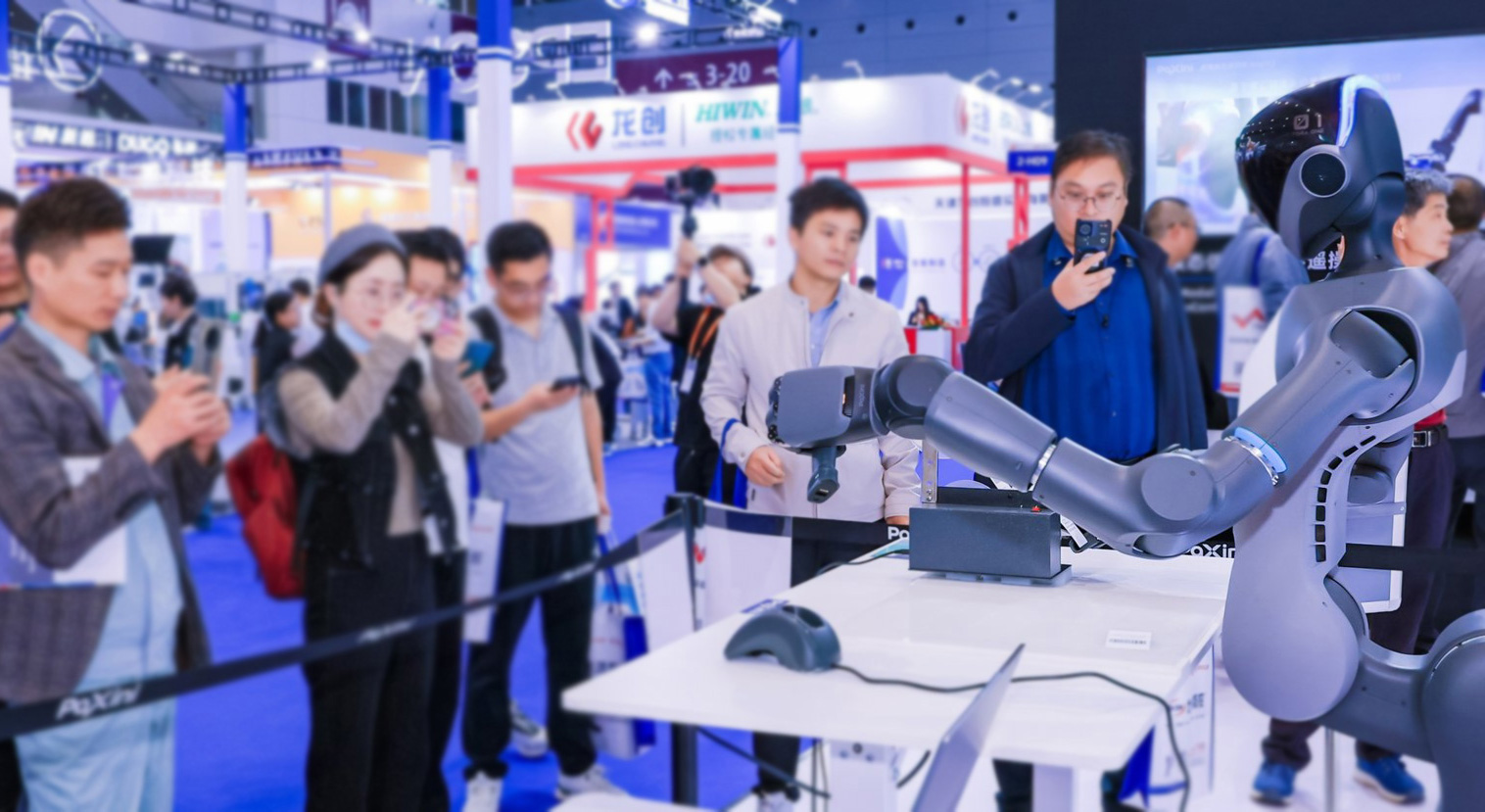
At our upcoming event, the exhibition scope is built to reflect the industry's priorities. Visitors will encounter live demonstrations of humanoid robot platforms, dexterous hands, and robotic arms, moving beyond theory to observable functionality. The exhibition dives into the core technologies, with focused displays on actuation systems like reducers and motors, sensing systems including advanced vision and tactile sensors, and the critical control systems featuring the latest drivers and software. This concentrated gathering of enterprises allows for comparison, technical discussion, and the identification of partners who can supply not just components, but solutions that enhance your own product development or integration projects. For a China humanoid robot company, participating means accessing a concentrated audience of serious buyers and collaborators.
The path to viable humanoid robotics is built on a foundation of exceptional components and seamless systems integration. Understanding the interplay between actuation, sensing, and control is the first step for any business looking to engage with this field. We provide the tangible connection point to that ecosystem. At ITES China, the entire chain is present, offering a unique opportunity to assess the technologies, meet the experts, and build the partnerships that will define the next phase of advanced automation. We invite you to join us and see the modules and machines that are building the future.