 Countdown155days
2027.3.24-3.27 Shenzhen World Exhibition & Convention Center
Countdown155days
2027.3.24-3.27 Shenzhen World Exhibition & Convention CenterAs AI Computing Power Races Ahead, Who Builds the “Metal Skeleton” of AI Servers?
【Introduction】 AI servers drive metal parts changes. Manufacturing needs speed and flexibility.
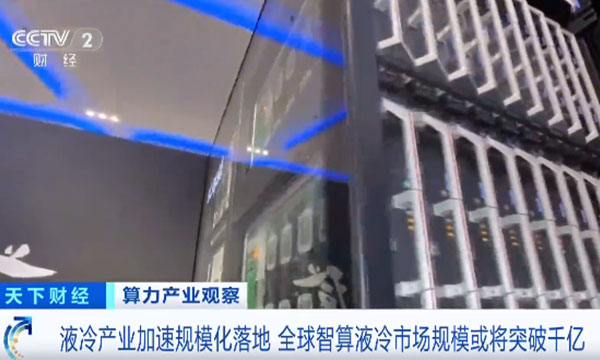
On August 30, CCTV Finance reported on a striking industry scene: in Qingdao, Shandong, orders on a CDU (Coolant Distribution Unit) production line for liquid-cooling core equipment are already booked through late December; in Foshan, Guangdong, a liquid-cooling component maker saw its orders, output value, and deliveries roughly double year over year, with some production lines already running at full capacity.
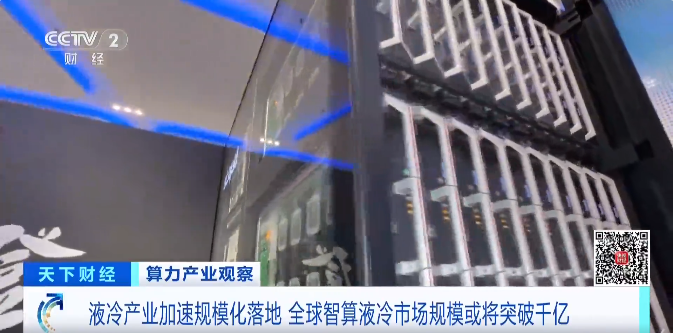
Image source: CCTV Finance
In the past, discussions about AI servers focused on GPUs, chips, HBM, and high-speed interconnect. But as ever more high-power chips are packed into a single rack, computing power ultimately still has to become real servers and rows of real racks.
And as servers grow larger, heavier, and more complex, the first thing to change is precisely their “metal skeleton.” Beyond enclosures, racks, trays, rails, brackets, air ducts, and shielding, components such as cold plates, manifolds, liquid-cooling piping, and CDUs — parts that did not belong to traditional servers — are now entering this system in large numbers.
More notably, CCTV Finance reported as early as April this year that liquid-cooling companies were “racing to fill orders and expand capacity.” By late August, liquid cooling had moved from a technology trend to the stage of real orders and capacity delivery — the growth of AI computing power is turning into concrete orders on the manufacturing floor.
So how many metal structural parts are actually hidden inside a single AI server? And what is changing about these seemingly ordinary plates, tubes, and brackets?
Key Takeaways
• AI server orders are reaching factories before the servers reach data centers: as of late August, some liquid-cooling CDU production lines were already booked through December (CCTV Finance).
• As servers grow larger and denser, the metal skeleton changes first — chassis, racks, trays, rails, and brackets, plus cold plates, manifolds, CDUs, and liquid-cooling piping now entering the system at scale.
• The parts are familiar, but manufacturing must change: fast changeover, flexible and automated production, and rigorous tube bending, welding, and leak testing.
• The real opportunity is not selling a few more laser cutters or bending machines, but bringing a complete metal-fabrication capability into a new demand scenario.
As AI Servers Grow More Complex, the Metal Skeleton Changes First
The structure of a traditional server is not complicated: the chassis holds the motherboard, hard drives, and power supply, the rack handles installation and deployment, and sheet-metal parts mainly bear loads, provide protection, and hold components in place.
But AI servers are changing this logic. As GPU power consumption keeps climbing, servers are moving from standalone deployment to GPU clusters and full-rack deployment, and cooling is gradually evolving from traditional air cooling to liquid cooling. A server is no longer just a “box that holds chips” — it is increasingly a system made up of computing, power delivery, cooling, and structure.
Rising computing density changes the metal structure inside first.
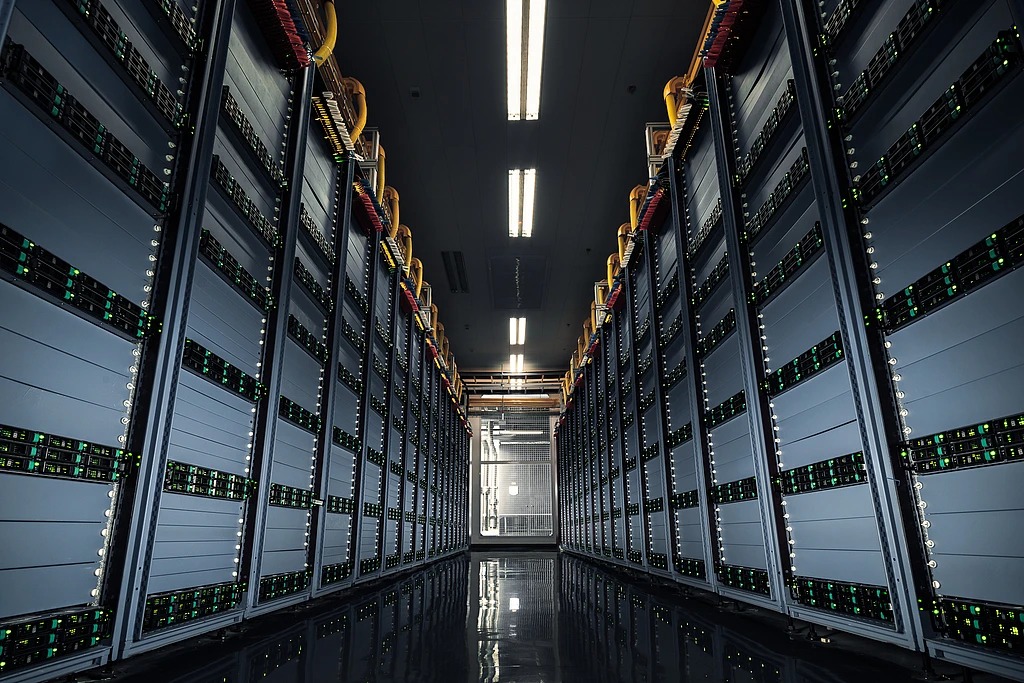
Image source: CCTV Finance
The most visible layer is the chassis and rack.
The common 1U and 2U servers of the past are evolving toward higher-spec GPU servers. The rack is no longer a simple standardized load-bearing structure; it must now accommodate high-density GPU deployment, liquid-cooling piping, power routing, and maintenance space.
As a result, structural parts such as rack beams, columns, trays, rails, doors, and maintenance panels all take on more complex installation and load-bearing tasks.
Looking further inside are the precision sheet-metal parts that are more numerous yet easier to overlook: GPU mounting brackets, motherboard trays, hard-drive trays, power brackets, fan brackets, air ducts, EMI shielding, reinforcement parts, connection brackets, and various liquid-cooling module fixtures — together they form the “skeleton” inside the server.
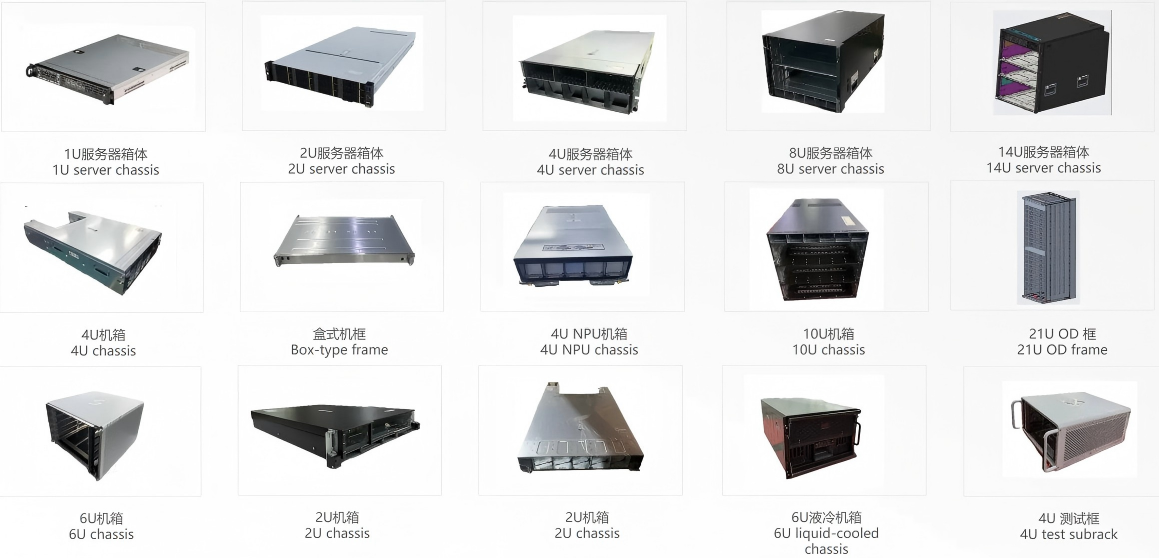
Image source: Shenzhen Huaxian Intelligent Manufacturing Technology Co., Ltd.
Individually these parts look unremarkable, but as server structures grow more complex, their quantity, specifications, and assembly relationships all increase.
Beyond these two layers is a third that is growing rapidly: the new metal structural parts brought by liquid cooling.
This is the layer where AI servers differ most clearly from traditional servers. As liquid cooling becomes the mainstream cooling solution for high-power AI servers, cold plates, manifolds, CDUs (Coolant Distribution Units), liquid-cooling piping, and a host of supporting brackets are entering server and rack systems at scale. Cold plates carry heat away from the chips; manifolds distribute and collect the coolant; CDUs handle coolant circulation, heat exchange, and control; and large quantities of copper, stainless steel, and other precision tubing transport the coolant between modules.
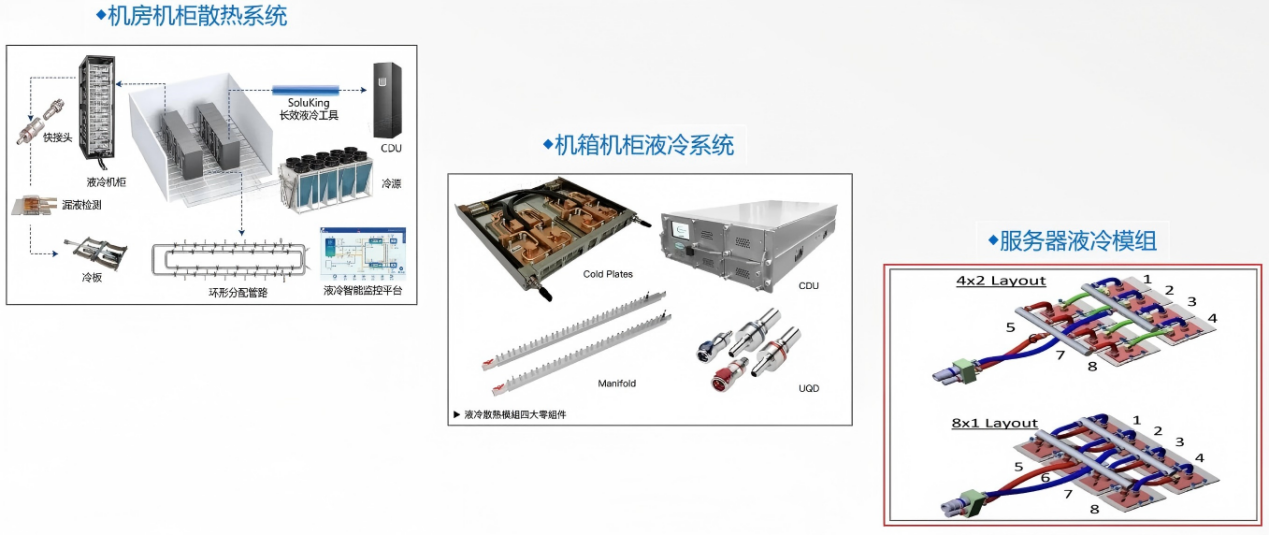
Image source: Shenzhen Huaxian Intelligent Manufacturing Technology Co., Ltd.
From chassis and racks to internal precision sheet metal to liquid-cooling piping, an AI server is turning into an increasingly complex metal manufacturing system.
The Parts Are the Same — the Manufacturing Has Changed
In terms of manufacturing processes, AI servers have not given rise to a brand-new set of sheet-metal techniques. Laser cutting, punching, bending, welding, riveting, and surface treatment remain the main processes — but these traditional processes now face a new kind of order structure.
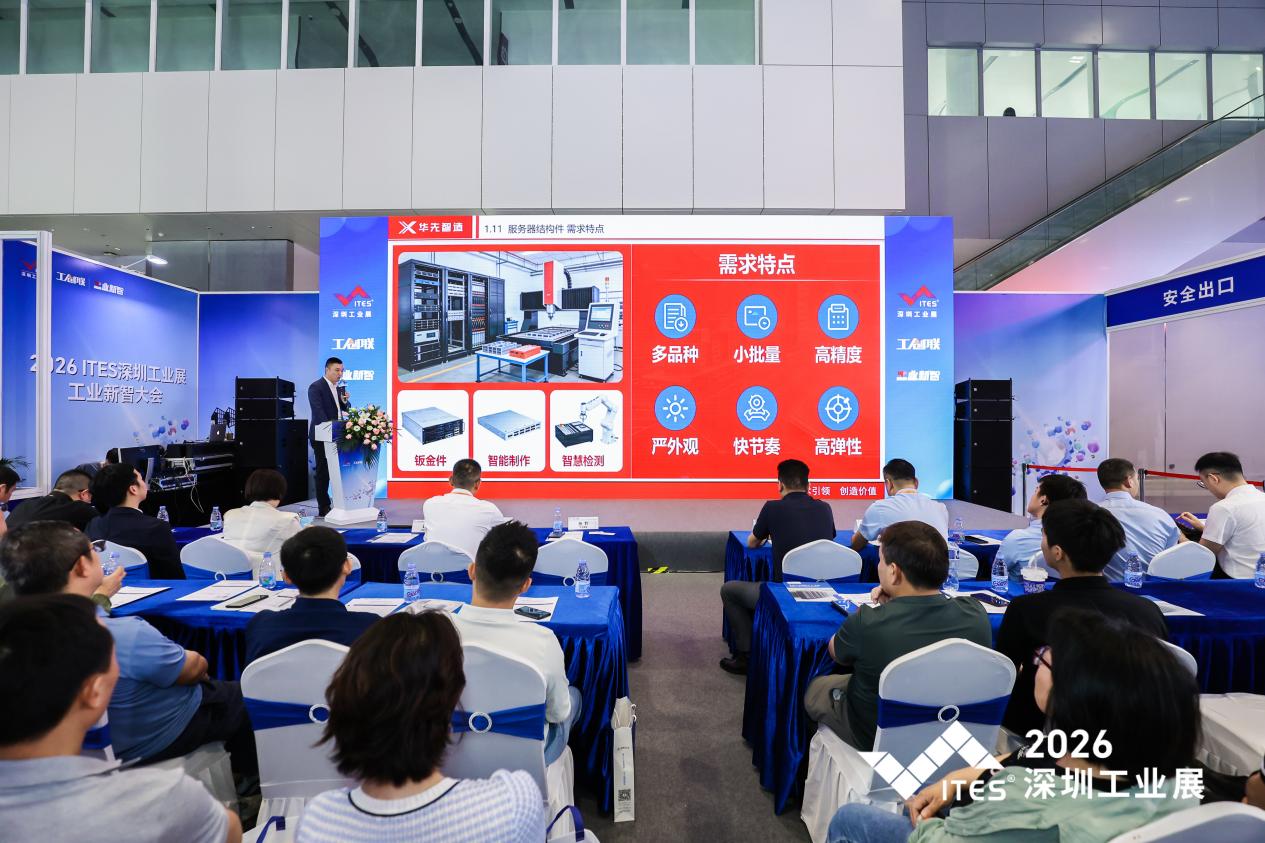
AI server models iterate quickly and structural parts come in many specifications; a single fabricator may face enclosures, trays, brackets, and racks all at once. Compared with the large-batch standardized production of the automotive industry, server structural parts put more pressure on a machine's ability to change over quickly.
No matter how fast a machine cuts, if switching to a different product requires lengthy setup, actual capacity will still be hard to release under this order structure.
For this reason, laser cutting, CNC punching, bending, and other equipment are placing growing emphasis on fast program changeover, automatic loading and unloading, and flexible transitions between different product specifications.
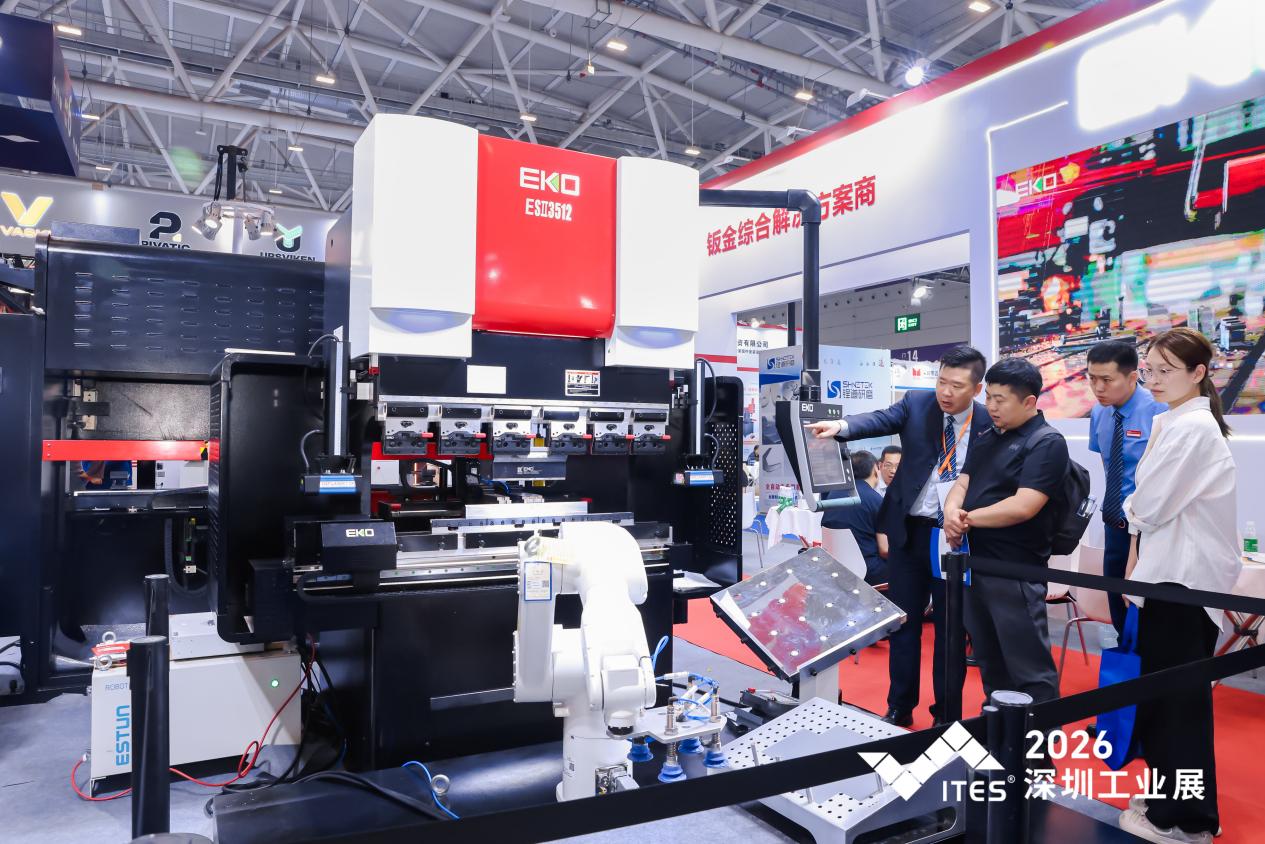
At the same time, AI servers are raising the bar for assembly consistency.
A single chassis may go through multiple bending and assembly steps; a small dimensional deviation early on can be amplified at the assembly stage. For a fabricator, the real difficulty is not making the first piece, but keeping identical parts coming out consistently after frequent changeovers.
Liquid cooling then pushes manufacturing requirements further into tubing and welding. Liquid-cooling piping must follow complex routing through the interior of the rack, and tube processing involves cutting, bending, end forming, and welding. Weld quality, sealing, cleanliness, and subsequent leak testing all directly determine whether the liquid-cooling system can run reliably over the long term.
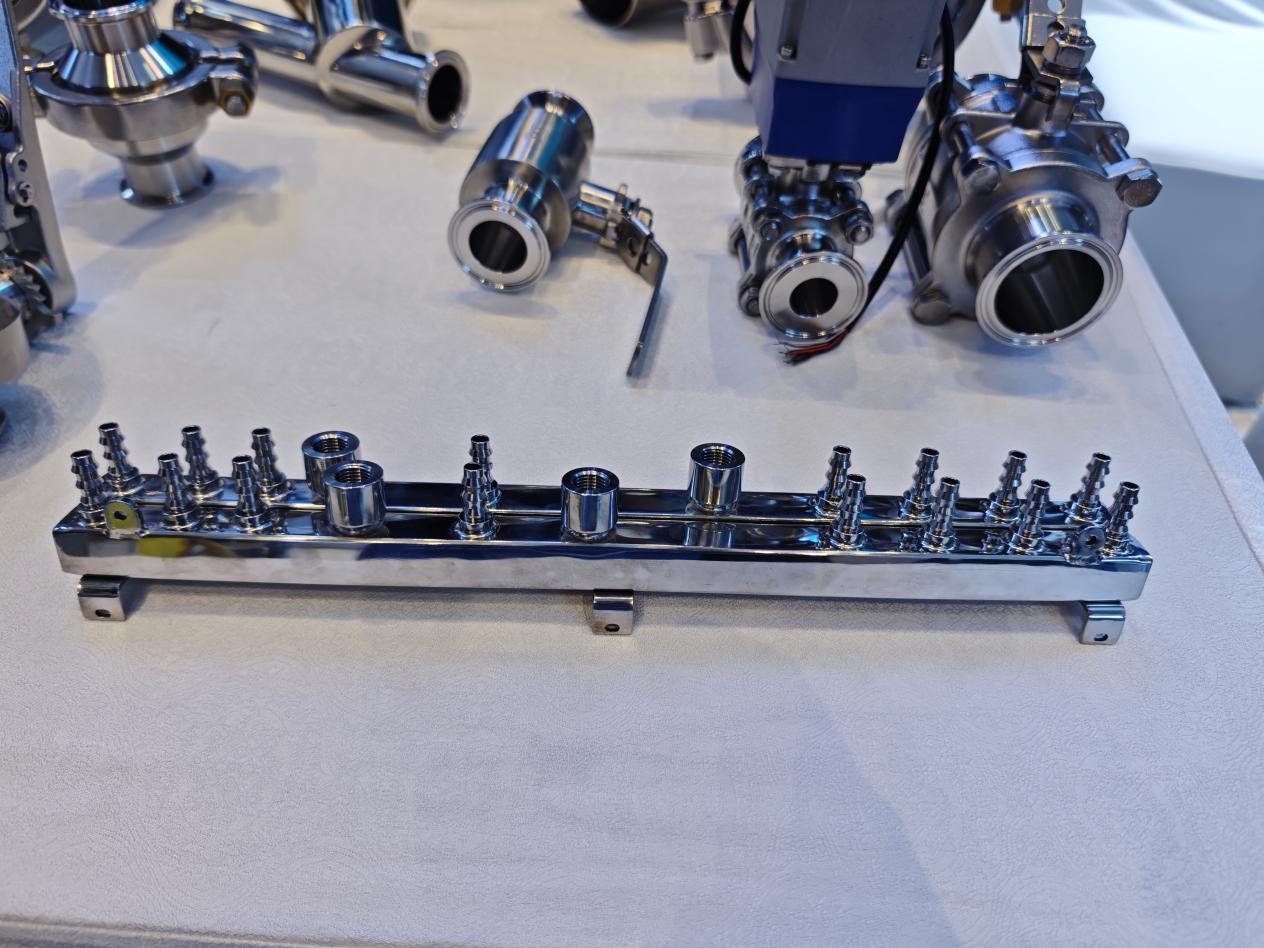
Once production truly enters volume, every step becomes a real difficulty. Cutting must be “accurate” — but the burrs left by high-speed cutting are a common industry pain point. Burrs damage sealing surfaces and fit accuracy, and detached metal chips can enter the coolant loop, clogging channels and scratching seals, so deburring and tube-end finishing steps are essential.
Bending must be “stable” — AI server piping has small bend radii and dense bends. If springback is not controlled in batch bending, wall thinning exceeds limits, or wrinkling and elliptical cross-section deformation appear, the routing of the entire batch will deviate from the design, leading to on-site assembly failure, stress concentration, or even leakage.
Welding must be “strong” and able to withstand volume production — automated TIG welding, laser welding, brazing, and other processes must keep weld formation consistent in continuous production, eliminate porosity and lack of fusion, and meet tube cleanliness standards. Residual slag, oxide scale, and other particles are hidden risks of clogging and failure later in the liquid-cooling system.
Sealing must be “detectable and leak-free” — every batch of tubing must pass airtightness testing, pressure-hold testing, and even helium mass spectrometer leak detection. Weld quality, sealing, cleanliness, and test results directly determine whether the liquid-cooling system can run reliably over the long term.
So when an order truly reaches the factory, what it faces is no longer a single standalone machine, but an entire manufacturing capability whose baseline is: cut accurately, bend stably, weld strongly, detect reliably — and change over quickly.
As AI Servers Scale Up, Which Equipment Gets a Seat at the Table?
If we break down the manufacturing needs of AI servers, the opportunities actually concentrate along two lines.
The first is the upgrade of traditional sheet-metal parts.
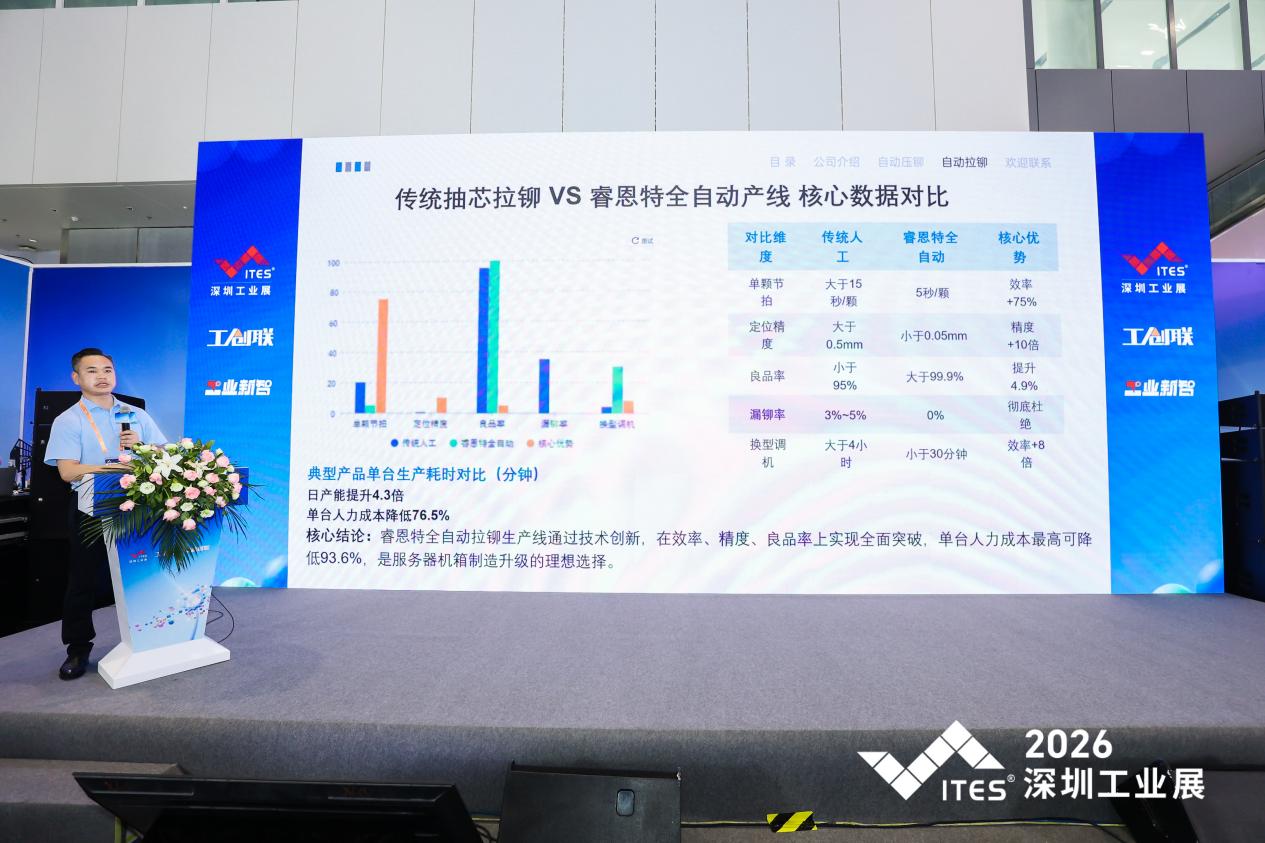
•Demand for enclosures, racks, trays, rails, brackets, air ducts, shielding, and other structural parts still exists — the products are just more complex and come in more specifications, raising the bar for machining precision, flexible production, and automation. This directly drives demand for laser cutting, CNC punching, bending, riveting, welding, and automatic loading and unloading equipment.
In particular, once orders move from individual server enclosures to full-rack delivery, manufacturers must solve not just “how to make one part,” but how a batch of parts in different specifications can be produced continuously and switched over quickly.
The second is the new metal-processing demand brought by liquid cooling.
Cold plates, manifolds, CDUs, copper tubing, and stainless-steel tubing are themselves a new manufacturing chain. Piping involves high-precision tube cutting, bending, end forming, welding, and inspection; components such as manifolds involve sheet forming, tube processing, welding, and leak testing. Cold plate manufacturing further involves micro-channel machining, welding, surface treatment, and reliability testing.
AI servers may not need a machine tool “invented specifically for AI,” but they do need a set of equipment that can adapt to the manufacturing logic of AI servers.
Flexible machining, fast changeover, automatic loading and unloading, precision bending, tube processing, laser welding, vision inspection, and leak testing may all become key links that continue to propagate down the industry chain.
More importantly, AI servers are re-linking these previously scattered processes. A sheet goes from cutting to bending; a tube goes from cutting to bending to welding; a liquid-cooling component goes from machining to inspection — all ultimately entering the same server system.
So the opportunity AI servers truly bring to manufacturing is not selling a few more laser cutters or bending machines, but bringing an entire metal-fabrication capability into a new demand scenario. This is also why AI servers are becoming a downstream market that precision-manufacturing equipment companies increasingly cannot afford to ignore.
From March 24 to 27, 2027, ITES 2027 — the 28th edition — will be held at the Shenzhen World Exhibition & Convention Center (Bao'an). Its Precision Manufacturing Equipment and Sheet-Metal & Tube Processing exhibitions will serve AI servers, new energy, automotive manufacturing, communications electronics, medical devices, machinery, and other fields, providing advanced processing equipment and automated, digital, and intelligent solutions for sheet metal, stamping, tube and profile processing, stainless-steel processing, welding, and surface treatment.
Leveraging the manufacturing supply-chain resources accumulated by ITES and Gongchuanglian over many years, this edition will focus on AI server liquid-cooling component manufacturing, bringing together 500+ companies in metal materials, precision equipment, components, sheet metal, welding, and inspection to create an integrated “conference + exhibition + matchmaking” industry event. It will close the manufacturing loop from chip cooling, cold plates and heat exchangers, quick-connect couplings and pumps/valves, and manifolds and piping through to complete CDU solutions — helping the industry cross the mass-production gap.
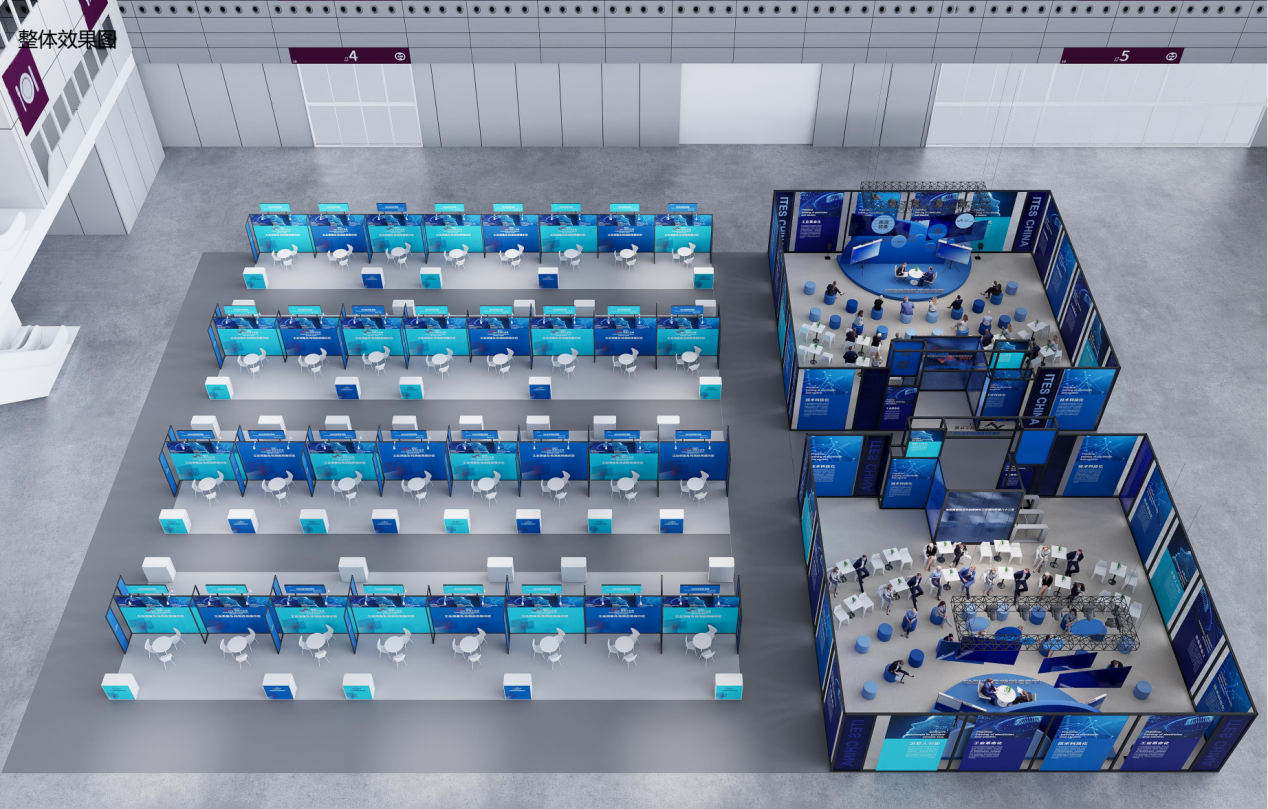
(AI Server & Liquid-Cooling Zone: conference + booth build rendering)
Forum topics:
AI Server / Liquid-Cooling Chassis & Rack & Switch & Precision Sheet-Metal Manufacturing Process Innovation Forum
AI Server Liquid-Cooling Piping Manufacturing Process Innovation Forum
AI Liquid-Cooling Cold Plate Welding & Inspection Innovation Forum
AI Liquid-Cooling Manifold Welding & Inspection Innovation Forum
AI-Empowered Sheet-Metal Equipment Innovation Launch
Stainless-Steel Sheet Metal & Cabinetry & Decoration Manufacturing Process Innovation & Application Forum
New Energy 800V Ultra-Fast Charging & Energy Storage Enclosure & Inverter & EV Charger Sheet-Metal Manufacturing Process Innovation Forum
(Exhibit)
Who we serve: manufacturers of complete liquid-cooling CDU units, micro-channel cold plates, heat exchangers, and heat-dissipation structural parts; AI server complete-system and ODM/OEM integrators; and liquid-cooling manifold (Manifold) R&D, processing, and inspection companies.
Booth sales and conference sponsorship for 2027 are now open — welcome to inquire and register!