How Friction Stir Welding Is Transforming High-Strength Aluminum Manufacturing
【Introduction】 How Friction Stir Welding Is Transforming High-Strength Aluminum Manufacturing
Joining high-strength aluminum alloys, particularly those in the 2xxx and 7xxx series, presents a persistent difficulty for traditional fusion welding methods. Issues such as porosity, solidification cracking, and significant loss of temper strength in the heat-affected zone can compromise the integrity of critical components. A solid-state joining process has emerged to address these exact challenges. Friction stir welding machine technology is changing approaches to fabricating aluminum structures where joint strength, fatigue life, and material properties are paramount. This method offers a different paradigm for creating high-integrity bonds in sectors ranging from aerospace to electric vehicle battery trays.
The Operational Mechanics of a Solid-State Bond
Unlike fusion welding, a friction stir welding machine does not melt the base material. The process utilizes a rotating, non-consumable tool with a specially designed pin and shoulder. This tool is plunged into the joint line between two workpieces and traversed along the seam. Frictional heat, generated between the tool and the material, plasticizes the aluminum without reaching its melting point. The tool's rotation mechanically stirs and forges the softened material across the joint, creating a metallurgical bond as it cools. This solid-state nature is the source of its key advantages: it eliminates solidification defects common in aluminum, preserves a higher percentage of the base material's mechanical properties, and results in a fine, recrystallized grain structure in the weld zone. The outcome is a joint with exceptional strength and consistency, a direct result of the precise engineering within a modern friction stir welding machine.
Supply Chain Development for Advanced Joining Systems
The design and manufacture of these sophisticated systems benefit from a concentrated industrial ecosystem. Proximity to a network of specialized suppliers—for robust spindle units, high-grade tool steel, advanced CNC components, and custom fixture fabrication—allows for iterative development and system optimization. This environment supports close collaboration between friction stir welding machine manufacturers and the end-user industries driving demand, such as transportation and energy storage. Such collaboration is necessary to adapt machine specifications—like spindle torque, axial force control, and work envelope—to specific applications like joining battery enclosure panels or structural aerospace members. The integrated supply chain enables friction stir welding machine manufacturers to respond with application-focused solutions, accelerating the technology's adoption for complex aluminum fabrication tasks.
Evaluating Advanced Welding Technology at an Industrial Gathering
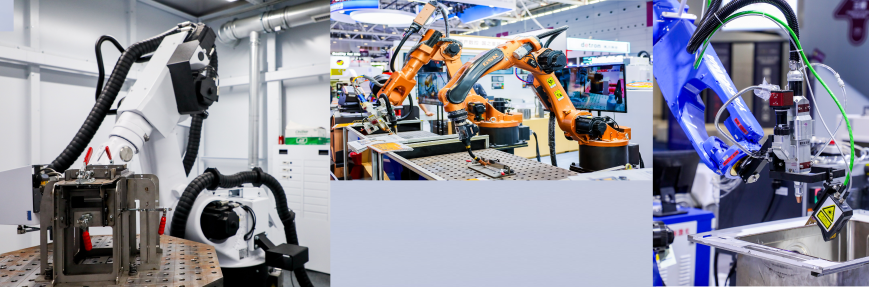
For engineering teams considering this capital investment, theoretical understanding must be supplemented with practical assessment. Specialized trade exhibitions provide a critical venue for this evaluation. The Welding Technologies & Equipment zone at ITES Shenzhen serves as a primary platform for this purpose. This zone brings together a spectrum of technology providers, allowing for direct comparison of different friction stir welding machine designs and their supporting technologies. Attendees can examine the machinery firsthand, discuss control software and parameter optimization with engineers, and see demonstrations that highlight joint quality and process stability. Beyond the primary equipment, the exhibition scope at ITES Shenzhen includes the entire supporting ecosystem: robotic integration packages for automating the welding process, precision positioners and fixtures, and inspection technologies for weld seam analysis. This comprehensive view allows manufacturers to assess not just a single friction stir welding machine, but the complete cell integration required for production.
The move toward lighter, stronger structures in advanced manufacturing continues to highlight the limitations of traditional joining techniques for aluminum alloys. The solid-state process enabled by a friction stir welding machine provides a technical answer to problems of strength, fatigue, and distortion. Its progression from a specialized technique to a production-ready solution is supported by a manufacturing base capable of producing and refining these complex systems. For any organization involved in the fabrication of high-performance aluminum components, engaging with the current state of this technology is a necessary step. An event like ITES Shenzhen facilitates this engagement, offering a direct avenue to observe equipment operation, understand integration requirements, and connect with the friction stir welding machine manufacturers and automation experts who can translate this advanced joining capability into a reliable production process.