 Countdown157days
2027.3.24-3.27 Shenzhen World Exhibition & Convention Center
Countdown157days
2027.3.24-3.27 Shenzhen World Exhibition & Convention CenterHow Vision-Guided Robotics Improve Assembly Accuracy and Flexibility
【Introduction】 How Vision-Guided Robotics Improve Assembly Accuracy and Flexibility
Assembly operations in modern manufacturing are defined by a need for both micron-level precision and the ability to accommodate product variation. Fixed automation often struggles with this duality, requiring costly retooling for each new component. This is where the integration of advanced sight into robotic operations creates a fundamental shift. Vision-guided robotic systems introduce a layer of perceptual intelligence, enabling robots to see, interpret, and adapt to their environment in real time. For manufacturers in sectors like electronics and automotive parts, this technology bridges the gap between high-volume throughput and high-mix production. The development and deployment of these sophisticated vision guided robotic systems are supported by a concentrated and technically proficient supply chain. To witness the full spectrum of this capability and its components, the Machine Vision Applications zone at ITES Shenzhen offers a dedicated forum for exploration and integration.
The Mechanism of Enhanced Precision and Adaptive Operation
The core function of a vision-guided robotic system is to replace mechanical certainty with visual confirmation. Before a robot moves, a vision system—comprising cameras, lighting, and software—captures an image of the workpiece or environment. Sophisticated algorithms then process this image to determine precise coordinates, orientation, and even identify specific features or defects. This data is fed to the robot controller, allowing it to adjust its programmed path dynamically. This process directly improves assembly accuracy by compensating for inherent variances in part placement, fixture wear, or conveyor positioning. More significantly, it unlocks flexibility. A single vision guided robotic system can be programmed to handle multiple part types by simply calling different vision inspection routines, eliminating the need for physical changeovers. This makes low-volume, high-variability production economically viable and responsive.
Supply Chain Integration for Sophisticated Vision Systems
The robust functionality of a vision-guided robotic system depends on the seamless integration of hardware and software from a diverse supplier base. A significant advantage lies in the accessibility of a comprehensive ecosystem. This includes specialized manufacturers of industrial cameras, optics, lenses, and LED lighting solutions, as well as producers of sensors, actuators, and precision mechanical components for peripheral equipment. Furthermore, a growing number of software firms provide robust vision processing platforms and development tools. The geographic and industrial concentration of these suppliers facilitates close collaboration. A system integrator can work directly with a lens manufacturer, a lighting specialist, and a software developer to create a tailored vision guided robotic system for a specific inspection or bin-picking task. This collaborative environment accelerates prototyping, reduces integration barriers, and allows for cost-effective customization across a wide range of assembly and inspection applications.
The Exhibition as a Live Integration Environment
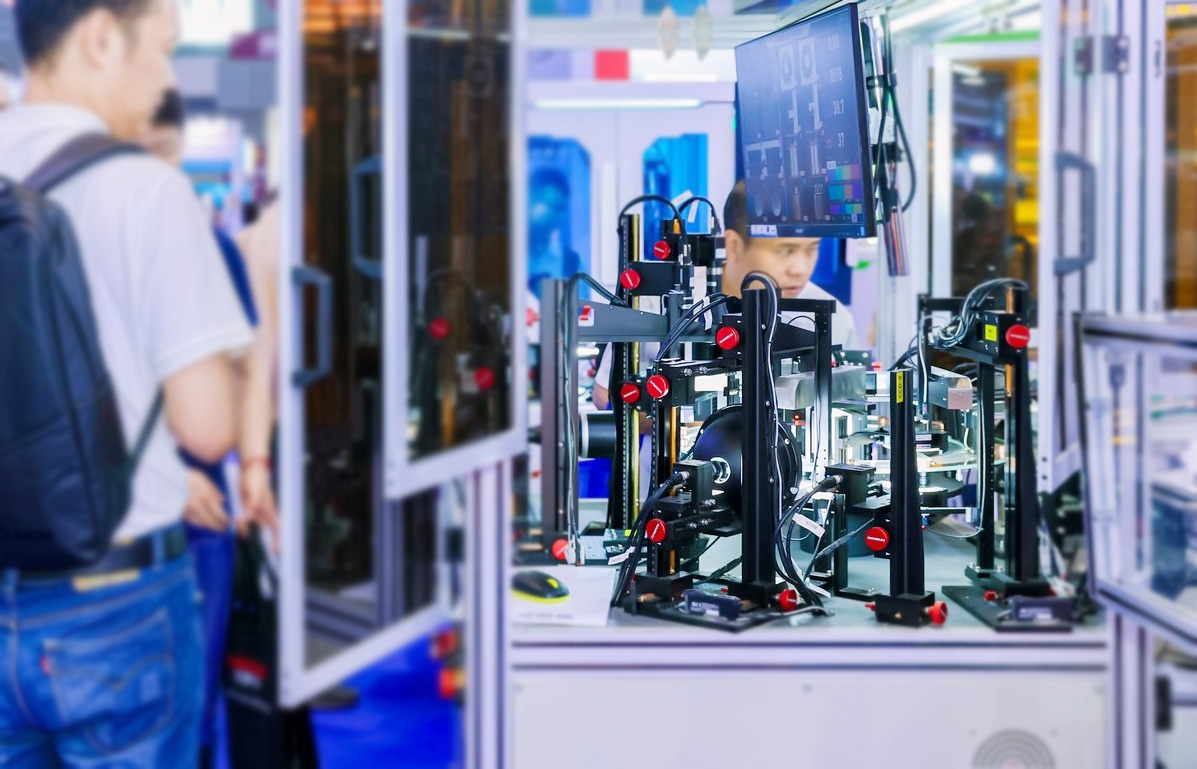
Moving from concept to a reliable production system requires evaluating the interaction between different vision components and their robotic partners. The Machine Vision Applications and Inspection Equipment section at ITES Shenzhen is designed to facilitate this critical evaluation. This zone addresses the complete workflow, from initial detection to final guidance. Visitors can examine dedicated vision inspection equipment like AOI (Automated Optical Inspection) systems and AI-powered deep learning platforms for defect detection. Crucially for assembly, the zone showcases the specific solutions that enable robotic flexibility. This includes advanced vision positioning and guidance solutions, such as unstructured bin-picking systems and structured light 3D cameras, which are the eyes for complex robotic grasping. Additionally, supporting identification technologies like high-speed code readers and OCR systems are present, which can be integrated into a vision-guided robotic system to verify component identity before assembly. Seeing these technologies operating side-by-side provides invaluable insight into their practical implementation.
The transition from rigid automation to intelligent, adaptive assembly is largely enabled by perceptual technology. Vision-guided robotic systems provide the critical link that allows programmable machines to interact with an unpredictable physical world. The depth of the supporting supply chain makes this advanced capability increasingly accessible and adaptable. The ITES Shenzhen exhibition functions as a central node in this ecosystem. We bring together the creators of cameras, software, sensors, and integrated solutions into a single venue. This gathering allows manufacturing engineers to assess not just individual components, but how a complete vision guided robotic system can be configured to solve specific accuracy and flexibility challenges in their own assembly processes. It is through this direct technical engagement that practical and impactful automation strategies are developed.