 Countdown155days
2027.3.24-3.27 Shenzhen World Exhibition & Convention Center
Countdown155days
2027.3.24-3.27 Shenzhen World Exhibition & Convention CenterHumanoid Robot Parts Machining: The Supply Chain Shift Behind Unitree's RMB 61 Billion Listing
【Introduction】 Unitree's IPO boosts robot parts demand. Precision shops face fragmented small-batch production.
On the evening of August 11, Unitree Robotics announced the online lottery results for its shares on the Shanghai STAR Market. The IPO price was set at RMB 150.80 per share (≈ US$22), with a listing market capitalization of about RMB 61 billion (≈ US$9 billion). The online subscription winning rate was only 0.018%, underscoring the market's enthusiasm. According to Bloomberg, Chinese humanoid robot shipments accounted for more than 97% of the global total in the first half of 2026, with global shipments set to surge from about 2,600 units in 2024 to an estimated 81,700 units in 2026.
But as the industry races toward mass production, the biggest wave of new orders may reach upstream precision manufacturers before robot OEMs.
Key Takeaways
• A single humanoid robot contains 1,000+ precision parts; reducers alone account for about 40% of its cost.
• Orders are fragmenting into small batches and high variety — machine tools must prioritize flexible changeover over peak efficiency.
• Cutting tools have shifted from consumable to process variable: thin walls and hard alloys demand sharper, more stable tooling.
• As models multiply, inspection is moving from post-production checks to dynamic, in-line calibration (CT, gear metrology, motion tracking).
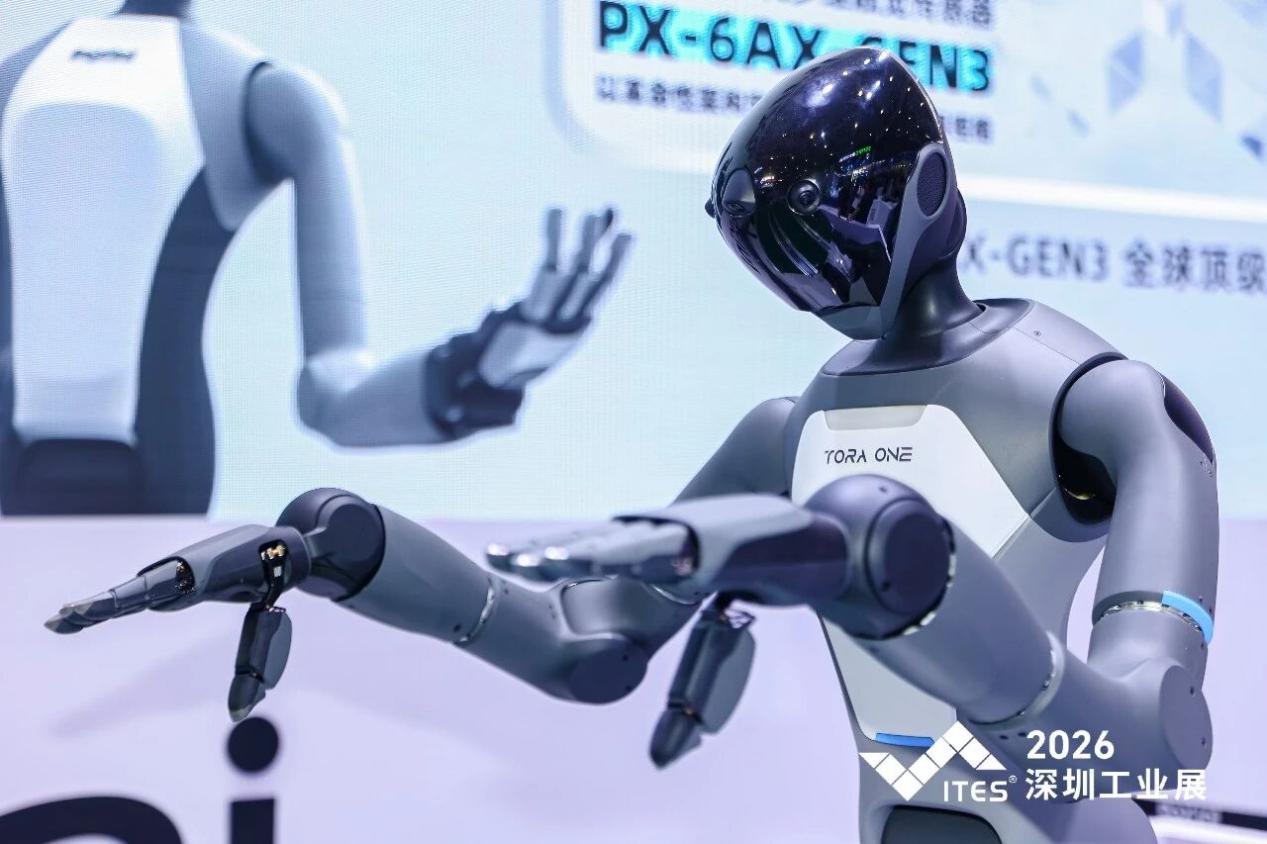
A single full-size humanoid robot carries over a thousand precision components — joint brackets, dexterous-hand finger segments, reducer housings, and sensor bases — each with different geometries, materials, and vastly different accuracy requirements. Manufacturers are moving beyond the traditional model of mass-producing standardized parts and entering a new production reality: 50 A-type joints today, 30 B-type brackets tomorrow, and 20 C-type connectors the day after.
This fragmentation — small batches, high variety, and continuous iteration — is reshaping the underlying production logic of the entire supply chain.
Orders Are Fragmenting
Machine Tools Must Get Flexible
Machining the core components of a humanoid robot — joints, skeletons, and connectors — is far more difficult than it appears.
Take the waist joint base as an example: it must bear the motion loads of the robot's upper body while simultaneously satisfying three conflicting requirements — many holes, tight positional tolerances, and thin walls. The positional tolerance of multiple mounting holes is typically required to be within ±0.02 mm, while the wall thickness must be reduced to 2–3 mm to save weight. The part must be light, strong, and precise all at once, yet thin-walled features are highly prone to deformation during machining.
Consider the reducer housing and joint bracket: their internal cavities are structurally complex, often containing curved surfaces, deep holes, threads, and slots. Traditional processes require roughing on a 3-axis machine first, then transferring the part to another machine for finishing. Every re-fixturing introduces a new positioning error, and the cumulative tolerances of robot parts often cannot tolerate such repetition.
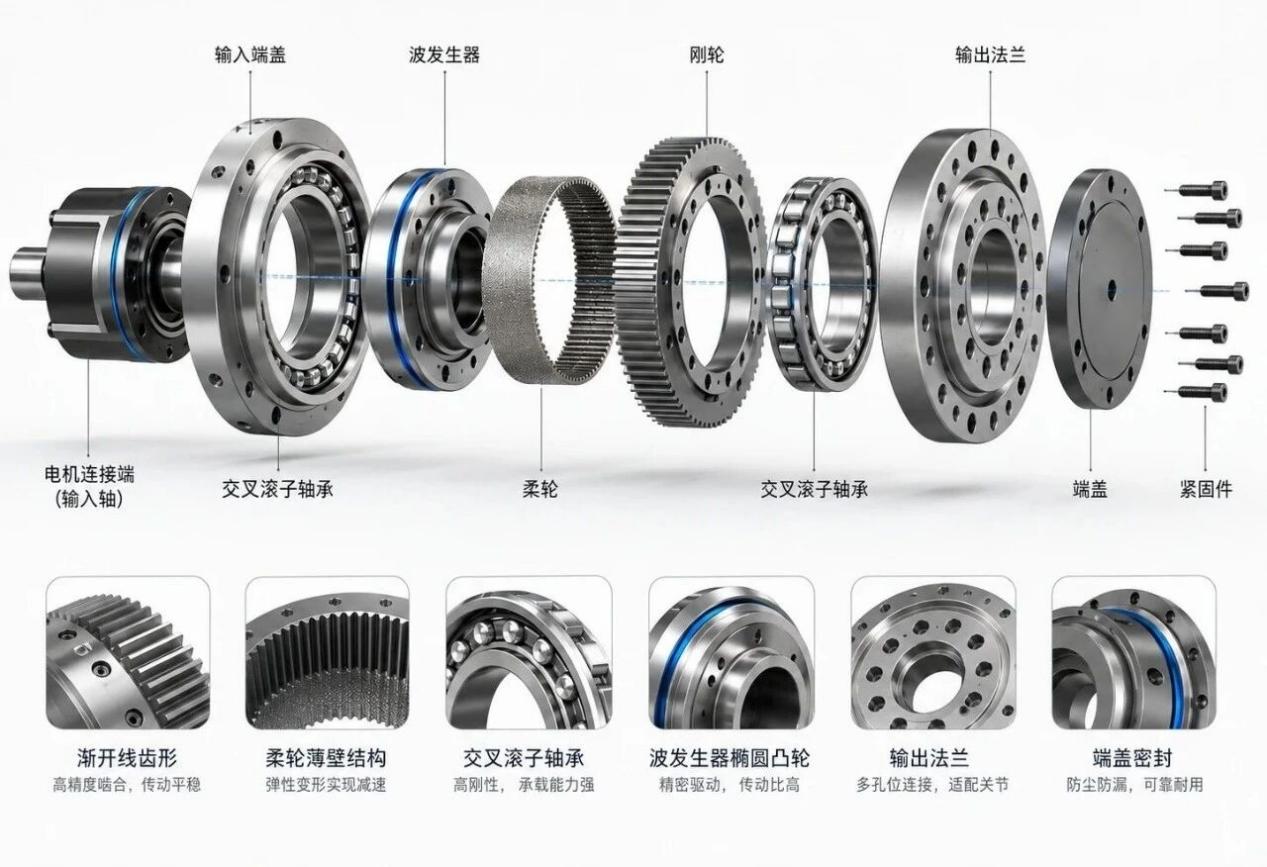
For the same robot model, the joint structure may be continuously optimized over a short period. When the reducer design changes, the housing dimensions and mounting hole positions must be adjusted accordingly.
For manufacturers, this means equipment must not only machine accurately but also support rapid changeover, rapid adjustment, and rapid reconfiguration of processes. As a result, multitasking machining, 5-axis simultaneous machining, and multi-process integration are becoming key criteria in selecting machine tools for robot parts.
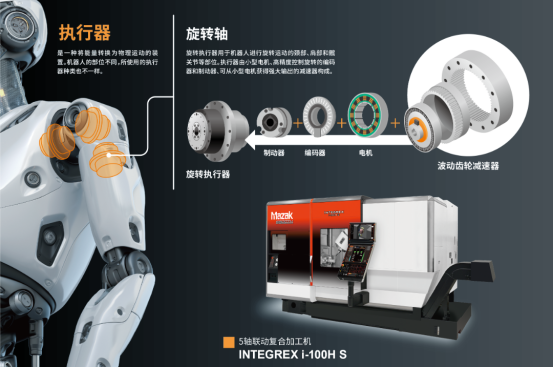
Mazak's INTEGREX i-H series multitasking machines integrate turning, milling, and gear-cutting capabilities. They combine turn-mill spindles with synchronized rotation to perform gear hobbing, and use 5-axis simultaneous machining for gear finishing — allowing complex parts that once required multiple operations to have more of their machining completed on a single machine.
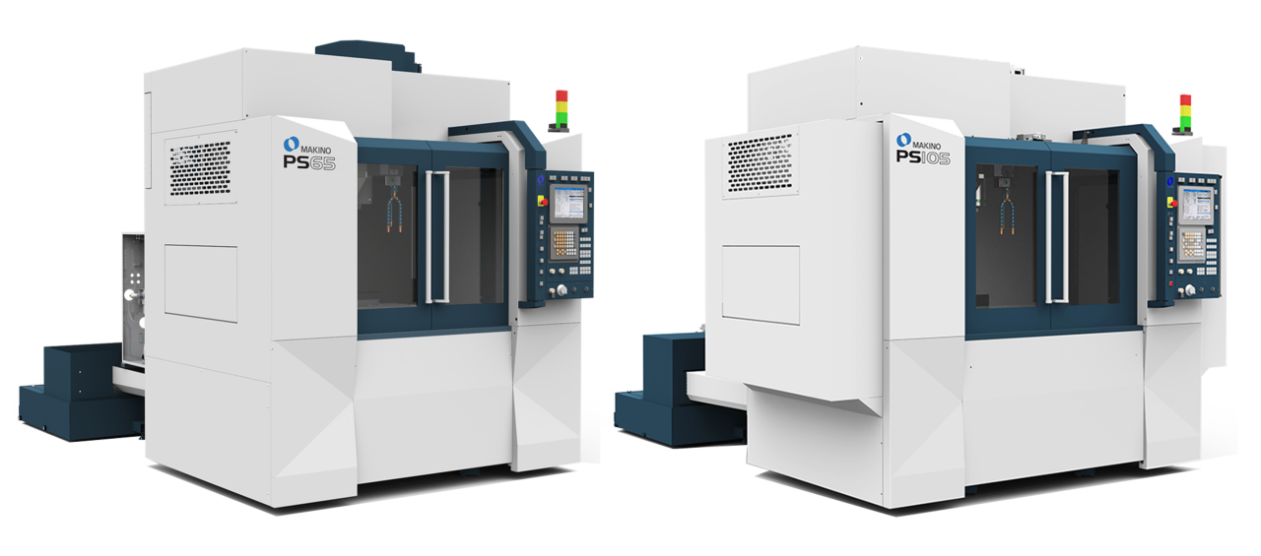
Makino's PS65 and PS105 vertical machining centers, meanwhile, are reinforced for parts such as planetary gear carriers in terms of spindle torque, speed, and spindle-core cooling, to maintain accuracy stability during long, continuous machining runs.
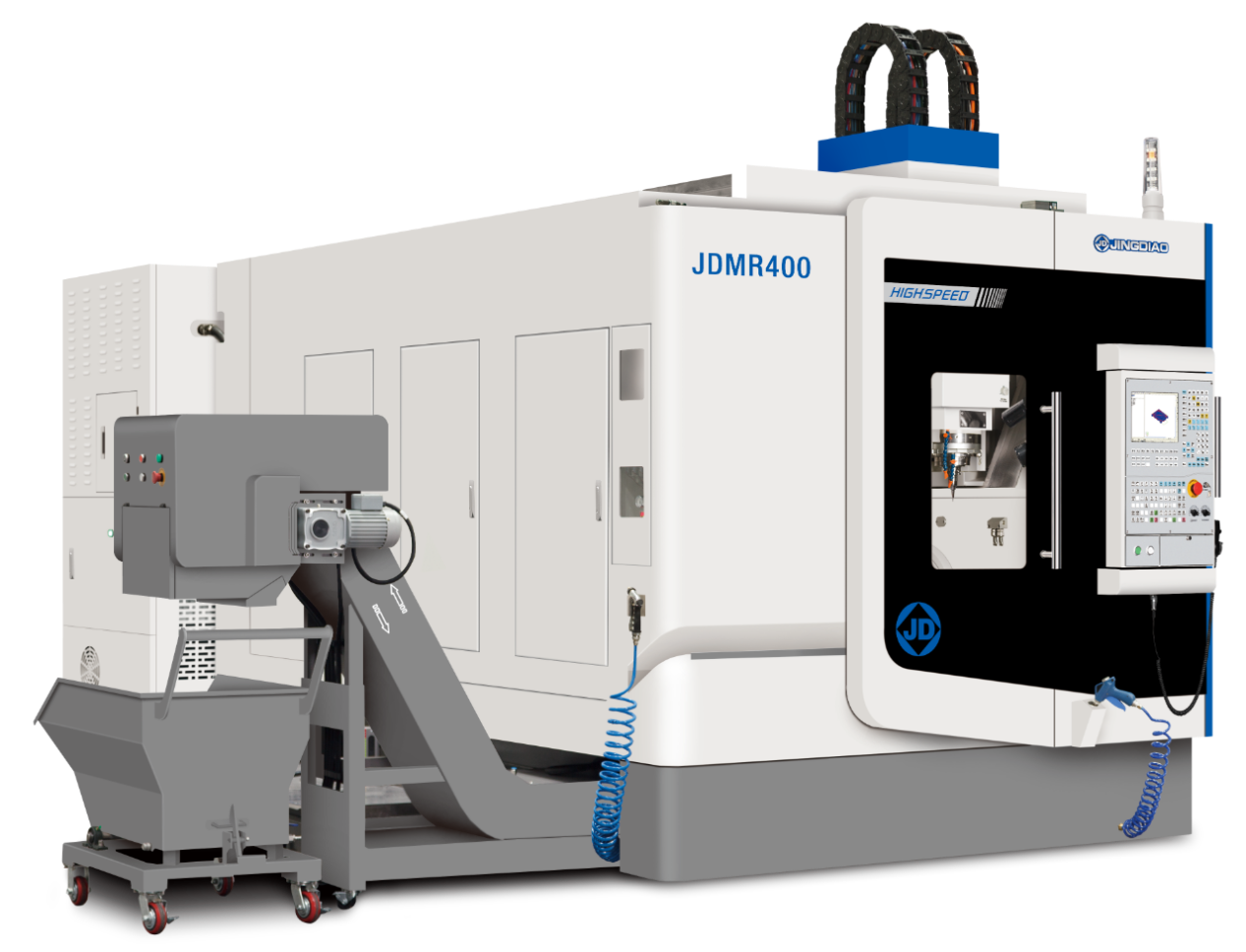
At ITES 2026, Jingdiao's JDMR400MT high-speed machining center made its South China debut. Built around mill-turn technology, the machine integrates milling, turning, boring, drilling, reaming, and tapping, and is equipped with an on-machine measurement system for real-time monitoring and correction of machining deviation. It is optimized for difficult-to-cut, deformation-prone parts such as titanium alloy joints and housings.
For small, complex parts such as joint assemblies, dexterous-hand components, and harmonic reducer core parts, precision Swiss-type lathes are equally important. Tsugami's B0386A-III and B0386A-II models accommodate parts under 38 mm, using simultaneous multi-tool machining and single-setup processing to meet the demands of small-batch, high-variety precision machining.
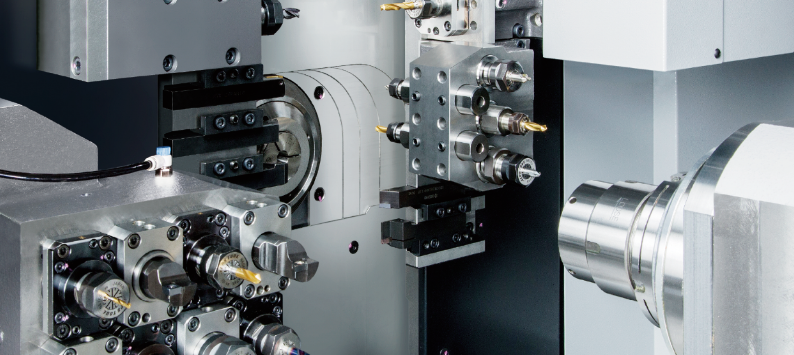
Kejie Technology globally premiered its KUPI-X1 ultra-precision vertical machining center at ITES 2026. It features a wall-type gantry structure with a high-speed built-in spindle, and its base is built using a special process that combines high-quality cast iron with advanced mineral casting for both rigidity and vibration damping. The entire machine is equipped with precision cooling circulation circuits for long-term accuracy retention, covering diverse applications from precision molds and general machinery to aerospace and robot core components.
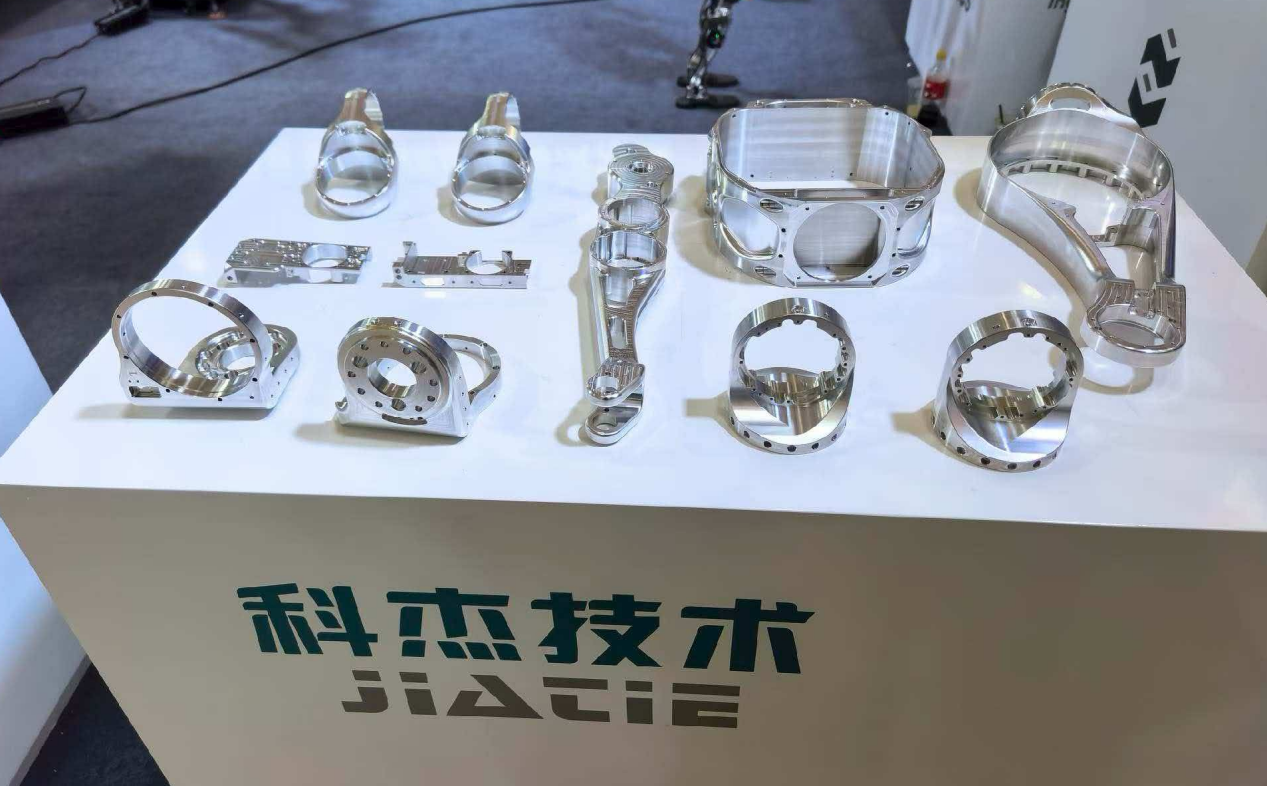
For machine tools targeting the humanoid robot market, the core of competition is no longer the extreme machining efficiency of a single product, but rapid changeover capability, process integration, and the flexibility to handle uncertain orders. Only equipment that treats "flexible production" as a core metric can absorb this wave of fragmented robot orders.
Parts Are Getting Smaller
Cutting Tools Become the Key Variable
Machine tools determine whether a factory can schedule production flexibly; cutting tools determine whether complex precision parts can be mass-produced reliably. The tooling challenge goes far beyond material hardness alone.
The difficulty of machining robot parts is not just material hardness, but the simultaneous presence of thin-wall structures, high-strength materials, complex geometries, and high precision requirements. Reducers are the most expensive component of a humanoid robot: a single robot has 30–40 degrees of freedom and is equipped with 30–40 reducers, which together account for about 40% of the robot's total cost.
In reducers, the flexspline is a typical thin-walled cup-shaped component, with a wall thickness of just 0.2–0.8 mm. As the part enters the finishing stage, the wall thickness is further reduced, and cutting forces, tool deflection, and heat-treatment deformation can all affect the final dimensional accuracy. Machining deformation mainly arises from three factors:
First, clamping deformation caused by uneven fixturing forces; second, tool deflection and localized deformation caused by cutting forces; and third, residual stress release after machining and heat treatment, which causes subsequent dimensional drift.
At the same time, robot core components make extensive use of high-strength alloy steel, bearing steel, and similar materials. Alloy steels are highly ductile and prone to built-up edge and chip adhesion during cutting, while high-hardness materials accelerate tool wear.
As a result, in robot parts machining, cutting tools are no longer simply consumables.
Tool selection itself has become part of the process solution.
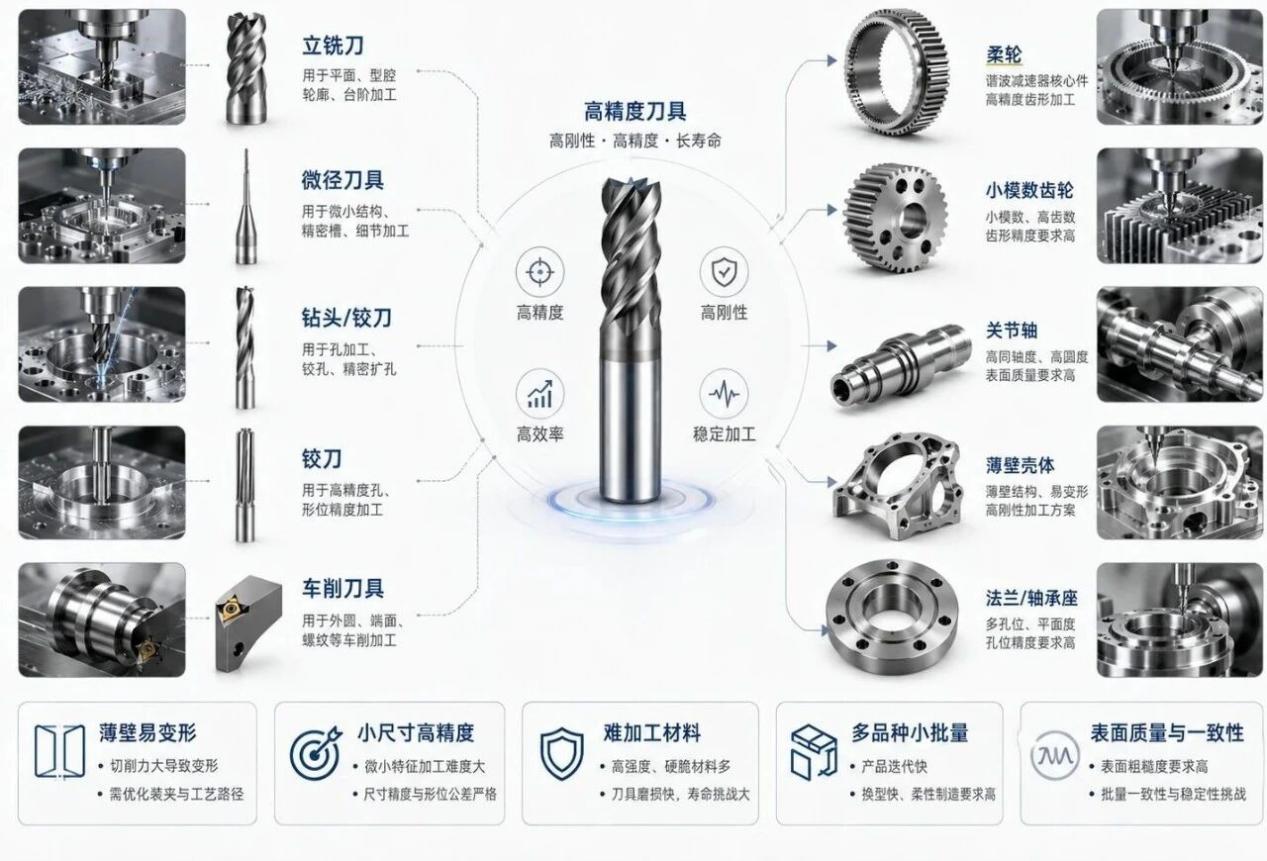
Tool brands such as Hitachi, Gühring, and Nachi-Fujikoshi are all rolling out cutting solutions for precision robot components. Gühring's milling cutter series, for example, covers difficult-to-machine materials including titanium and titanium alloys, high-alloy steels, and chromium-nickel alloys, and can be adapted for high-hardness materials.
As orders further evolve into multi-material, multi-model, small-batch runs, cutting tools must take on another task: switching rapidly between different materials, structures, and batch sizes while maintaining a stable machining window as much as possible.
This is why machining the micro, complex-structure parts for robot mass production places higher demands on tool sharpness, rigidity, wear resistance, and cutting stability.
More Models
Harder Inspection
The challenge that robot mass production poses to the inspection and measurement industry is likewise not simply the pursuit of "higher accuracy." As product models change more frequently, can inspection really keep pace with production?
Traditional inspection mostly addresses whether products are made accurately. Once robots enter mass production, inspection must also address how quickly products can be changed over.
Small-module gears are a typical inspection scenario. Dexterous hands and robotic arm joints involve large numbers of micro gears, whose machining errors, heat-treatment deformation, and assembly deviations all further affect the robot's motion performance. Inspection equipment must maintain stable accuracy and efficiency at even smaller sizes and more complex tooth profiles.
For enclosed internal cavities, traditional inspection methods often struggle to directly capture the internal assembly state. ZEISS industrial CT (computed tomography) can obtain internal 3D data of components through non-destructive testing, for analyzing complex internal structures and assembly conditions.
For dexterous hands, inspection is moving from static dimensional measurement toward dynamic motion calibration. During continuous motion, factors such as actuator error and temperature rise change a dexterous hand's motion state. Tracking these dynamic changes and feeding the data back into model correction and structural optimization is becoming a new inspection requirement.
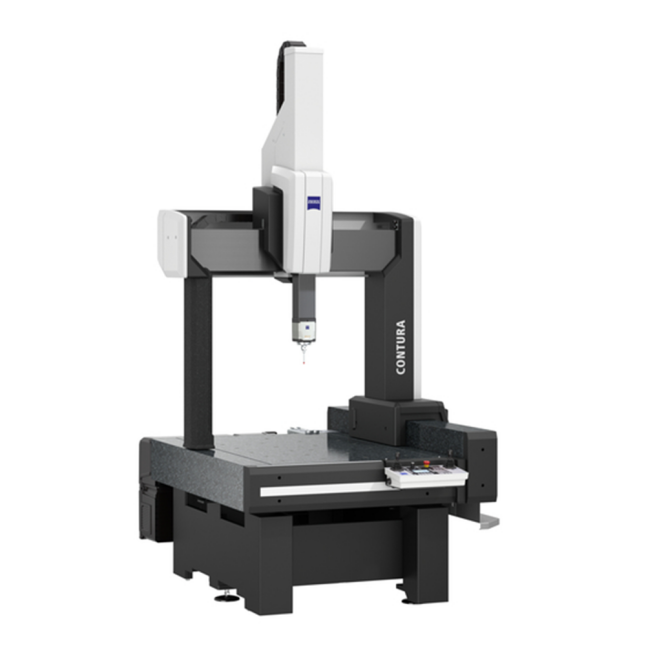
ZEISS coordinate measuring machines (CMMs) paired with the GEAR PRO gear measurement software can inspect multiple parameters — including tooth profile, helix, and pitch — in a single setup. ZEISS ARAMIS, meanwhile, uses non-contact measurement to perform dynamic data acquisition on complex joint motion.
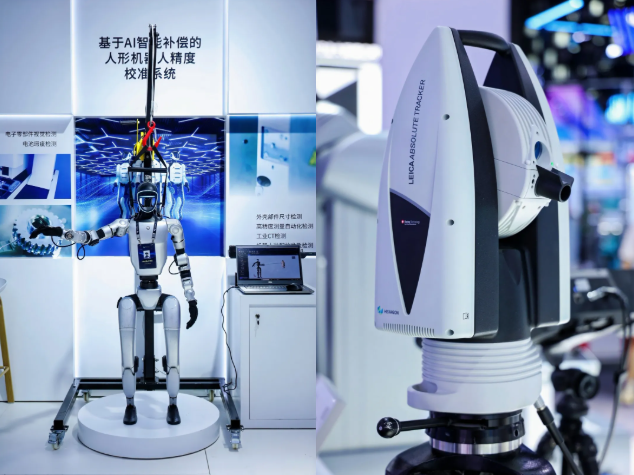
Hexagon relies on the Leitz Reference ultra-high-precision measuring machine for tooth-form inspection of ultra-precision parts such as harmonic flexsplines and cycloidal gears. Its dexterous-hand calibration solution combines stereo-vision tracking hardware with RoboDyn software to achieve motion-state tracking, error compensation, and automated calibration.
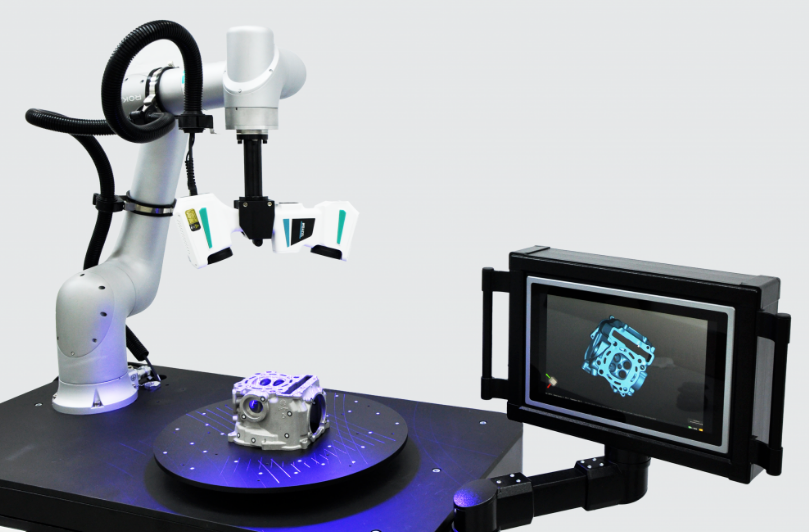
Wenzel is similarly building its portfolio around gear accuracy inspection for humanoid robots, with equipment such as industrial CT and the XO87 CMM covering the inspection needs of micro gears, geometric tolerances, and dexterous-hand core components.
Thus, the logic of inspection is shifting from "inspect after production" to "inspection must keep up with changes in production." Underlying this is the same broader trend: what the robot industry is really transmitting to manufacturing is not just a batch of new orders, but a new set of manufacturing requirements.
Orders demand more flexibility, so machine tools must be more agile; parts demand reliable mass production, so cutting tools must be more dependable; models keep changing, so inspection must be faster.
From machine tools and cutting tools to measurement and inspection, and on to precision parts manufacturing services, humanoid robots are unleashing increasingly clear new demands across the manufacturing side.
This is also why ITES continues to focus on the mass production of embodied AI. From March 24–27, 2027, ITES 2027 — the 28th edition — will be held at the Shenzhen World Exhibition & Convention Center (Bao'an). Centered on high-end equipment, precision manufacturing, and industrial embodied AI applications, it will bring the machining, components, automation, and inspection needs behind humanoid robots to the show floor once again.To stay up to date on the latest technological developments in humanoid robot mass production, precision machining, and the broader supply chain, keep following ITES. See you in Shenzhen next March.