 Countdown155days
2027.3.24-3.27 Shenzhen World Exhibition & Convention Center
Countdown155days
2027.3.24-3.27 Shenzhen World Exhibition & Convention CenterDexterous Hands: 70,000 Units of Annual Demand, Fewer Than 20,000 in Production | Industry Chain Observation
【Introduction】 Unitree IPO: dexterous hand key bottleneck. Micro parts challenge mass production, drive prices down.
Ahead of its IPO, Unitree Robotics likely understood better than the capital markets just how much a single "hand" matters to a humanoid robot.
In its latest IPO inquiry responses, Unitree boiled the barriers to mass commercialization of humanoid robots — in industry and the home — down to two things: the generalization capability of embodied foundation models, and the dexterity and durability of the hand. Notably, Unitree did not treat the "dexterous hand" as a mere component upgrade; it directly called out four specific bottlenecks: tactile perception, control precision, durability, and cost.
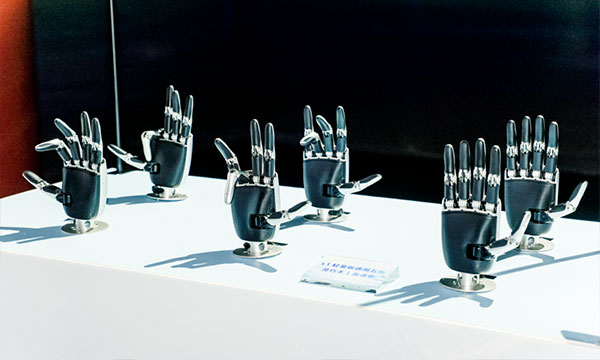
That same day, in Changsha's Xiangjiang New Area, Zhongke Huisi was officially inaugurated and unveiled three dexterous hands at once — the L1, D1, and M1 — with Lens Technology standing behind it. Even more telling, funding for the dexterous hand space has kept heating up this year: Lingxin Qiaoshou, Xynova, and BrainCo have all landed fresh capital. A "hand" that once hid behind the humanoid robot is now being priced on its own.

Image source: Changsha High-tech Zone
Why the focus on a single hand?
Because a single hand conceals an entire micro-manufacturing chain: motors, reducers, lead screws, tendons, tactile sensors, plus precision structural parts and assembly. As humanoid robots evolve to the point of actually working, the supply chain behind this hand is becoming the most compelling new growth area in manufacturing.
Key Takeaways
• A dexterous hand packs an entire micro-manufacturing chain — motors, reducers, lead screws, tendons, and tactile sensors — into a hand-sized space.
• Unitree's IPO filings show the hand shifting from an optional accessory to a make-vs-buy supply-chain decision.
• The real barrier is mass production, not prototypes: micro gears (module <1 mm) and micro lead screws (1.4 mm shafts) must be made repeatable at scale.
• Prices are falling from RMB 50,000+ (≈ US$7,400+) toward RMB 20,000 (≈ US$3,000) — competition is now about cost, yield, and lifespan, not just degrees of freedom.
Why Did Unitree Single Out the Dexterous Hand?
One figure in Unitree's IPO inquiry responses is especially worth a closer look.
From January to September 2025, Unitree sold 3,551 humanoid robots, of which 445 were fitted with purchased dexterous hands and 521 with in-house ones. Over the same period, Unitree spent RMB 17.88 million (≈ US$2.65 million) on purchased hands, with Yinshi Robotics accounting for 96.19% of that amount.
In the past, humanoid robots first had to solve the "body" problem — walking, running, and keeping balance were enough to make a product. The dexterous hand was more like an optional accessory, added only when needed.
But as robots began actually working in factories, the question shifted: once it reaches a workstation, can it handle the delicate work?
Unitree itself gave the answer. Before launching its own Dex5 five-finger hand in April 2025, the company had been meeting customer demand through external purchases. In the first three quarters of 2025, Unitree spent RMB 17.88 million (≈ US$2.65 million) on purchased hands, of which Yinshi Robotics accounted for 96.19%.
Even after Unitree had its own in-house hand, external purchasing continued. Public procurement records show that in July 2026, Unitree still placed orders for G1 and Yinshi Robotics five-finger hands; in NVIDIA Isaac GR00T-related projects, Unitree supplies the robot body while the five-finger hand comes from Singapore-based Sharpa.

This means the dexterous hand is no longer a simple "whether to have one" question — it has become a make-versus-buy supply-chain decision for robot makers: how much to build in-house, and how much to buy.
And this hand is far from cheap. Morgan Stanley once estimated that the dexterous hand accounts for about 17.3% of the bill of materials for Tesla's Optimus. Industry players generally put the hand's hardware cost at 10%–20% of the whole robot body, with some high-end configurations exceeding 20%. A single hand integrates four systems at once: actuation, transmission, sensing, and control.
More importantly, there is another layer of growth from rising penetration: robots that once had no hand are now getting one; three-finger hands are upgrading to five-finger hands; and lab products are entering industrial settings.
The dexterous hand's market potential is not simply "robot shipments × 2" — it is the incremental growth driven by rising attachment rates, product upgrades, and expanding applications. According to GGII (Gaogong Industry Research Institute), China sold about 19,200 dexterous hands in 2025, a figure expected to reach 70,200 in 2026. Yet the market is still two orders of magnitude away from "million-unit orders," and only a handful of companies have truly reached mass production and volume shipments.

And that brings the next question to the fore: with so many hands needed, how do you manufacture them reliably?
Why Is a Dexterous Hand So Hard to Manufacture?
On paper, building a high-degree-of-freedom dexterous hand prototype is not that hard. What truly separates players is a different set of questions once it leaves the lab for mass production: Can dimensions stay stable? Can parts match? Can assembly be replicated? Can precision hold up after long-term use?
Take apart a production-grade dexterous hand and you will see that its biggest difference from conventional robot parts is not just more degrees of freedom. The real challenge is achieving high degrees of freedom, high precision, high reliability, and low cost — all within a space the size of a human hand.
Take micro gears, among the most critical transmission components in a dexterous hand joint module. Their module is typically no more than 1 mm, and some go below 0.3 mm. During machining, even slight deviations in machine parameters matter: tooth-profile errors affect meshing stiffness and noise, while cumulative pitch errors directly impact angular accuracy and backlash. Nitriding during heat treatment causes dimensional distortion, further squeezing already-tight geometric tolerances.
Then there are micro lead screws. Dexterous-hand-specific micro ball screws are now publicly available in shaft diameters of 1.4 mm, 1.8 mm, 3 mm, and 4 mm. Insufficient rigidity, easy deformation, and difficult-to-machine materials are the three hurdles in machining them. Because the diameters and leads are small and the threads dense, the process must first use multi-thread grinding wheels for efficient roughing to remove material quickly, then hold dimensional accuracy to the micron level.

Even trickier is machining the nut's internal thread. Grinding requires an internal thread grinder that automatically transitions from rough, to semi-finish, to finish grinding within a single operation. If the material is titanium alloy, its low thermal conductivity causes grinding heat to accumulate, slender parts tend to chatter, and its high chemical reactivity makes it prone to loading the grinding wheel — any one of these, let alone their combination, is enough to make yields swing wildly.
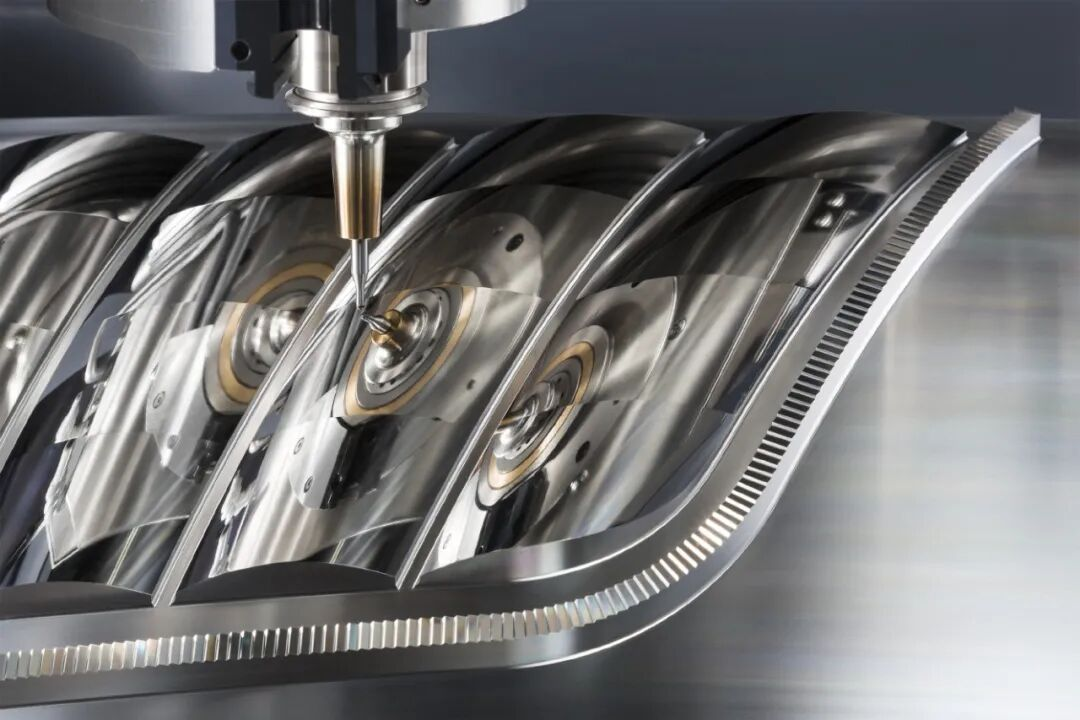
There are also irregular structural parts such as finger bones and housings. Complex curved surfaces, deep holes, multi-directional angled holes, internal wiring channels, and sensor slots all demand extremely high machining precision — they require 5-axis simultaneous machining to form in a single setup, avoiding the accuracy errors of repeated fixturing. Some parts have walls thinner than 1 mm, so slightly higher heat or cutting force during machining causes deformation. If the part uses an engineering plastic such as PEEK, cutting heat and clamping deformation must be controlled even more carefully, or entire batches can be scrapped in an instant.
Tesla's Optimus has repeatedly delayed mass production, and the industry knows the AI algorithm is not the main bottleneck — the batch-to-batch machining consistency of the dexterous hand's micro components is one of the key bottlenecks. Under high-intensity use, parts wear and precision degrades over time, falling short of industrial production standards.
A passing part does not mean a passing product. Industrial mass production requires standardized, repeatable, operator-independent assembly processes. This, in turn, forces production lines to upgrade their precision tooling, automation equipment, and high-precision inspection and calibration systems.
With Volume, a Market, and High Barriers, Why Still Push Prices Down?
This may be the most important shift to watch in the dexterous hand industry going forward: the more demand there is, the less likely prices are to stay high. It sounds counterintuitive, but the logic is simple.
At the prototype stage, companies just want to "make it work." At the mass-production stage, they want to "make it work, make it reliable, and make it cheap." Today, customers may still accept a high-performance dexterous hand priced at tens of thousands of RMB. But if a robot model eventually sells tens of thousands or hundreds of thousands of units, the math changes completely.
Dexterous hands once cost RMB 50,000 (≈ US$7,400), RMB 100,000 (≈ US$14,800), or even more. Today, domestic products have clearly entered the five-figure RMB price band (roughly US$1,500 and up).
Public information shows that some BrainCo dexterous hands are priced around RMB 20,000 (≈ US$3,000), with non-tactile versions at about RMB 20,000 and tactile versions at about RMB 35,000 (≈ US$5,200). Yinshi Robotics' five-finger hands have already come down to around RMB 20,000 (≈ US$3,000).

Going forward, competition in the dexterous hand market will likely boil down to: who can deliver the same degrees of freedom at lower cost, higher yield, and longer lifespan?
In fact, technology paths are diverging for exactly this reason. Some companies keep pursuing high degrees of freedom, high dexterity, and rich tactile perception; others are deliberately reducing degrees of freedom, trading simpler structures and lower cost for scale deployment.
Once robots truly enter factories, customers are not buying "the most human-like hand" but "the most cost-effective hand for the task." The industry logic of the dexterous hand is therefore shifting: from chasing specs to chasing value for money; from chasing prototypes to chasing yield; from chasing single-point performance to chasing total lifecycle cost. Because between making one hand and reliably making a hundred thousand, the gap is not a product definition — it is an entire manufacturing capability.
This market-driven price decline will also create new opportunities along the robot supply chain — which is exactly why we keep tracking embodied-AI mass manufacturing. In the 2026 "Industry Chain Observation" series, ITES, together with Gongchuanglian and TMTPost, keeps pushing the lens deeper into the robot supply chain: as a humanoid robot scales from prototype to 100,000 and then 1 million units, what new precision-manufacturing demand will emerge behind it? We will keep delivering supply-chain visits, hands-on process workshops, supply-demand matchmaking, and closed-door consultations to help manufacturers secure an early position in the humanoid robot supply chain and connect with robot OEMs and core-component suppliers.
When a hand starts being priced separately from the robot, what is really being re-priced is everything behind it: micro precision machining, sensor integration, precision assembly, and the manufacturing capability to replicate all of it — reliably, at scale.